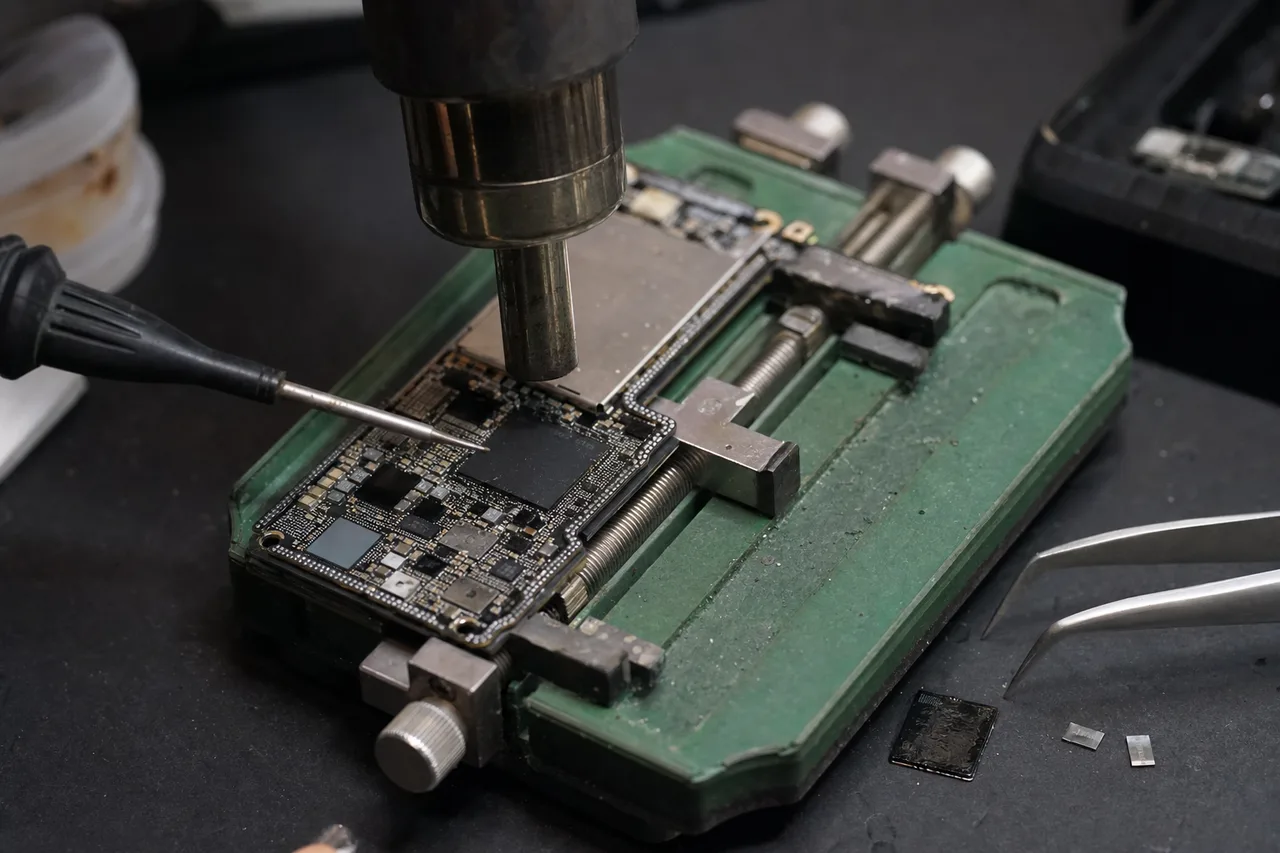
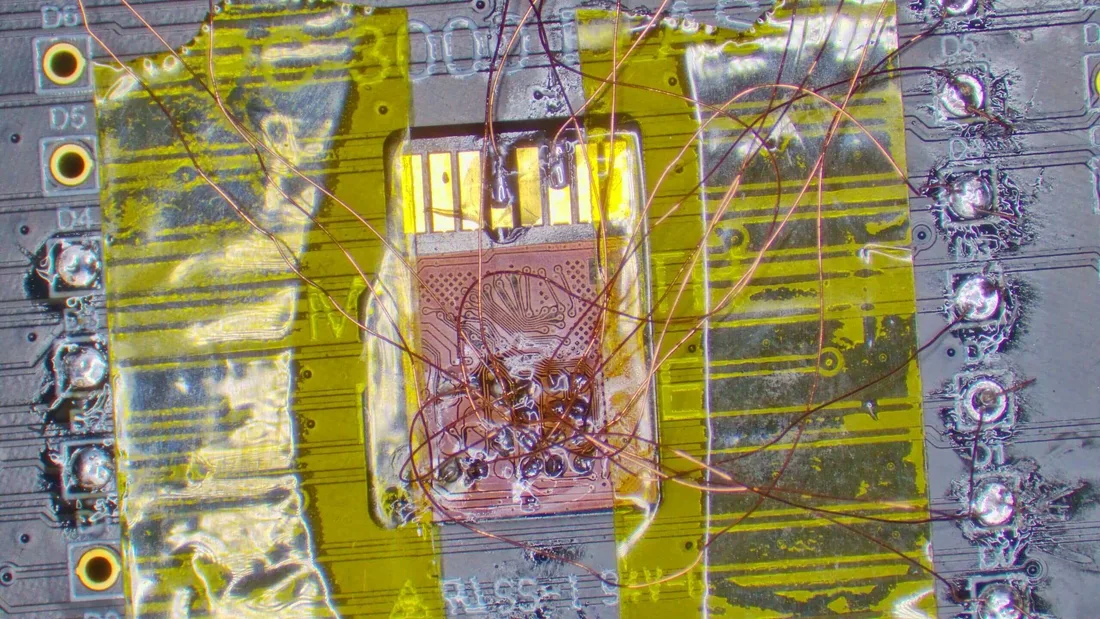
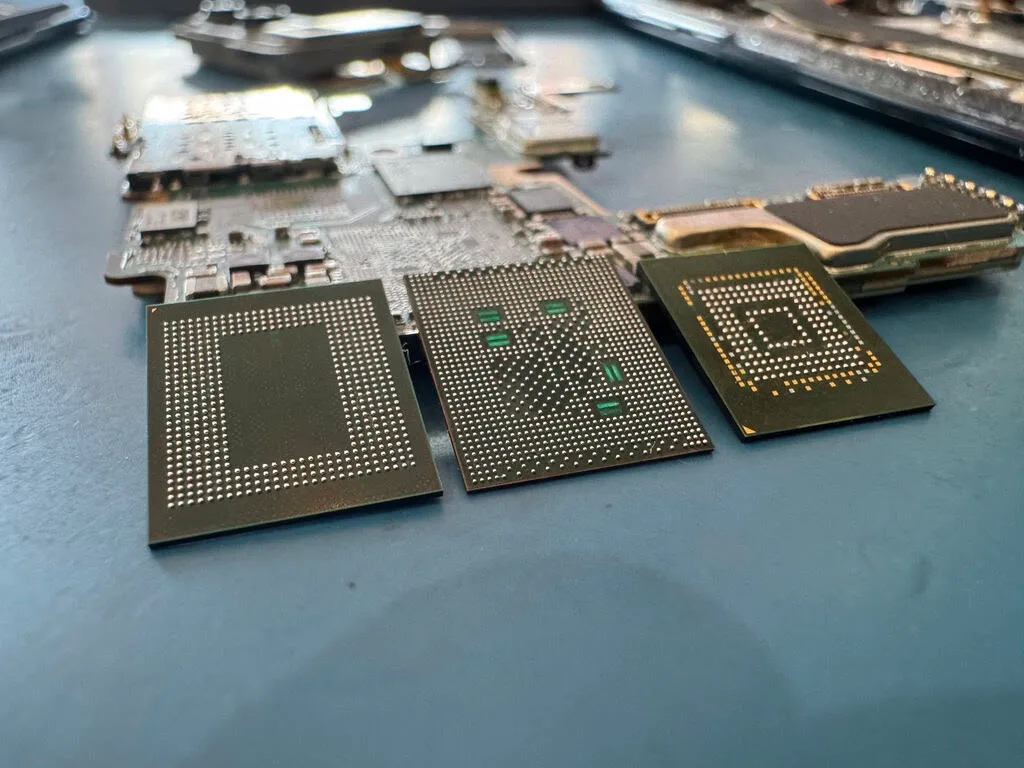
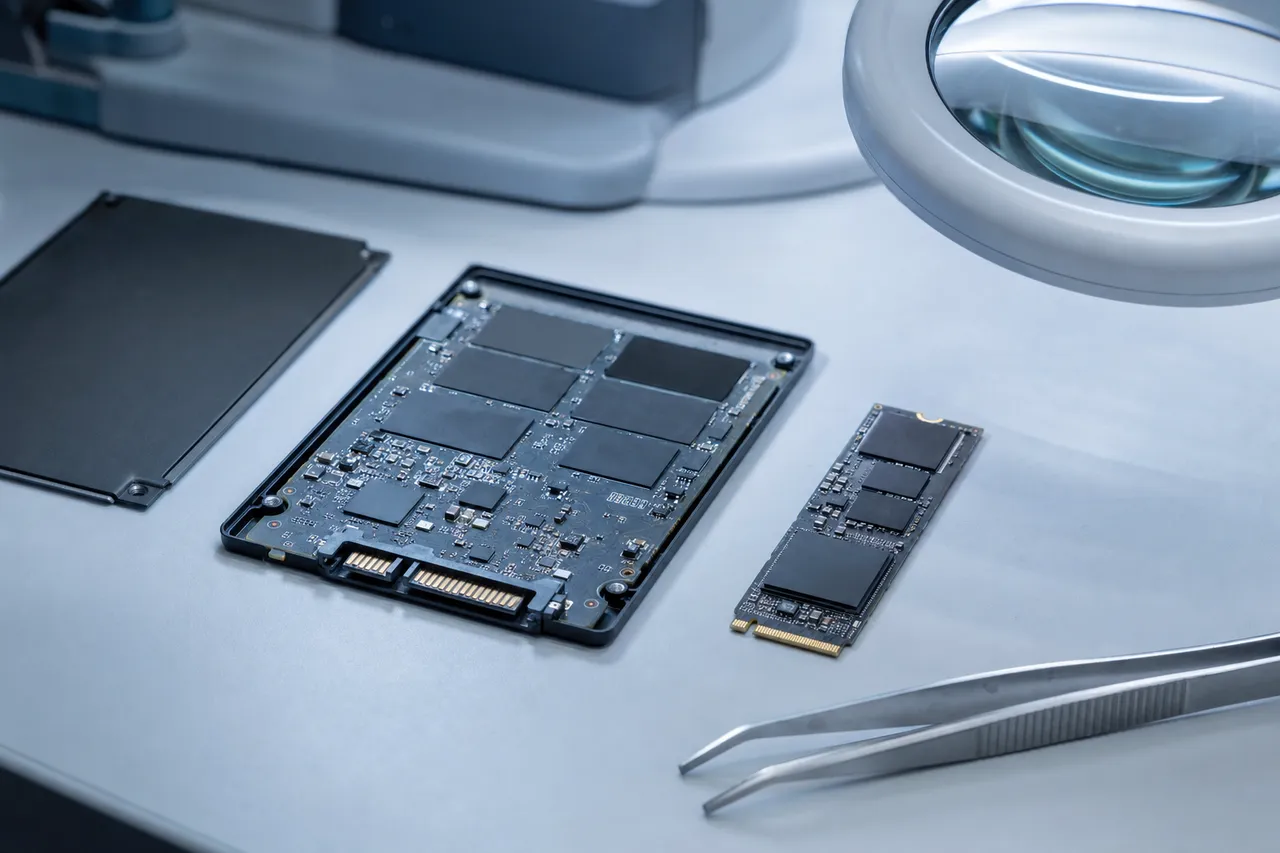
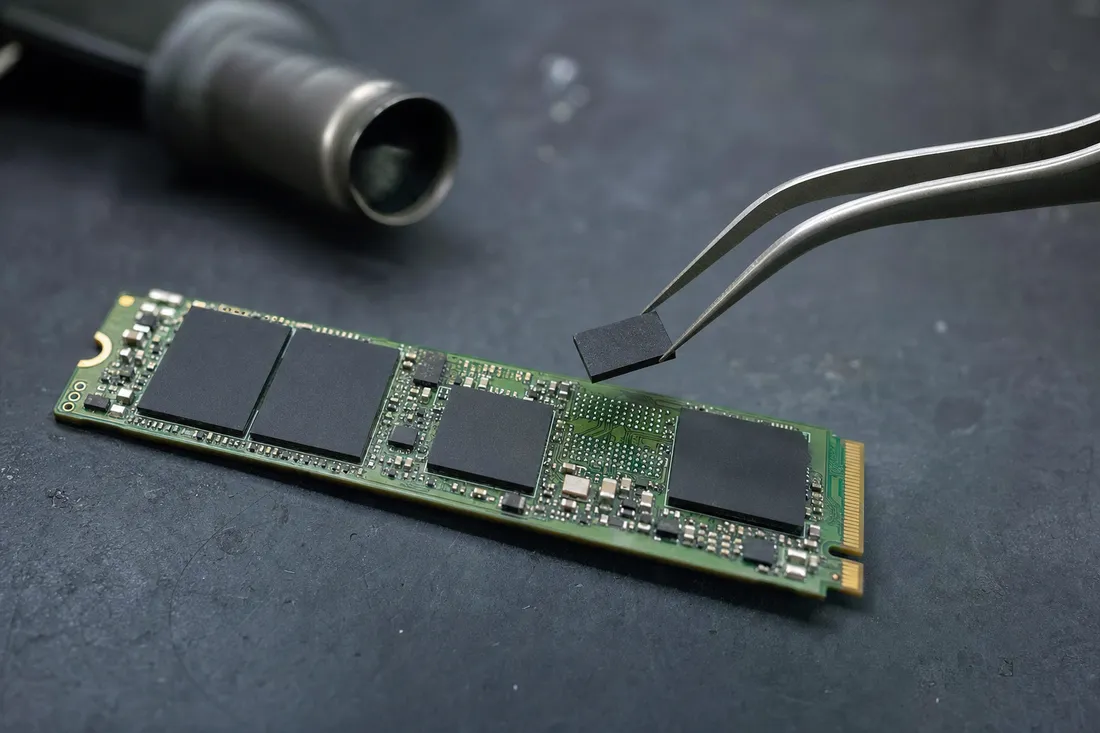
The NAND flash memory chips inside your NVMe SSD are where your data physically resides, and the type of NAND - SLC, MLC, TLC, or QLC - fundamentally affects both the drive's performance characteristics and the complexity of data recovery. Understanding NAND technology at the cell level is critical for our recovery technicians because it determines the voltage thresholds we must work with, the error correction challenges we face, and the likelihood of successful recovery when the drive fails.
SLC (Single-Level Cell) NAND stores one bit per cell, meaning each cell exists in one of two voltage states - programmed or erased, representing 0 or 1. SLC NAND is the most durable and reliable, enduring approximately 100,000 program/erase cycles, but it is also the most expensive per gigabyte. SLC is rarely used in consumer NVMe SSDs today, though some enterprise NVMe drives still use it for critical metadata storage. When we encounter SLC NAND during recovery, the wide voltage margins between states make data extraction relatively straightforward even from degraded cells.
MLC (Multi-Level Cell) NAND stores two bits per cell across four voltage states. MLC offers a good balance of endurance (approximately 3,000-10,000 P/E cycles), performance, and cost. Samsung's 970 Pro was one of the last consumer NVMe SSDs to use MLC NAND, and many enterprise NVMe drives continue to use it. MLC recovery is more complex than SLC because the four voltage states are closer together, meaning cell degradation can cause voltage drift that makes distinguishing between states more difficult. However, MLC's generous voltage margins compared to TLC and QLC still provide relatively favorable recovery conditions.
TLC (Triple-Level Cell) NAND stores three bits per cell across eight voltage states, and it dominates the current NVMe SSD market. The Samsung 980 Pro, 990 Pro, WD Black SN850X, Crucial P5 Plus, SK Hynix P41 Platinum, and most other flagship NVMe drives all use TLC NAND. The eight voltage states in TLC are much more tightly packed than MLC's four states, meaning the voltage margins between adjacent states are narrower. This tighter packing makes TLC more susceptible to read disturb errors, data retention loss, and voltage drift from cell degradation. For recovery, this means our NAND readers must work with much finer voltage resolution to correctly distinguish between the eight states, and our ECC algorithms must handle higher raw bit error rates.
QLC (Quad-Level Cell) NAND stores four bits per cell across sixteen voltage states. Drives like the Intel 670p, Sabrent Rocket Q, and some Crucial and Samsung models use QLC NAND to achieve lower cost per gigabyte at the expense of endurance (500-1,000 P/E cycles) and sustained write performance. From a recovery perspective, QLC represents the most challenging NAND type. Sixteen voltage states crammed into the same voltage range as SLC's two states means the margins are extremely narrow. Cell degradation, temperature fluctuations, or read disturb effects can easily shift a cell's voltage across a threshold boundary, causing bit errors. Our recovery from QLC drives requires the most sophisticated error correction algorithms and the most precise NAND reading equipment to achieve successful results.
Modern NVMe SSDs use 3D NAND (also called V-NAND by Samsung), where memory cells are stacked vertically in layers rather than spread across a flat (planar) surface. This vertical stacking dramatically increases storage density without shrinking the physical cell size, which actually improves reliability compared to aggressively-shrunk planar NAND. Current generation 3D NAND reaches impressive layer counts: Samsung's V-NAND is at 236 layers, Micron (Crucial) uses 232 layers, SK Hynix has reached 238 layers, and Kioxia (WD) uses 218 layers in their BiCS8 process.
Higher layer counts improve density but introduce new failure modes. The vertical channel that connects all layers of cells becomes increasingly difficult to manufacture uniformly as layer counts grow. Manufacturing defects, inter-cell interference between adjacent layers, and charge leakage through the vertical channel can all cause data errors that develop over time. During chip-off recovery, we must account for these 3D-specific failure patterns - certain layers or blocks may have higher error rates than others, and our reconstruction algorithms weight data from different NAND regions accordingly.
Every NVMe SSD employs a pseudo-SLC cache - a portion of the TLC or QLC NAND operated in SLC mode (one bit per cell) to provide a burst of fast write performance. Data written to the SLC cache is later relocated to the main TLC or QLC storage area during idle time through a process called folding. During recovery, we must account for data that may still reside in the SLC cache area (not yet folded to its final location), data in the main TLC/QLC area, and metadata about which areas contain valid data versus stale copies. Our recovery tools understand the SLC cache management algorithms used by each controller family, allowing us to correctly locate and prioritize the most current version of each data block.
The ECC (Error Correcting Code) system is another critical consideration for NVMe recovery. Modern drives use LDPC (Low-Density Parity-Check) codes that can correct dozens of bit errors per page, allowing the drive to function reliably even as NAND cells degrade. When performing chip-off recovery, we must replicate this ECC correction process outside the drive's controller - applying the appropriate LDPC decoding algorithms to each page of raw NAND data to produce correct, usable data. Our NAND recovery tools support the LDPC implementations used by all major NVMe controller families, ensuring maximum data integrity during the reconstruction process.