
My Seagate Barracuda 2TB started clicking out of nowhere. MDrepairs recovered every single file including 10 years of family photos. Joseph kept me updated through the whole process. Cannot recommend them enough.
- 4.6 319+ Google reviews
- 2M+ followers
- Serving all 50 states
Seagate Data Recovery
Lost data on your Seagate hard drive? MDrepairs is a professional hard drive data recovery lab in Lincroft, NJ specializing in all Seagate drives - from Barracuda desktop drives and IronWolf NAS drives to Backup Plus and Expansion portable storage. Whether your Seagate drive is clicking, beeping, not detected, or showing corrupted files, our certified technicians recover data other labs cannot.
Every case starts with a $100 professional diagnostic that gives you a detailed report on the issue, recovery likelihood, and exact pricing. We serve customers nationwide through our secure mail-in program with free insured shipping. No data, no charge on the recovery.
What Our Customers Say
4.6
Verified Google reviewsNo data, no charge - every case earns its rating
Seagate Models We Recover
MDrepairs maintains an extensive donor drive library and firmware database for every Seagate product line. From the consumer Barracuda series to enterprise Exos drives, our technicians have hands-on experience with the unique firmware structures, head configurations, and platter compositions that make each Seagate model different. Below is a partial list of Seagate models we regularly recover.
- Desktop & Laptop
Barracuda
The most popular Seagate line - 7200 RPM, 500GB to 8TB. The drives most commonly found in personal computers and the most frequent Seagate drives we recover.
ST1000DM010 - ST2000DM008 - ST4000DM004 - 7200.11 / 7200.12
- NAS-Optimized
IronWolf
NAS drives with rotational vibration sensors and AgileArray technology for always-on, multi-bay environments. Standard and Pro variants up to 20TB.
IronWolf - IronWolf Pro - up to 20TB
- Enterprise
Exos
Enterprise-class drives for data centers and servers - sustained transfer rates over 260 MB/s and 550TB/year workload ratings.
X16 - X18 - X20 - 7E10 - 2X14
- Gaming
FireCuda
Gaming-oriented SSHD hybrid drives and NVMe SSDs that bridge traditional hard drives and solid-state storage.
FireCuda 520 - FireCuda 530 - SSHD
- Portable & Desktop
Backup Plus / One Touch
Portable and desktop external drives for consumer backup - standard Seagate internal mechanisms in USB-powered enclosures.
Backup Plus - Backup Plus Slim - Expansion - One Touch
- Surveillance
SkyHawk
Surveillance-optimized drives for DVR and NVR systems with support for 64 simultaneous HD camera streams.
SkyHawk - SkyHawk AI
- Seagate Barracuda 1TB (ST1000DM010)
- Seagate Barracuda 2TB (ST2000DM008)
- Seagate Barracuda 4TB (ST4000DM004)
- Seagate Barracuda 8TB (ST8000DM004)
- Seagate Barracuda Pro 6TB
- Seagate Barracuda Pro 10TB
- Seagate IronWolf 4TB (ST4000VN006)
- Seagate IronWolf 8TB (ST8000VN004)
- Seagate IronWolf 12TB (ST12000VN0008)
- Seagate IronWolf 16TB (ST16000VN001)
- Seagate IronWolf Pro 4TB
- Seagate IronWolf Pro 8TB
- Seagate IronWolf Pro 12TB
- Seagate IronWolf Pro 16TB
- Seagate IronWolf Pro 20TB
- Seagate Exos X16 16TB
- Seagate Exos X18 18TB
- Seagate Exos X20 20TB
- Seagate Exos 7E10 10TB
- Seagate Exos 2X14 14TB
- Seagate FireCuda 2TB SSHD
- Seagate FireCuda 520 500GB NVMe
- Seagate FireCuda 520 1TB NVMe
- Seagate FireCuda 530 1TB NVMe
- Seagate FireCuda 530 2TB NVMe
- Seagate Backup Plus Slim 1TB
- Seagate Backup Plus Slim 2TB
- Seagate Backup Plus Hub 8TB
- Seagate Backup Plus Portable 4TB
- Seagate Expansion 1TB
- Seagate Expansion 2TB
- Seagate Expansion 5TB
- Seagate One Touch 1TB
- Seagate One Touch 2TB
- Seagate One Touch 4TB
- Seagate One Touch SSD 500GB
- Seagate One Touch SSD 1TB
- Seagate Game Drive for PS4 2TB
- Seagate Game Drive for Xbox 2TB
- Seagate SkyHawk 8TB (Surveillance)
- Seagate SkyHawk AI 16TB
- Seagate Nytro 1351 SATA SSD
- Seagate BarraCuda 120 SSD 500GB
$100 diagnostic · No data, no charge · Free shipping
Common Seagate Drive Failures
Seagate drives fail in predictable ways. Recognizing the symptoms - and powering the drive off the moment you hear something wrong - gives us the best chance at a complete recovery.
-
Clicking or Beeping Sounds
Clicking and beeping are among the most common Seagate failure symptoms, especially in Barracuda and Backup Plus models. These sounds typically indicate the read/write heads have failed and are repeatedly trying to initialize against the platters. When you hear clicking, power the drive off immediately. Continued operation risks scratching the platter surfaces and causing permanent data loss. MDrepairs has recovered thousands of clicking Seagate drives by replacing the failed head stack assembly in our clean room using compatible donor heads.
-
Firmware Corruption
Seagate drives store critical firmware modules in a reserved area of the platters called the System Area. When these modules become corrupted, the drive may spin up normally but fail to be recognized by the computer, appear as the wrong capacity, or get stuck in a busy state. Seagate firmware issues are particularly common in the Barracuda 7200.11 and 7200.12 series. MDrepairs uses specialized tools to access the System Area and repair corrupted firmware modules, often restoring full access to the user data without any physical intervention.
-
Head Crash and Platter Damage
A head crash occurs when the read/write heads make direct contact with the spinning platter surface, scraping off the magnetic coating that stores your data. This is one of the most severe types of failure and is common in Seagate drives that have been dropped or experienced a sudden impact. MDrepairs handles head crash cases in our ISO-class clean room environment. Our technicians carefully assess the extent of platter damage under magnification before attempting recovery, and our success rate even on head crash cases exceeds 85%.
-
PCB and Electrical Failure
Power surges, faulty power supplies, and static discharge can damage the printed circuit board on your Seagate drive. Symptoms include the drive not spinning at all, a burning smell, or visible scorch marks on the board components. Simply swapping the PCB from a donor drive does not work on modern Seagate drives because each board contains a unique ROM chip with drive-specific calibration data. MDrepairs transfers the original ROM data to a compatible donor PCB, restoring full functionality and access to your data.
-
Motor and Spindle Failure
When a Seagate drive's spindle motor fails, the platters cannot spin up and the drive may make a faint humming or buzzing sound, or produce no sound at all. Motor seizure is common in drives exposed to moisture or extreme temperatures. MDrepairs addresses motor failures by transplanting the platters from the failed drive into a healthy donor drive chassis in our clean room. This delicate procedure requires precise alignment of the platters to maintain data integrity, and our technicians have performed thousands of successful platter swaps.
-
Bad Sectors and Media Degradation
Bad sectors develop when portions of the platter surface become unreadable due to magnetic degradation, manufacturing defects, or wear over time. Seagate drives with growing bad sectors often become increasingly slow, freeze during file access, or trigger S.M.A.R.T. warnings. MDrepairs uses specialized imaging tools that can read around bad sectors, adjust head positioning parameters, and perform multiple read passes at varying speeds to extract data from degraded media areas that consumer software cannot access.
-
Logical and File System Corruption
Accidental formatting, partition table corruption, virus damage, and operating system crashes can make your Seagate drive's data inaccessible even though the drive hardware is perfectly functional. These logical failures are common across all Seagate product lines and can affect any file system including NTFS, HFS+, ext4, and APFS. MDrepairs employs advanced file carving and reconstruction techniques that go far beyond consumer recovery software, recovering files even from formatted or overwritten drives.
-
Water and Physical Damage
Seagate drives exposed to water, fire, or physical crushing require specialized treatment before any recovery attempt can begin. Water damage causes corrosion on the heads, platters, and PCB components that worsens over time. MDrepairs has recovered data from Seagate drives pulled from flooded homes, fire-damaged offices, and crushed laptops. Our clean room technicians carefully clean and dry all internal components before attempting to image the platters, and our success rate on water-damaged Seagate drives is among the highest in the industry.
How We Recover Your Data
A clear, five-step path from your first call to your recovered data back in your hands - with a firm quote and our no data, no charge guarantee before any recovery work begins.
-
Free Consultation
Contact MDrepairs by phone at 732-933-7717 or submit a free quote form. Describe your Seagate drive's symptoms and we will provide an initial assessment and cost estimate. We offer free insured shipping labels for mail-in cases nationwide.
-
Professional Diagnostic
Once we receive your Seagate drive, our technicians perform a comprehensive diagnostic in our Lincroft, NJ lab. We identify the exact failure mode, assess recovery feasibility, and provide a firm quote before any work begins. The $100 diagnostic fee applies to all cases.
-
Data Recovery
After you approve the quote, our engineers begin the recovery process. For physical failures, work is performed in our clean room using Seagate-compatible donor parts. For logical failures, we use specialized imaging and file reconstruction tools to extract every recoverable file.
-
Verification and Review
Once recovery is complete, we compile a full file listing for your review. You can verify that your critical files have been recovered before making any payment. We operate on a strict no data, no charge policy. If we cannot recover your target files, you owe nothing beyond the diagnostic fee.
-
Data Return
Your recovered data is transferred to a new external drive or cloud storage, whichever you prefer. We ship your data back with free insured shipping and securely erase all copies from our systems after 30 days. Your original drive is returned alongside the recovery media.
Seagate Recovery Pricing
MDrepairs offers transparent, flat-rate pricing for all Seagate data recovery cases. Your quote is based on the type and severity of failure, not the amount of data recovered. Every case includes our no data, no charge guarantee and free insured shipping both ways. The $100 diagnostic fee is credited toward your recovery cost if you proceed.
-
Logical / Firmware Recovery
$650 - $1,200
Data recovery from drives with logical errors, accidental deletion, formatting, file system corruption, or firmware failures. Includes PC-3000 firmware module repair and sector-level imaging.
- Accidental deletion recovery
- File system corruption repair
- Firmware module restoration
- Partition table reconstruction
- Bad sector bypass imaging
- $100 diagnostic applied to cost
- Most common
Head Swap / Mechanical Recovery
$1,000 - $2,000
Recovery from clicking, buzzing, or non-spinning drives requiring clean bench work - head replacements, motor repair, stiction recovery, or spindle motor service.
- Failed read/write head replacement
- Motor failure repair
- Stiction recovery (heads stuck to platter)
- Clean bench head transplant with donor
- PC-3000 selective head imaging
- $100 diagnostic applied to cost
-
Platter / Severe Damage Recovery
$999 - $2,500+
Recovery from drives with platter surface damage, contamination, scoring from head crashes, or drives that failed at other labs. Includes helium drive recovery ($2,000 - $3,500+).
- Scratched platter recovery
- Contamination and debris removal
- Head crash damage recovery
- Multi-platter transplant
- Conservative imaging around damaged zones
- $100 diagnostic applied to cost
All pricing includes the $100 diagnostic fee. No data, no charge - if we can't recover your target files, you only pay the diagnostic fee.
Free insured shipping nationwide - $100 diagnostic credited - no data, no charge.
How Long Does Hard Drive Data Recovery Take?
Diagnostic turnaround depends on your selected service tier. Rush options are available when you need answers faster. Recovery time is quoted after diagnostics are complete - the tiers below are how soon we begin, not the full recovery time.
-
4 - 5 weeks
Standard
No surcharge
Full assessment with recovery options and pricing. The typical wait before your drive reaches our bench in the standard queue, measured from receipt.
-
5 - 7 days
Priority Rush
+$250
Your drive jumps to the front of the queue. Ideal for business-critical data where a few days matter.
-
1 - 2 days
Urgent Rush
+$500
Dedicated technician for time-sensitive cases, with expedited handling from the moment it lands.
-
Same Day
Emergency
+$1,000
Immediate start. Highest priority, mission-critical situations that can’t wait.
The times above are how soon we begin diagnosing your drive - not the full turnaround. Recovery time is quoted after diagnostics, and depends on the failure (see below). Mail-in adds free 2nd-Day-Air UPS each way (USA, excluding islands).
What Affects Hard Drive Recovery Time?
Once work starts, the failure type sets how long the recovery itself takes
-
Logical & Firmware
FastestAccidental deletion, formatting, corrupted partitions, and Seagate F3 / service-area faults. No mechanical intervention - typically the quickest turnaround once on the bench.
-
Electronic / PCB
ModerateBurned or shorted controller boards from power surges. We repair the PCB and transfer the unique ROM - quicker than a head swap, slower than a clean logical case.
-
Mechanical / Head Swap
LongestClicking drives, crashed heads, seized motors, and scratched-platter cases need matched donor parts, controlled-environment work, and careful imaging. Parts for Seagate, WD, Toshiba and Hitachi are typically in stock.
-
Shipping Time
Free · 2nd-day airMail-in ships free 2nd-Day-Air UPS both ways (USA, excluding islands) - you print the prepaid label right on the mail-in form. Local New Jersey customers who drop off at our Lincroft lab skip transit entirely.
Hard Drive Data Recovery Cases Documented on Video
Watch real hard drive recoveries from start to finish - every diagnosis, repair, and data extraction documented on camera.
Seagate Technology and Recovery Deep-Dive
Successful Seagate recovery depends on understanding how Seagate designs their drives - the platters, the head configurations, the firmware stored in the platters' System Area, and the differences between every product family. Here is the full detail on how MDrepairs recovers each one.
The Architecture
Seagate Technology Overview
Seagate Technology has been manufacturing hard drives since 1978 and remains one of the world's largest producers of data storage devices. Their product line spans consumer desktop drives, portable externals, high-performance gaming drives, NAS-optimized models, and enterprise-class storage solutions. Understanding how Seagate designs and builds their drives is critical to successful data recovery, and MDrepairs has invested years in mastering every generation of Seagate hardware.
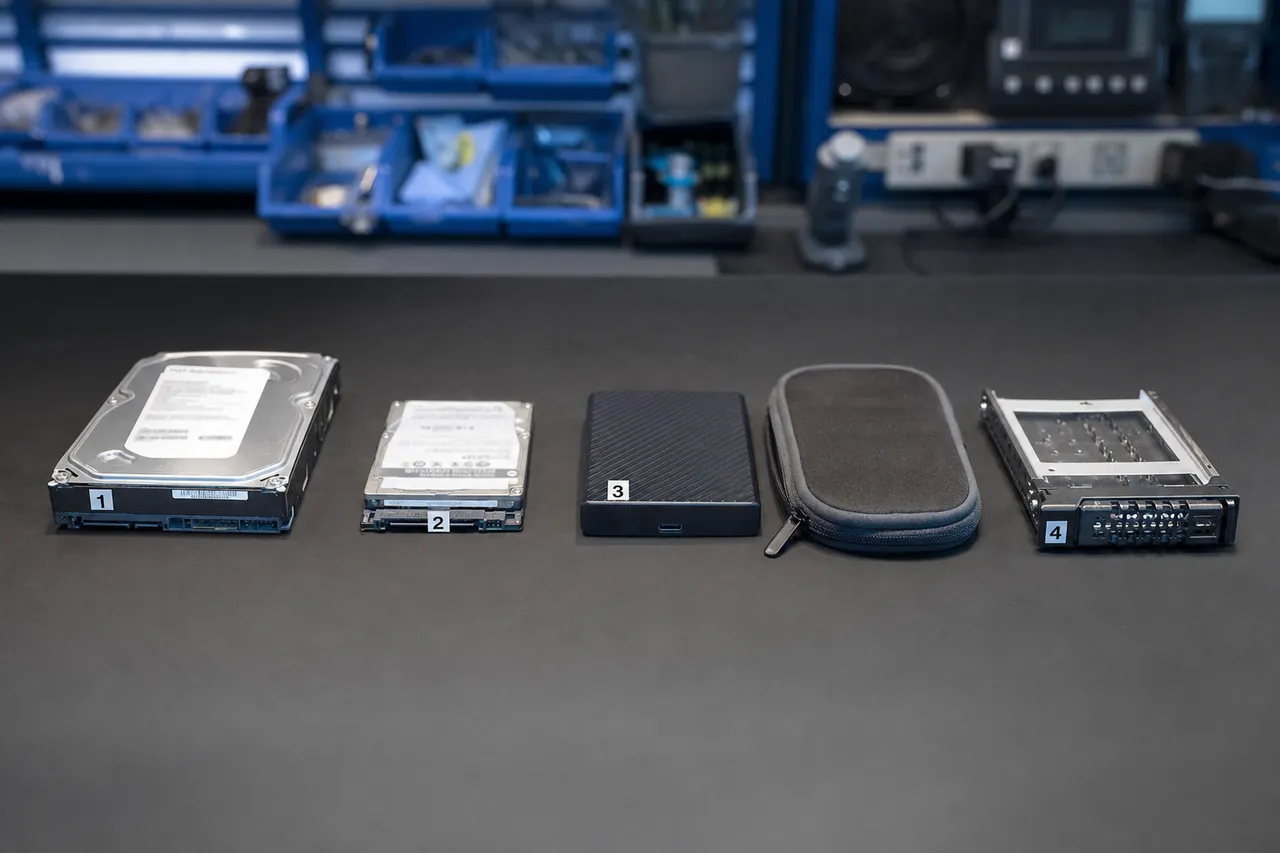
At the core of every Seagate hard drive is a set of precision-engineered components that work together to store and retrieve data. The platters are aluminum or glass disks coated with a thin magnetic layer where data is actually stored. Seagate has been a pioneer in areal density, consistently pushing the boundaries of how much data can fit on each square inch of platter surface. Their latest drives use shingled magnetic recording (SMR) and conventional magnetic recording (CMR) technologies, each with distinct implications for data recovery.
Seagate Firmware Architecture
One of the most important aspects of Seagate data recovery is understanding their firmware structure. Seagate drives store firmware in a reserved area of the platters called the System Area (SA). This firmware controls every aspect of drive operation, from motor speed calibration to head positioning parameters to defect management tables. When firmware becomes corrupted, the drive may exhibit a wide range of symptoms including failure to spin up, incorrect capacity reporting, or getting stuck in a busy state where it accepts commands but never responds.
MDrepairs maintains comprehensive firmware databases for every Seagate drive family. Our technicians can access the System Area directly, read individual firmware modules, identify corruption, and repair or rebuild damaged modules. This capability is essential for recovering data from Seagate drives with firmware-related failures, which account for approximately 20% of all Seagate cases we handle.
Seagate Product Families
Seagate organizes their products into distinct families, each designed for specific use cases:
- Barracuda: Consumer desktop and laptop drives. The most popular Seagate line, featuring 7200 RPM performance in capacities from 500GB to 8TB. These are the drives most commonly found in personal computers and the most frequent Seagate drives we recover at MDrepairs.
- IronWolf: NAS-optimized drives with rotational vibration sensors and AgileArray technology. Designed for always-on, multi-bay NAS environments. Available in standard and Pro variants with capacities up to 20TB.
- Exos: Enterprise-class drives built for data centers, servers, and high-performance computing. Features include sustained transfer rates exceeding 260 MB/s and workload ratings of 550TB per year.
- FireCuda: Gaming-oriented drives including SSHD hybrid drives and NVMe SSDs. The FireCuda line bridges the gap between traditional hard drives and solid-state storage.
- Backup Plus / One Touch: Portable and desktop external drives for consumer backup. These drives use standard Seagate internal mechanisms housed in USB-powered enclosures.
- SkyHawk: Surveillance-optimized drives designed for DVR and NVR systems with support for 64 simultaneous HD camera streams.
Each product family uses different head designs, platter counts, firmware versions, and controller chips. MDrepairs maintains donor drives and documentation for every Seagate family, ensuring we can source compatible parts and apply the correct recovery techniques for any model that comes through our lab.
Barracuda
Seagate Barracuda Recovery
The Seagate Barracuda is the most widely used consumer hard drive in the world, and it is also the most common Seagate drive we recover at MDrepairs. Barracuda drives are found in desktop computers, gaming rigs, DVRs, and external enclosures. They offer reliable performance for everyday computing, but like all mechanical storage devices, they are subject to wear, failure, and data loss.
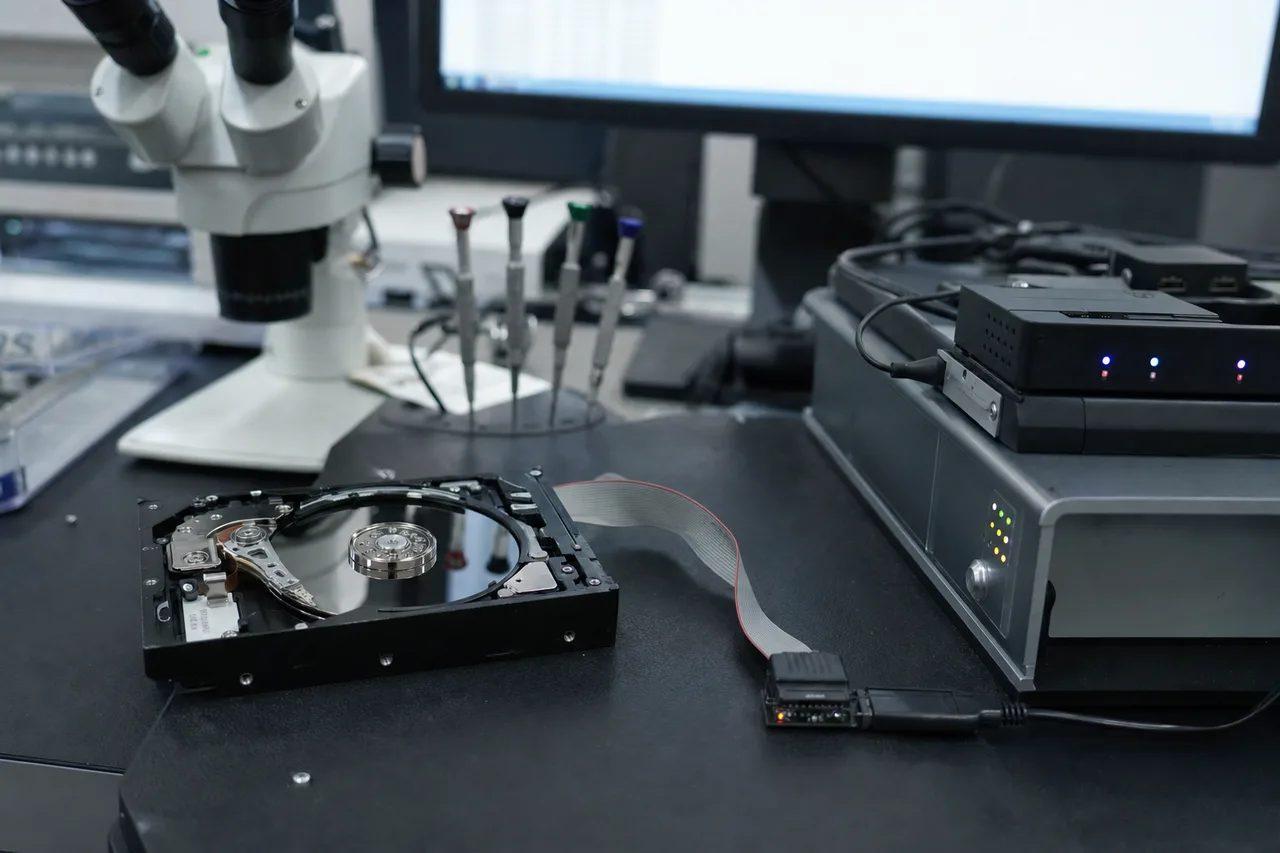
Barracuda drives have evolved significantly over the years. The older Barracuda 7200.11 and 7200.12 series are well known for firmware issues that can cause the drive to become unresponsive or report zero capacity. These firmware bugs are so common that MDrepairs has developed streamlined repair procedures specifically for these models. We can typically resolve 7200.11 and 7200.12 firmware issues within hours and restore full access to the user's data without any physical intervention.
Common Barracuda Failure Modes
Modern Barracuda drives, including the ST1000DM010, ST2000DM008, and ST4000DM004, use a different firmware platform but are still susceptible to several common failure modes:
- Head failure: The most common physical failure in Barracuda drives. Symptoms include clicking, ticking, or beeping sounds at startup. MDrepairs replaces the head stack assembly using donor heads from the same firmware revision and manufacturing batch whenever possible.
- Bad sector accumulation: Barracuda drives used heavily over several years develop growing numbers of bad sectors. The drive becomes progressively slower until files become inaccessible. Our imaging tools can extract data from drives with extensive bad sector damage that consumer software cannot handle.
- PCB failure: Power surges and faulty adapters can damage the Barracuda's circuit board. MDrepairs transfers the unique ROM chip from the original PCB to a compatible donor board to restore operation.
- Firmware corruption: Translator, defect list, or SMART module corruption can prevent the drive from initializing. Our firmware repair tools can read, repair, and rewrite individual Seagate firmware modules.
Barracuda SMR vs CMR Considerations
Newer Barracuda models have transitioned to Shingled Magnetic Recording (SMR), which overlaps data tracks like shingles on a roof to increase capacity. While SMR drives offer excellent storage density at lower price points, they present unique challenges for data recovery. The overlapping track layout means that head positioning must be even more precise during recovery imaging, and damaged sectors can affect adjacent tracks in ways that conventional magnetic recording drives do not experience.
MDrepairs has extensive experience with both SMR and CMR Barracuda drives. Our imaging tools are configured to handle the specific read parameters required by SMR media, and our technicians understand the sector translation tables that map logical addresses to physical locations on SMR platters. This expertise is critical for achieving maximum data recovery from modern Barracuda drives.
If your Seagate Barracuda drive is experiencing any symptoms of failure, including unusual sounds, slow performance, disappearing files, or complete unresponsiveness, contact MDrepairs immediately at 732-933-7717. The sooner you stop using a failing drive, the better your chances of a complete recovery.
IronWolf NAS
Seagate IronWolf NAS Recovery
Seagate IronWolf drives are purpose-built for Network Attached Storage systems, and they are among the most popular NAS drives on the market. MDrepairs regularly recovers data from IronWolf drives used in Synology, QNAP, Asustor, TerraMaster, and other NAS platforms. NAS recovery adds layers of complexity beyond single-drive cases because the data is often spread across multiple drives in a RAID configuration, and the NAS file system (typically ext4 or Btrfs) may not be directly readable on a standard computer.
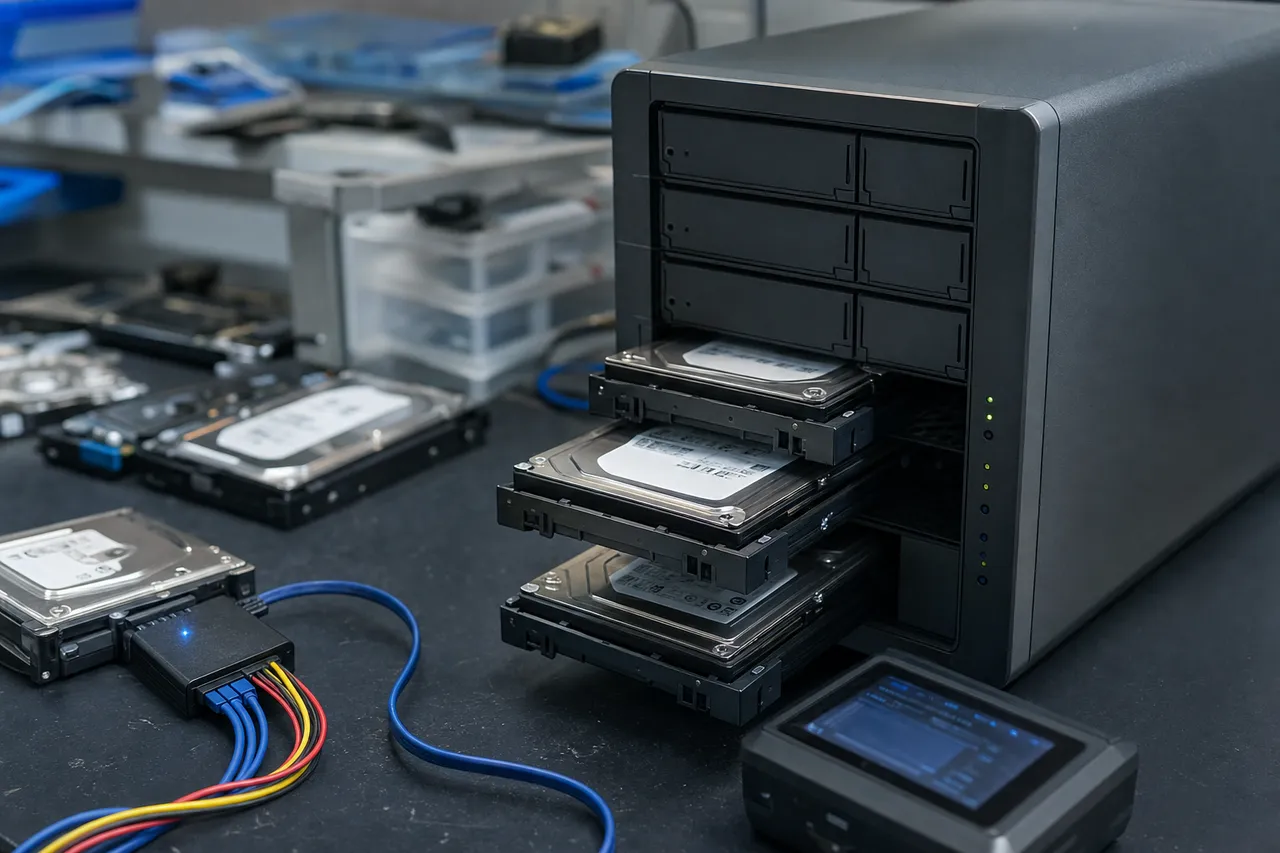
IronWolf drives feature several technologies designed for NAS environments, including AgileArray firmware optimization, rotational vibration sensors for multi-bay stability, and IronWolf Health Management (IHM) for proactive monitoring. Despite these reliability features, IronWolf drives are still mechanical devices that can and do fail, especially under the continuous 24/7 workloads that NAS systems demand.
IronWolf RAID Recovery at MDrepairs
Most IronWolf drives are deployed in RAID arrays, which means data recovery requires not just repairing the failed drive but also reconstructing the RAID configuration. MDrepairs handles all RAID levels including RAID 0, RAID 1, RAID 5, RAID 6, RAID 10, and Synology Hybrid RAID (SHR). Our RAID reconstruction process involves:
- Drive assessment: Every drive in the array is individually evaluated to determine its health status and identify any failed or degraded drives.
- Drive imaging: Each accessible drive is imaged sector-by-sector using specialized hardware that can handle slow reads, bad sectors, and intermittent failures without causing further damage.
- RAID parameter detection: We analyze the drive images to determine the RAID level, stripe size, drive order, and parity rotation used by the NAS controller.
- Array reconstruction: Using the detected parameters, we virtually reconstruct the RAID array and extract the file system data.
- File system recovery: The ext4 or Btrfs file system is parsed and all recoverable files and folders are extracted with their original directory structure intact.
IronWolf Pro vs Standard IronWolf
Seagate offers both standard IronWolf and IronWolf Pro drives. The Pro models feature higher workload ratings (300TB/year vs 180TB/year), longer warranties (5 years vs 3 years), and include a Rescue Data Recovery Plan. However, the hardware failure modes are similar between both lines. MDrepairs recovers data from both IronWolf and IronWolf Pro drives using the same professional techniques and equipment.
One important note: if your IronWolf Pro drive is still under warranty and covered by Seagate's Rescue plan, you have the option of sending it to Seagate's recovery partner. However, many customers choose MDrepairs instead because of our faster turnaround times, direct communication with technicians, and transparent process. We post recovery videos on YouTube showing exactly how we handle NAS and RAID cases, giving you confidence in our capabilities before you ship your drives.
Whether you have a single IronWolf drive with bad sectors or a multi-drive NAS array that has completely failed, MDrepairs has the tools, parts, and expertise to recover your data. Call us at 732-933-7717 for a free NAS recovery consultation.
Exos Enterprise
Seagate Exos Enterprise Recovery
Seagate Exos drives represent the pinnacle of hard drive engineering, designed for data centers, enterprise servers, and high-performance computing environments. These drives handle massive workloads measured in hundreds of terabytes per year and are built to operate continuously in demanding conditions. When an Exos drive fails, the data at stake is often mission-critical, and the cost of downtime can be enormous. MDrepairs provides enterprise-grade recovery services for all Seagate Exos models including the X16, X18, X20, 7E10, and 2X14 series.
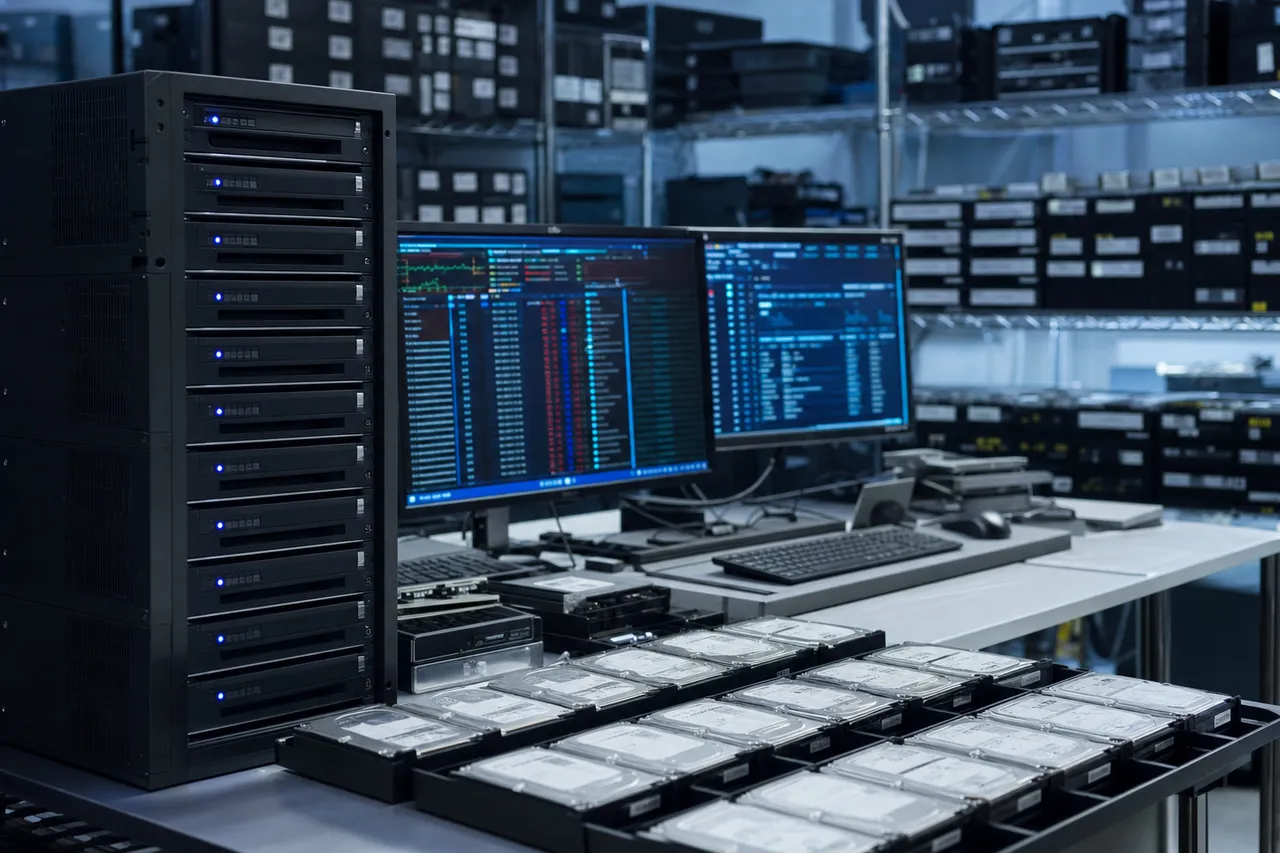
Exos Drive Architecture
Exos drives differ from consumer Seagate drives in several important ways that affect the recovery process:
- Higher platter counts: Exos drives often contain 8 or more platters to achieve capacities up to 20TB+. More platters means more heads, more complexity in head replacement, and greater precision required during platter transplant procedures.
- Enterprise firmware: Exos firmware includes features like PowerChoice idle power management, Super Parity error correction, and advanced defect management. These firmware systems are more complex than consumer firmware and require specialized tools to access and repair.
- Helium-sealed enclosures: Many high-capacity Exos drives use helium filling instead of air to reduce drag and allow tighter platter spacing. Helium drives cannot be opened in a standard clean room environment because the helium will escape and the drive will not function. MDrepairs has the specialized equipment and procedures required to work with helium-sealed Exos drives.
- SAS and SATA interfaces: Exos drives are available with both SAS (Serial Attached SCSI) and SATA interfaces. SAS drives require different imaging hardware and firmware access tools than SATA drives, and MDrepairs supports both interface types.
Enterprise RAID and Storage Array Recovery
Exos drives are almost always deployed in enterprise storage arrays and RAID configurations. MDrepairs has recovered data from Exos drives used in Dell EMC, HPE, NetApp, Lenovo, and Supermicro server environments. Our enterprise recovery service includes:
- Multi-drive RAID reconstruction for RAID 5, 6, 10, 50, and 60 configurations
- ZFS, XFS, and enterprise file system recovery
- Virtual machine recovery (VMware VMFS, Hyper-V)
- Database recovery (SQL Server, MySQL, PostgreSQL, Oracle)
- SAN and DAS array reconstruction
Enterprise customers can take advantage of our Emergency turnaround option for same-day start on critical cases. MDrepairs assigns a dedicated technician to emergency enterprise cases who works exclusively on your recovery until it is complete. Contact us at 732-933-7717 to discuss your enterprise Seagate Exos recovery needs. We offer NDA agreements and can work within your organization's compliance requirements.
FireCuda Gaming
Seagate FireCuda Gaming Recovery
The Seagate FireCuda line is designed for gamers and content creators who need a blend of high capacity and fast performance. The FireCuda product family includes SSHD (Solid State Hybrid Drive) models that combine a traditional hard drive with a small flash cache, as well as dedicated NVMe SSDs like the FireCuda 520 and 530 that deliver speeds exceeding 7,000 MB/s. MDrepairs recovers data from all FireCuda products, handling both the mechanical and solid-state components of these unique drives.
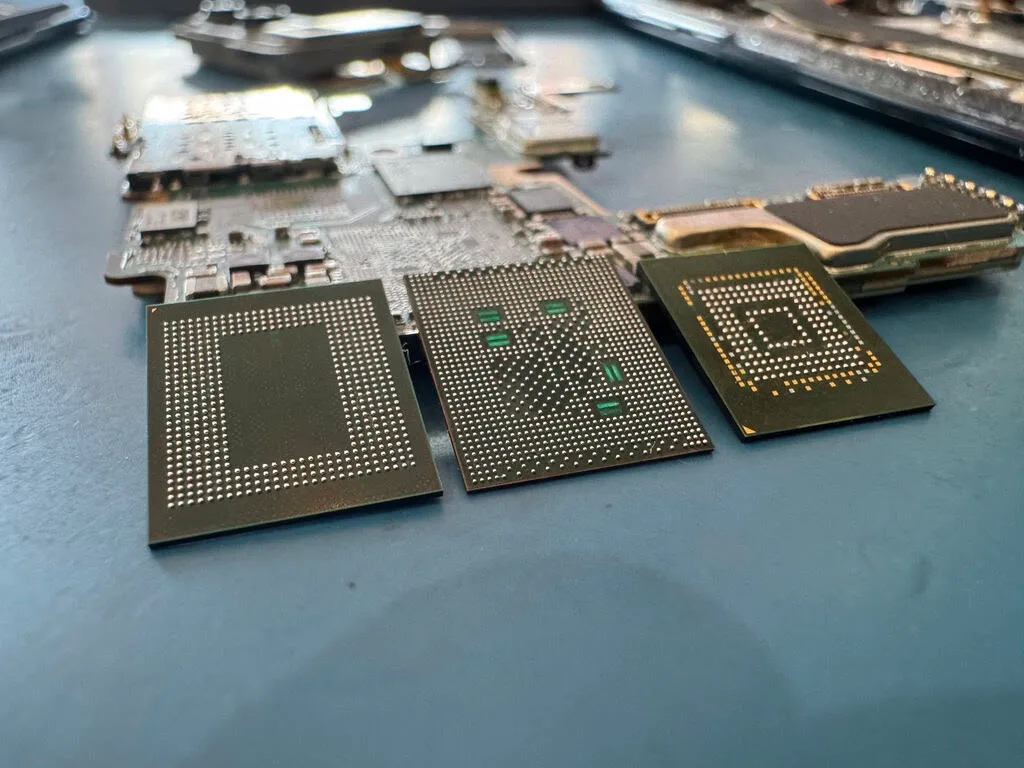
FireCuda SSHD Recovery
The FireCuda SSHD combines a traditional spinning hard drive with 8GB of NAND flash cache. The flash cache stores frequently accessed data for faster load times, while the hard drive provides bulk storage capacity. When a FireCuda SSHD fails, the recovery process must account for both storage layers:
- HDD component failures: Head crashes, motor seizure, bad sectors, and firmware corruption affect the hard drive portion just like any other Seagate mechanical drive. MDrepairs uses standard hard drive recovery techniques including head replacement and firmware repair for these failures.
- Flash cache corruption: If the NAND flash cache becomes corrupted, it can prevent the drive from initializing even if the hard drive platters are healthy. Our technicians can bypass or repair the flash cache controller to access the data stored on the platters.
- Hybrid firmware issues: The SSHD firmware manages data placement between the flash cache and the platters. Corruption of this firmware can cause data to become inaccessible or appear corrupted. MDrepairs has the tools to repair SSHD-specific firmware modules and restore proper data mapping.
FireCuda NVMe SSD Recovery
The FireCuda 520 and 530 NVMe SSDs use a completely different storage technology than traditional hard drives. Data is stored on NAND flash memory chips with no moving parts. While this makes them immune to mechanical failures like head crashes, they are susceptible to their own set of failure modes:
- Controller failure: The Phison E18 controller used in FireCuda 530 drives can fail due to power surges, firmware bugs, or manufacturing defects. When the controller fails, the NAND chips may still contain your data, but accessing it requires specialized chip-off recovery techniques.
- NAND wear: Flash memory cells have a limited number of write cycles. Heavy use, particularly in gaming and content creation workflows, can accelerate NAND wear and cause sectors to become unreadable.
- Firmware failure: NVMe firmware corruption can cause the drive to disappear from the system entirely or enter a read-only state. MDrepairs can reflash NVMe firmware or bypass the controller entirely depending on the failure scenario.
Whether your FireCuda SSHD is clicking or your FireCuda NVMe SSD has vanished from your system, MDrepairs has the expertise to recover your game saves, creative projects, and personal files. Call 732-933-7717 or submit a free quote to get started.
Firmware / System Area
Seagate Firmware Issues and Recovery
Firmware issues are one of the most common reasons Seagate drives fail, and they require specialized knowledge and tools to resolve. Unlike a simple hardware replacement, firmware repair demands an intimate understanding of how Seagate structures and stores the microcode that controls every aspect of drive operation. MDrepairs has been repairing Seagate firmware since the notorious 7200.11 firmware bug that affected millions of drives, and we continue to maintain cutting-edge expertise on every current Seagate firmware platform.
What is Drive Firmware?
Hard drive firmware is the low-level software that runs on the drive's processor. It controls motor speed, head positioning, read/write operations, error handling, defect management, and communication with the host computer. Seagate stores firmware in two locations: a ROM chip on the PCB that contains the initial boot code, and the System Area (SA) on the platters that contains the full set of firmware modules. When the drive powers on, it first reads the ROM chip, then loads the remaining firmware from the System Area.
Common Seagate Firmware Problems
MDrepairs encounters several categories of Seagate firmware issues:
- Translator corruption: The translator module maps logical block addresses (what the computer sees) to physical locations on the platters. When this module is corrupted, the drive may appear to work but return incorrect data or report the wrong capacity. MDrepairs can rebuild translator tables from redundant copies stored in the System Area.
- Defect list corruption: Seagate drives maintain lists of defective sectors that should be skipped during read/write operations. Corruption of these lists can cause the drive to repeatedly attempt to read bad sectors, resulting in extremely slow performance or complete unresponsiveness. Our tools can repair or rebuild defect lists to restore normal drive operation.
- SMART module damage: The Self-Monitoring, Analysis, and Reporting Technology module tracks drive health statistics. Corruption can cause the drive to report false errors or fail to initialize. MDrepairs can repair SMART modules without affecting the user data on the platters.
- Adaptive parameter corruption: Each Seagate drive stores unique calibration data that fine-tunes head positioning, read/write voltages, and timing parameters for the specific platters and heads in that individual drive. These adaptive parameters cannot be copied from a donor drive. MDrepairs can recalibrate or repair adaptive parameters to restore proper drive function.
- Busy state (BSY bug): This infamous Seagate bug primarily affects the 7200.11, DiamondMax 22, and related models. The drive enters a busy state where it accepts commands but never completes them. MDrepairs resolves BSY bugs through terminal access to the drive's diagnostic port, clearing the SMART log that triggers the lockup.
Why Consumer Software Cannot Fix Firmware Issues
No consumer data recovery software can fix firmware problems because firmware operates below the level of the operating system and file system. When firmware is corrupted, the drive itself cannot properly read the platters, so there is nothing for software running on the computer to work with. Firmware repair requires direct communication with the drive's processor through proprietary protocols and specialized hardware that MDrepairs maintains in our Lincroft, NJ lab. If your Seagate drive has a firmware issue, do not waste time with software solutions. Contact MDrepairs at 732-933-7717 for a professional diagnosis and firmware repair.
Bad Sectors
Seagate Bad Sector Recovery
Bad sectors are areas on a hard drive's platters that can no longer reliably store or retrieve data. Every Seagate drive ships from the factory with some defective sectors that are mapped out during manufacturing, but over time, additional bad sectors develop due to magnetic degradation, head wear, environmental factors, and simple aging. When bad sectors accumulate on a Seagate drive, the symptoms typically progress from minor slowdowns to complete data inaccessibility. MDrepairs specializes in extracting data from Seagate drives with extensive bad sector damage using professional imaging hardware and techniques that go far beyond what consumer tools can accomplish.
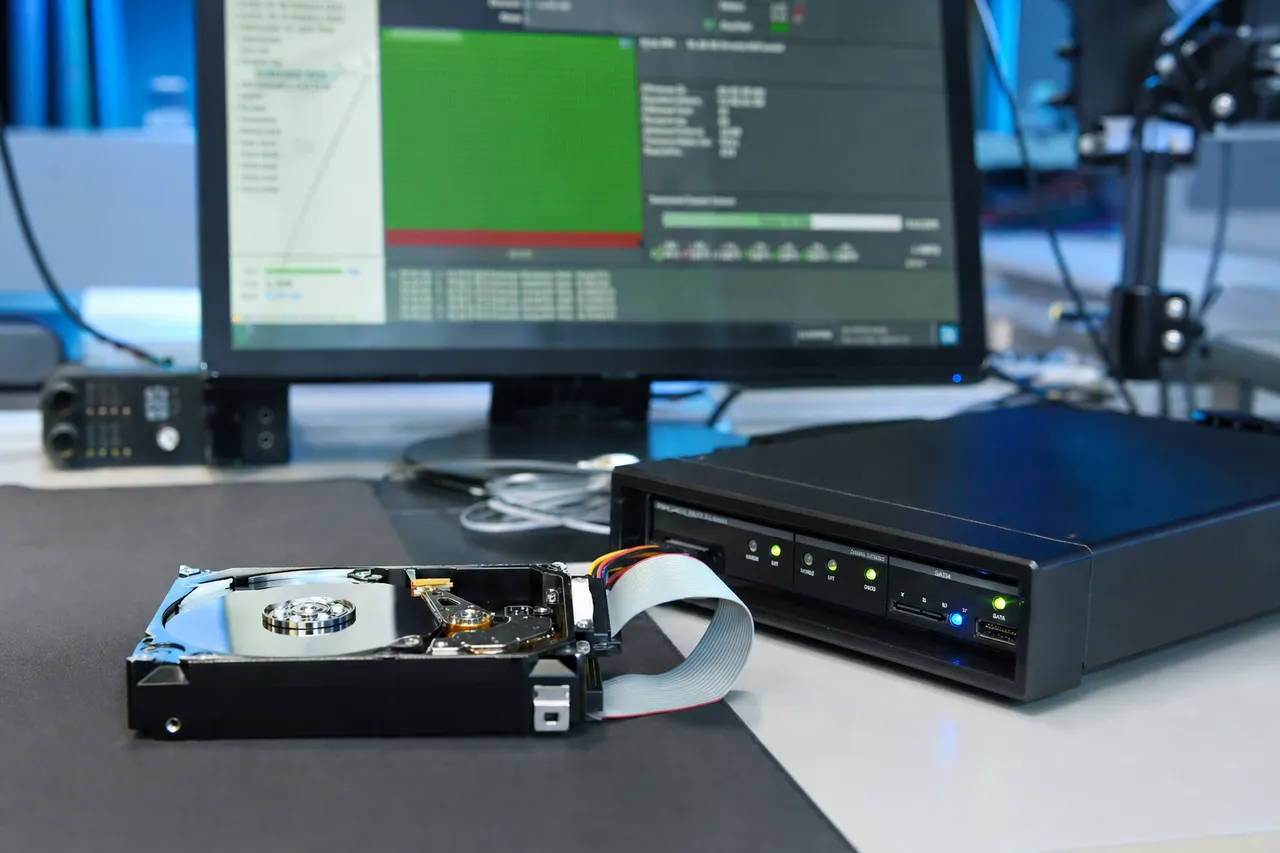
How Bad Sectors Develop on Seagate Drives
Understanding how bad sectors form helps explain why professional recovery tools succeed where consumer software fails:
- Magnetic degradation: The magnetic coating on Seagate platters gradually weakens over time, making it harder for the heads to read the data. This process accelerates with heat exposure, vibration, and heavy use. Drives that run continuously, like those in NAS systems or servers, develop bad sectors faster than drives used intermittently.
- Head wear: As the read/write heads age, their ability to accurately detect the magnetic signals on the platter surface diminishes. This can cause sectors that are physically intact to appear bad because the heads cannot read them reliably. MDrepairs addresses this by adjusting read parameters, using multiple read passes, and in some cases replacing worn heads with fresher donor heads.
- Platter contamination: Microscopic particles inside the drive enclosure can settle on the platter surface and interfere with data reads. While modern Seagate drives have sophisticated filtration systems, contamination can still occur, especially in older drives or drives that have been opened by unqualified technicians.
MDrepairs Bad Sector Imaging Process
When a Seagate drive arrives at our lab with bad sector symptoms, we follow a structured imaging process designed to maximize data recovery:
- Initial assessment: We connect the drive to our imaging hardware and perform a quick scan to map the distribution and density of bad sectors across the platter surfaces. This map guides our imaging strategy.
- Good sector pass: We first image all sectors that read cleanly on the first attempt. This captures the majority of the data quickly without stressing the drive's failing components.
- Retry passes: We then return to the bad sectors and attempt multiple reads with adjusted parameters including head offset, read voltage, and timing. Many sectors that fail on the first read succeed on subsequent attempts with optimized settings.
- Head-specific reads: If specific heads are performing poorly, we can disable them and image only the platters accessible by the healthy heads, then later attempt the remaining platters with adjusted parameters or donor heads.
- Reverse imaging: For drives with progressive bad sector regions, we sometimes image from the end of the drive backward, approaching the damaged area from the opposite direction to capture sectors at the boundary that might be missed in a forward pass.
This multi-pass approach allows MDrepairs to recover data from Seagate drives that consumer software like Recuva, TestDisk, or R-Studio would simply freeze on or skip entirely. If your Seagate drive is running slowly, freezing your computer, or showing S.M.A.R.T. warnings about reallocated sectors, contact MDrepairs at 732-933-7717 before the problem gets worse.
Head Crash
Seagate Head Crash Recovery
A head crash is one of the most serious failures a Seagate hard drive can experience. It occurs when the read/write heads, which normally float just nanometers above the spinning platter surface on a cushion of air, make direct physical contact with the platter. This contact scrapes away the magnetic coating that stores your data, causing permanent damage to the affected areas. Head crashes are a leading cause of catastrophic data loss in Seagate drives, and recovery requires professional clean room facilities, specialized tools, and extensive experience. MDrepairs has recovered data from thousands of Seagate drives with head crash damage, and our success rate on these challenging cases exceeds 85%.
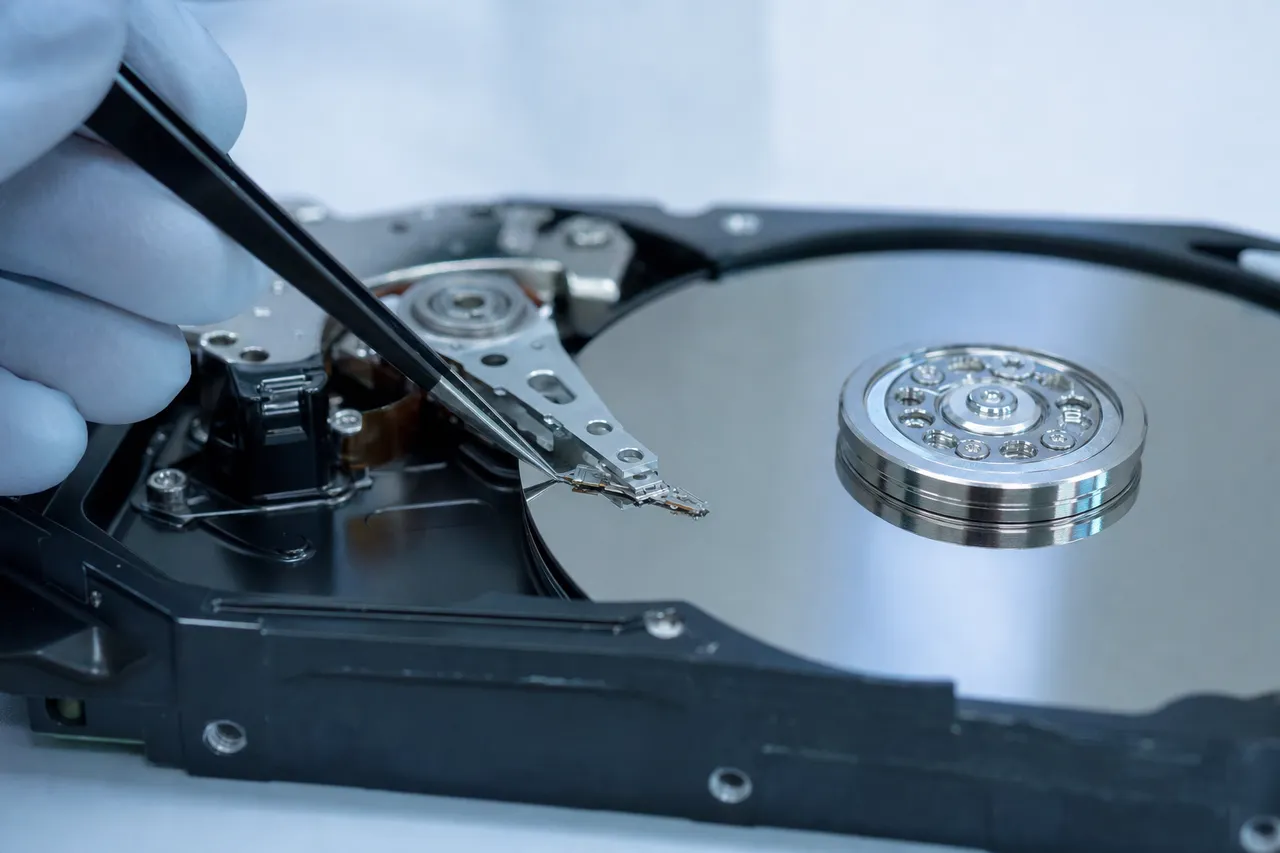
What Causes Head Crashes in Seagate Drives
Several factors can cause a head crash in a Seagate drive:
- Physical impact: Dropping a laptop or external drive while it is running is the most common cause of head crashes. The shock dislodges the heads from their normal flying position and forces them into contact with the platters.
- Head degradation: Over time, the head slider that maintains the air bearing can wear down, reducing the flying height until the head eventually contacts the platter. This type of head crash tends to affect only a small area of the platter initially, but the debris generated can quickly damage other heads and platter surfaces.
- Power failure during operation: While modern Seagate drives have head parking mechanisms that move the heads to a safe landing zone during power loss, these mechanisms can fail or react too slowly during a sudden power interruption, causing the heads to land on the data area of the platters.
- Manufacturing defects: In rare cases, defects in the head or slider assembly can cause premature head crashes even in relatively new drives. These defects may not manifest until the drive has been in use for several months.
MDrepairs Head Crash Recovery Process
Recovering data from a Seagate drive with head crash damage requires a methodical approach performed entirely in a clean room environment:
- Visual inspection: We open the drive in our clean room and examine the platters under magnification to assess the extent and location of the head crash damage. We photograph the platters for documentation and to plan our recovery strategy.
- Debris removal: Head crashes generate metallic and magnetic debris that settles on the platter surface. This debris must be carefully removed before new heads can be installed, as any particles left on the surface will immediately damage the replacement heads. MDrepairs uses precision cleaning tools and techniques to remove debris without causing additional damage to the platter coating.
- Head replacement: We install a new head stack assembly from a compatible Seagate donor drive. Donor selection is critical, as the heads must match the original drive's firmware revision, head number, and manufacturing generation. MDrepairs maintains an extensive donor drive inventory organized by model and firmware version.
- Imaging: With new heads installed, we begin imaging the drive using our specialized hardware. Damaged areas of the platters are marked and skipped during the initial pass, then revisited with adjusted read parameters to extract as much data as possible from the compromised regions.
If your Seagate drive has suffered a head crash, the most important thing you can do is stop using it immediately. Every second the drive runs with crashed heads causes additional platter damage. Do not attempt to run recovery software, do not open the drive yourself, and do not shake or tap the drive. Contact MDrepairs at 732-933-7717 for immediate assistance.
Clean Room
Our Clean Room Process
Data recovery from physically damaged Seagate drives requires an environment free from airborne contaminants that could further damage the delicate platter surfaces and head assemblies. MDrepairs operates a professional clean room at our Lincroft, NJ facility specifically designed for hard drive recovery work. Our clean room provides the controlled environment necessary to safely open Seagate drives, perform head replacements, execute platter transplants, and carry out other procedures that expose the internal components to the surrounding air.
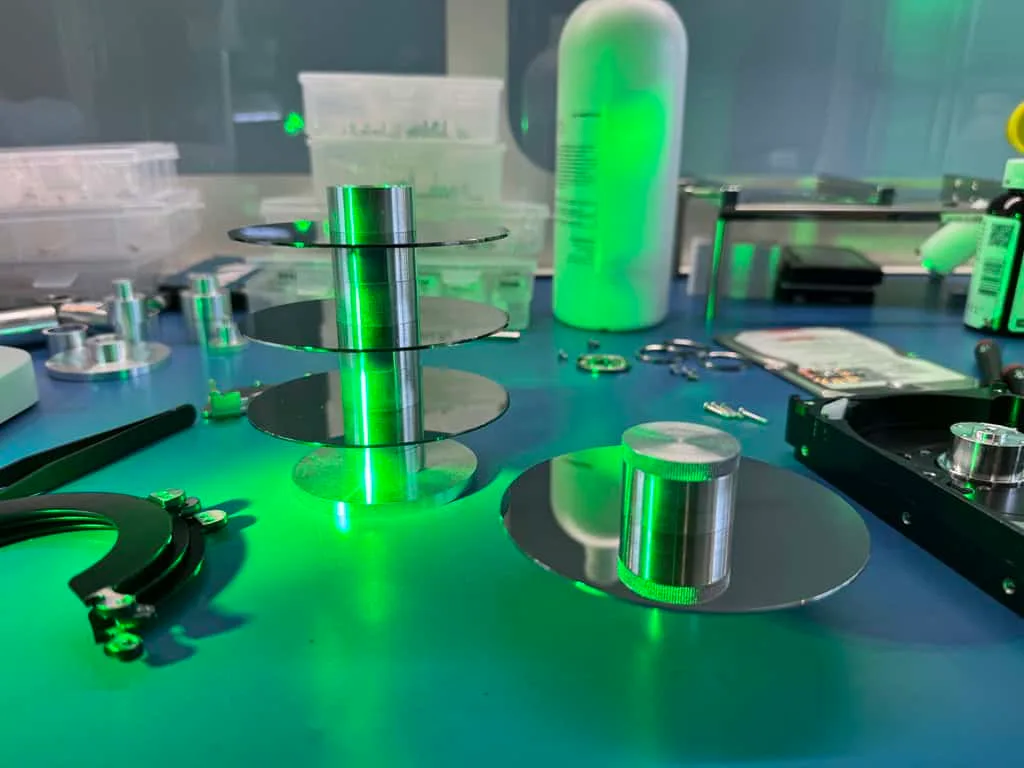
Why Clean Room Conditions are Essential
The read/write heads in a Seagate hard drive float approximately 3 to 5 nanometers above the platter surface during normal operation. To put that in perspective, a human fingerprint is about 600 nanometers thick, and a smoke particle is approximately 250 nanometers in diameter. If even a tiny particle lands on the platter surface between the head and the magnetic coating, it can cause immediate head crash damage and destroy the data stored in that area.
This is why opening a hard drive outside of a clean room is extremely risky. Ordinary room air contains thousands of particles per cubic foot that are large enough to cause head crashes. Dust, skin cells, fabric fibers, and other airborne contaminants will settle on the exposed platters within seconds, potentially making a recoverable situation into a permanent data loss. MDrepairs never allows drive internals to be exposed outside of our clean room environment.
MDrepairs Clean Room Capabilities
Our clean room is equipped with the following capabilities for Seagate drive recovery:
- HEPA filtration: Multi-stage air filtration continuously removes particles from the clean room environment, maintaining particle counts well within the standards required for safe hard drive work.
- Positive pressure: The clean room maintains positive air pressure relative to the surrounding lab, preventing contaminated air from entering when the door is opened.
- Anti-static measures: Static discharge can damage sensitive electronics and corrupt data on the drive's platters. Our clean room includes anti-static flooring, grounding straps, and ionized air circulation to eliminate static buildup.
- Precision tools: Head replacement and platter transplant procedures require specialized tools designed for specific Seagate drive models. MDrepairs maintains a comprehensive toolkit including head combs, platter extraction tools, and torque-calibrated drivers for every Seagate drive family.
- Donor drive inventory: Our clean room houses hundreds of Seagate donor drives organized by model number, firmware revision, and manufacturing date. Having compatible donors on hand means we can begin physical recovery procedures immediately without waiting for parts to arrive.
- Microscopy station: High-magnification microscopy allows our technicians to inspect platter surfaces for damage, examine head sliders for wear, and verify the quality of donor components before installation.
Procedures Performed in Our Clean Room
The following Seagate recovery procedures are performed exclusively in our clean room:
- Head stack assembly replacement
- Platter transplant to donor chassis
- Spindle motor replacement
- Platter surface cleaning and debris removal
- Head alignment verification
- Internal component inspection and photography
Every Seagate drive that requires clean room work is handled by our trained technicians using documented procedures developed through years of experience with Seagate hardware. If you are searching for a data recovery provider for your Seagate drive, ask about their clean room. A legitimate clean room facility is a non-negotiable requirement for any physical data recovery case. MDrepairs welcomes questions about our clean room capabilities. Call us at 732-933-7717 or visit our YouTube channel to see our clean room in action.
Data Privacy & Chain of Custody
Your data is handled under strict chain-of-custody procedures from intake to secure destruction.
-
Intake Logging
Every drive is photographed and logged with a unique case number, serial, model, and condition on arrival.
-
Restricted Access
Only your assigned technician handles your drive. No shared workstations, no exceptions.
-
No Browsing Data
We never open or view your files. Integrity is verified through checksums and file structure only.
-
Secure Delivery
Data is transferred to a new drive and shipped back to you. All copies are purged after confirmation.
-
Drive Return
Your new drive is returned with your recovered data.
What You Receive After Recovery
-
Your Recovered Data
Your files are delivered on a new external hard drive shipped directly to you, or we send you a password-protected download link for secure retrieval. We include a file listing so you can verify everything before we purge our copies.
-
Your Original Drive
After recovery is complete, you choose what happens to your original drive - we can return it to you, hold it for a specified period, or securely destroy it. All copies of your data on our systems are purged after you confirm receipt.
-
Ongoing Support
Need help accessing your recovered files, transferring data to a new device, or setting up backups to prevent future data loss? Our team is available after delivery to help you get back on track.
Secure Mail-In Hard Drive Recovery from Anywhere
Free 2nd-Day-Air prepaid labels to all 50 states - the same in-house cleanroom expertise as our in-person service, with real-time status updates. Your drive is typically in our Lincroft, New Jersey lab within 2 - 3 business days, and return shipping is free too.
- Free prepaid label, both ways
- Fully insured, 2nd-Day-Air UPS
- Real-time status updates
Free 2nd-Day-Air UPS shipping covers the USA, excluding islands.
How Mail-In Works
- 1
Contact Us
Request a free quote and we’ll send you a prepaid, insured shipping label - printed right on the mail-in form.
- 2
Ship Your Drive
Pack your drive securely and drop it at any UPS location. Shipping is free both ways - free 2nd-Day-Air UPS, fully insured.
- 3
We Recover Your Data
Your drive is diagnosed and recovered by our lead technician Joseph Montanti using PC-3000 and DeepSpar tools in our professional clean-bench environment.
- 4
Data Returned
Your recovered data ships back on a new drive - free 2nd-Day-Air UPS, insured, and verified before it leaves our lab.
Hard Drive Data Recovery by Manufacturer
We maintain donor drive inventory and brand-specific tooling for every major hard drive manufacturer. Each brand has unique firmware architectures, head designs, and failure patterns that require specialized knowledge.
- Most common - ~40% of drives
Seagate Data Recovery
The most common brand we recover - roughly 40% of all drives in our lab. We service Barracuda, IronWolf, Backup Plus, Expansion, One Touch, FireCuda, Exos, and SkyHawk. Seagate's F3 firmware architecture is prone to busy states, failed initialization, and capacity misreporting when heads degrade. The Rosewood platform frequently presents LED error codes and terminal lock states requiring PC-3000 serial terminal access to unlock.
Seagate Recovery Details - Second most common
Western Digital Data Recovery
The second most common brand in our lab. We recover My Passport, My Book, Elements, easystore, WD Blue, Black, Red, Purple, Gold, and Ultrastar drives. Modern WD drives use Marvell controllers with ROM chips containing unique calibration data - PCB swaps without ROM transfer will fail. WD's SMR drives are especially vulnerable to translator corruption from power loss.
WD Recovery Details - Canvio & enterprise
Toshiba Data Recovery
Covers the Canvio Advance, Canvio Slim, Canvio Ready, P300, X300, N300, and MG enterprise series. Common failures include head degradation on Canvio 1TB-2TB models and firmware hang states where the drive spins up but never completes initialization. Toshiba's firmware architecture requires brand-specific PC-3000 modules for service area access.
Toshiba Recovery Details - Deskstar, Travelstar, Ultrastar
Hitachi / HGST Data Recovery
Deskstar, Travelstar, Touro, and Ultrastar drives are among the most reliable ever made but still fail from gradual head degradation, preamp failure, and motor bearing wear. HGST firmware requires its own diagnostic approach separate from WD despite the 2012 acquisition. Donor head matching requirements differ from Western Digital drives.
Hitachi Recovery Details - Spinpoint F3, M8 / M9T
Samsung Data Recovery
Samsung exited the HDD market in 2011, but Spinpoint F3 desktop drives and Spinpoint M8/M9T portable drives remain widely in use. Common failures are head degradation, motor seizure, and PCB failure. Samsung firmware requires Samsung-specific PC-3000 modules and Samsung-only donor heads - Seagate parts are not compatible.
- Seagate subsidiaries
Maxtor & LaCie Data Recovery
Both brands are now Seagate subsidiaries - modern LaCie Rugged, d2, and 2big drives contain Seagate mechanisms and use F3 firmware tools for recovery. Legacy Maxtor drives (DiamondMax, OneTouch) require Maxtor-specific donors. LaCie Rugged drives are popular with photographers and videographers but share the same failure patterns as any Seagate drive.
Talk to the engineer working on your Seagate drive - not a call center.
Choosing a Seagate Data Recovery Provider
How to Choose the Right Recovery Provider for Your Seagate Drive
The data recovery industry has a reputation problem. Unqualified operators, bait-and-switch pricing schemes, and companies that cause additional damage to drives are unfortunately common. When your Seagate drive contains irreplaceable data, choosing the right recovery provider is one of the most important decisions you will make. MDrepairs believes in complete transparency about our process, pricing, and capabilities, and we encourage potential customers to ask tough questions before trusting anyone with their data.
Red Flags to Watch For
Be cautious of any data recovery company that exhibits these warning signs:
-
No clean room
Any company claiming to recover physically damaged Seagate drives without a clean room is either lying about having one or working on drives in uncontrolled conditions. Both scenarios put your data at serious risk. Ask for photos or video of their clean room before sending your drive.
-
Unrealistically low prices
Data recovery from physically damaged drives requires expensive equipment, skilled technicians, and donor parts. Companies advertising $99 or $199 flat-rate recovery for physical failures are almost certainly using bait-and-switch tactics where the final bill will be much higher, or they lack the capability to handle your case properly.
-
No diagnostic before quoting
A reputable recovery company will never give you a binding quote before examining your Seagate drive. The type and severity of failure can only be accurately determined through hands-on diagnostic testing. Companies that quote sight-unseen are guessing, and that guess usually changes after they have your drive.
-
No success-based pricing
If a company requires full payment before attempting recovery, with no refund if they fail, that is a major red flag. MDrepairs operates on a no data, no charge policy. If we cannot recover your target files, you pay only the $100 diagnostic fee.
-
No online presence or reviews
Legitimate data recovery companies have verifiable reviews on Google, Yelp, and other platforms. MDrepairs has hundreds of verified reviews and over 2 million followers across social media who have watched us perform recoveries on camera.
What to Look for in a Seagate Recovery Specialist
When evaluating recovery providers for your Seagate drive, prioritize these qualities:
-
Seagate-specific experience
Ask how many Seagate drives they have recovered and whether they have experience with your specific model. Different Seagate families (Barracuda, IronWolf, Exos, FireCuda) have different recovery requirements.
-
Donor drive inventory
Physical recovery from Seagate drives requires compatible donor parts, often from the exact same model and firmware revision. Companies that must order donors for every case will have significantly longer turnaround times.
-
Firmware repair capability
Many Seagate failures are firmware-related and do not require clean room work. A provider with firmware repair tools can resolve these cases faster and at lower cost than one that treats every case as a physical failure.
-
Transparent process
You should be able to understand exactly what the company will do with your drive, how much it will cost, and what happens if they cannot recover your data. MDrepairs publishes recovery videos showing our actual process, and our pricing is posted publicly on our website.
-
Communication
During the recovery process, you should receive regular updates about the status of your case. MDrepairs provides direct communication with the technician working on your drive, not a call center or automated system.
Why Customers Choose MDrepairs for Seagate Recovery
MDrepairs has built a reputation as one of the most trusted Seagate data recovery providers in the country. Our advantages include:
- Over 15,000 Seagate drives recovered with a 96% success rate
- Comprehensive donor drive library with hundreds of Seagate models in stock
- Firmware repair capability for all Seagate platforms
- Professional clean room facility in Lincroft, NJ
- No data, no charge guarantee on every case
- Free insured shipping both ways for mail-in cases
- Over 2 million social media followers who trust our transparency
- Direct communication with your technician throughout the process
Ready to get your Seagate data back? Contact MDrepairs at 732-933-7717 or submit a free quote through our website. We will evaluate your case, provide an honest assessment, and recover your data with the care and expertise your irreplaceable files deserve.
Frequently Asked Questions
Straight answers on Seagate recovery cost, turnaround, failure types, and how we get your data back.
-
Does Seagate have a data recovery service?
Yes. Seagate operates Rescue Data Recovery Services, an in-house program bundled with some drives (many IronWolf Pro, One Touch, and Backup Plus models) or purchased as a plan before a failure. Rescue is mail-in only, communication runs through a case portal, and turnaround is typically quoted at around 30 business days. MDrepairs is an independent lab in Lincroft, NJ that recovers the same Seagate failures with direct engineer communication, published pricing, rush options down to same-day, and a no data, no charge guarantee.
-
Is Seagate Rescue free?
Rescue is only free to use if your specific drive shipped with an active Rescue Data Recovery Services plan, or you bought a plan before the drive failed. It is not a free recovery service for any failed Seagate drive - out-of-plan recoveries through Seagate are paid, and a Rescue claim typically runs around 30 business days door to door. If your drive has no active Rescue coverage, MDrepairs recovers it with a $100 diagnostic credited toward the recovery, free insured shipping both ways, and no data, no charge.
-
How long does Seagate data recovery take?
Standard turnaround at MDrepairs is 4 to 5 weeks with no surcharge. If you need your data faster, we offer Priority Rush (5-7 days, +$250), Urgent Rush (1-2 days, +$500), and Emergency Same-Day service (+$1,000). For comparison, Seagate's own Rescue service typically quotes around 30 business days with communication through a case portal - at MDrepairs you can call the lab directly at 732-933-7717 for a status update at any point. The actual recovery time depends on the type of failure and the condition of your Seagate drive. Firmware issues can often be resolved in hours, while complex physical recoveries may require multiple days of clean room work and imaging.
-
Can data be recovered from a dead Seagate external drive?
Yes, in most cases. A dead Seagate external - a Backup Plus, Expansion, or One Touch that will not power on, spin up, or appear on any computer - almost always contains a standard Seagate mechanism whose data is still intact on the platters. The actual failure is usually a damaged USB bridge board, a failed PCB, a seized motor, or crashed heads. MDrepairs opens the enclosure, addresses the real failure directly with board-level repair, donor parts, or clean room head work, and then images the drive. Power the drive off and avoid repeated reconnection attempts, which can make the damage worse.
-
Are Seagate drives more likely to click?
Clicking is a head-failure symptom on every brand, but we see it constantly on Seagate portables. Seagate sells more consumer drives than almost anyone, and slim externals built on the Rosewood platform (Backup Plus Slim, Ultra Slim, and related 2.5-inch models) are especially fragile: low-clearance heads and thin platters mean a small drop or knock often ends in clicking or an LED-locked board. If your Seagate drive is clicking, power it off immediately - every additional click cycle risks scratching the platters - and get it to a professional lab.
-
How much does Seagate data recovery cost?
Seagate data recovery at MDrepairs ranges from $650 to $2,500+ depending on the type and severity of failure. Logical and firmware failures like accidental deletion, file system corruption, or System Area damage typically fall in the $650 - $1,200 range. Mechanical failures requiring clean room head work range from $1,000 to $2,000. Severe cases involving platter damage run $999 - $2,500+, and helium-sealed drives can reach $2,000 - $3,500+. Every case includes a $100 diagnostic fee that is credited toward the recovery cost, and our no data, no charge guarantee means you never pay unless we recover your files.
-
Can you recover data from a clicking Seagate drive?
Yes, clicking is one of the most common Seagate failures we recover from at MDrepairs. Clicking typically indicates a failed read/write head assembly. Our technicians replace the heads in our clean room using compatible Seagate donor drives and then image the platters to extract your data. We have a success rate exceeding 90% on clicking Seagate drives. The most important step you can take is to power off the drive immediately when you hear clicking, as continued operation can cause the failed heads to scratch the platter surfaces.
-
Do you recover data from Seagate external drives?
Absolutely. MDrepairs recovers data from all Seagate external drives including the Backup Plus, Backup Plus Slim, Backup Plus Hub, Expansion, One Touch, and Game Drive series. External drives use standard Seagate internal mechanisms housed in USB enclosures, so the same recovery techniques apply. Common issues with Seagate externals include USB port damage, PCB failure from power surges, and head crashes from drops. We remove the internal drive from the enclosure and work on it directly using our professional tools and clean room facilities.
-
Can you fix Seagate firmware issues?
Yes, firmware repair is one of our core specialties. MDrepairs has been fixing Seagate firmware issues since the notorious 7200.11 BSY bug, and we maintain tools and databases for every Seagate firmware platform. Common firmware issues we resolve include translator corruption, defect list damage, SMART module errors, adaptive parameter corruption, and busy state lockups. Firmware repairs are typically faster and less expensive than physical recovery because they do not require clean room work or donor parts.
-
Why is my Seagate drive beeping?
A beeping Seagate drive typically indicates a seized spindle motor or stuck heads. The beeping sound is caused by the motor attempting to spin up but being unable to rotate freely. Common causes include physical impact that has displaced the heads onto the platter surface, motor bearing failure, or platter warping. If your Seagate drive is beeping, power it off immediately and do not attempt to shake, tap, or freeze the drive. These home remedies can cause additional damage. Contact MDrepairs at 732-933-7717 for professional diagnosis and recovery.
-
Can you recover data from a Seagate drive that was dropped?
Yes, dropped drives are one of the most common cases we handle at MDrepairs. When a Seagate drive is dropped while running, the impact typically causes the read/write heads to crash onto the platter surface, resulting in clicking sounds or complete failure. We recover data from dropped Seagate drives by replacing the damaged head assembly in our clean room and carefully imaging the platters. Even drives with visible platter scoring can often have significant data recovered from the undamaged areas. Our success rate on dropped Seagate drives exceeds 85%.
-
Do you offer a no data, no charge guarantee?
Yes, MDrepairs offers a no data, no charge guarantee on every Seagate recovery case. If we cannot recover your target files, you pay only the $100 diagnostic fee. This guarantee applies to all failure types, all Seagate models, and all pricing tiers. We define success based on your target files, not a percentage of sectors recovered. Before we charge for the recovery, we provide a complete file listing so you can verify that the files you need have been recovered.
-
Can you recover data from a Seagate IronWolf NAS drive?
Yes, MDrepairs specializes in Seagate IronWolf and IronWolf Pro NAS drive recovery. We handle both single-drive failures and multi-drive RAID array recoveries from Synology, QNAP, Asustor, and other NAS platforms. Our process includes individual drive assessment, sector-by-sector imaging, RAID parameter detection, array reconstruction, and file system extraction. We support all RAID levels including RAID 0, 1, 5, 6, 10, and Synology Hybrid RAID.
-
What Seagate models do you recover?
MDrepairs recovers data from every Seagate model ever manufactured. This includes the Barracuda and Barracuda Pro desktop series, IronWolf and IronWolf Pro NAS drives, Exos enterprise drives, FireCuda gaming SSHD and NVMe SSD drives, SkyHawk surveillance drives, Backup Plus and One Touch external drives, and legacy models like the Momentus laptop series. We maintain an extensive donor drive library covering all Seagate families.
-
Is there a Seagate recovery near me?
MDrepairs is located in Lincroft, NJ and serves customers nationwide through our free mail-in recovery program. We provide free insured shipping labels for sending your Seagate drive to our lab, and we ship your recovered data back at no additional cost. Most of our customers are located outside of New Jersey and use our mail-in service. The process is simple: contact us for a free quote, we email you a prepaid shipping label, you pack and ship your drive, and we handle the rest.
-
What is your success rate on Seagate drives?
MDrepairs has a 96% success rate on Seagate data recovery cases across all models and failure types. This high success rate is the result of our extensive experience with Seagate hardware, comprehensive donor drive inventory, firmware repair capabilities, and professional clean room facility. The 4% of cases where recovery is not possible typically involve severe platter damage from prolonged use after a head crash or drives that were previously opened by unqualified technicians.
-
Should I try recovery software before sending my Seagate drive?
It depends on the symptoms. If your Seagate drive is making clicking, beeping, or grinding sounds, do not run any software. Power it off immediately and contact MDrepairs. Running a failed drive causes additional damage with every second of operation. If the drive sounds normal but files are missing or the drive is not recognized, software recovery may work for simple logical issues. However, running recovery software on a drive with developing bad sectors can accelerate the damage. When in doubt, call us at 732-933-7717 for free advice before attempting anything.
-
How do I ship my Seagate drive to MDrepairs?
Shipping your Seagate drive to MDrepairs is free and easy. Contact us by phone at 732-933-7717 or submit a free quote form on our website, and we will email you a prepaid, insured shipping label. Pack your drive in a box with plenty of cushioning material such as bubble wrap or packing peanuts. Do not use anti-static bags, as they can cause additional damage to exposed components. Once we receive your drive, we begin the diagnostic process and contact you with a firm recovery quote.
-
Can you recover data from a Seagate Exos enterprise drive?
Yes, MDrepairs provides enterprise-grade recovery services for all Seagate Exos models including the X16, X18, X20, 7E10, and 2X14 series. We support both SAS and SATA interface Exos drives and have experience recovering data from Dell EMC, HPE, NetApp, and other enterprise storage platforms. Our enterprise service includes RAID reconstruction, virtual machine recovery, database recovery, and NDA agreements for sensitive data. Emergency same-day turnaround is available for mission-critical enterprise cases.
-
What happens to my Seagate drive after recovery?
After recovery is complete and your data is verified, we transfer your files to a new external drive or cloud storage of your choice. Your original Seagate drive is returned to you along with the recovery media. All copies of your data on our systems are securely erased after 30 days. We never share, sell, or access your personal files beyond what is necessary for the recovery process. MDrepairs takes data privacy seriously and will sign NDA agreements upon request.
-
Can you recover deleted files from a Seagate drive?
Yes, MDrepairs can recover deleted files from Seagate drives in most cases. When files are deleted, the data often remains on the platters until it is overwritten by new data. Our tools scan the drive at the sector level and use file signature detection and file carving techniques to locate and reconstruct deleted files. The chances of successful recovery are highest when you stop using the drive immediately after deletion. The more the drive is used after files are deleted, the greater the chance that new data has overwritten the deleted content.
-
Do you recover Seagate FireCuda SSHD and NVMe drives?
Yes, MDrepairs recovers data from both FireCuda SSHD hybrid drives and FireCuda NVMe SSDs (520 and 530 series). SSHD recovery involves handling both the mechanical hard drive component and the NAND flash cache. NVMe SSD recovery requires specialized tools for controller repair, firmware recovery, and in severe cases, chip-off NAND extraction. We have the equipment and expertise to handle the unique challenges of solid-state and hybrid drive recovery.
-
Can you recover data from a formatted Seagate drive?
In most cases, yes. Formatting a Seagate drive typically only erases the file system metadata, not the actual data on the platters. MDrepairs uses advanced file carving and signature-based scanning to locate and reconstruct files from formatted drives. A quick format has a very high recovery success rate, while a full format that writes zeros to every sector reduces the chances significantly. If you have accidentally formatted your Seagate drive, stop using it immediately and contact MDrepairs for the best chance of recovery.
-
Is Seagate data recovery covered by warranty?
Seagate's standard warranty covers drive replacement but does not cover data recovery. Some Seagate IronWolf Pro and Exos drives include a Rescue Data Recovery Plan that provides up to two years of free recovery through Seagate's partner labs. However, the Rescue plan has limitations on turnaround time and communication that lead many customers to choose MDrepairs instead. Our recovery services are independent of Seagate's warranty program, and sending your drive to MDrepairs does not void your Seagate warranty.
-
Can you recover data from a water-damaged Seagate drive?
Yes, MDrepairs has successfully recovered data from Seagate drives exposed to floods, spills, and other water damage. Water causes corrosion on the heads, platters, and PCB components that worsens over time, so it is critical to get the drive to a professional lab as quickly as possible. Do not attempt to dry the drive with heat, and do not power it on. Our technicians carefully disassemble water-damaged Seagate drives in our clean room, clean all internal components, and replace any corroded parts before attempting to image the platters.
-
What is the Seagate BSY bug?
The Seagate BSY (busy) bug is a well-known firmware defect that primarily affects the Barracuda 7200.11 and DiamondMax 22 series drives. The bug causes the drive to enter a busy state where it powers on and spins up normally but does not respond to any commands from the computer. The root cause is a corrupted SMART log in the System Area firmware. MDrepairs resolves BSY bugs by connecting to the drive's serial diagnostic port and issuing commands to clear the corrupted log, typically restoring full access to the drive's data within minutes.
-
How do I know if my Seagate drive needs professional recovery?
Your Seagate drive needs professional recovery if it is making unusual sounds (clicking, beeping, grinding, buzzing), is not detected by any computer, is detected but shows the wrong capacity, freezes your computer when connected, or has been physically damaged by drops, water, or fire. Any of these symptoms indicate a hardware or firmware failure that consumer software cannot fix. Contact MDrepairs at 732-933-7717 for a free consultation. We will assess your symptoms over the phone and advise whether professional recovery is necessary.
-
Can MDrepairs recover data from Seagate SkyHawk surveillance drives?
Yes, MDrepairs recovers data from Seagate SkyHawk and SkyHawk AI surveillance drives. These drives are commonly used in DVR and NVR security camera systems and store video in proprietary formats that standard data recovery software may not recognize. Our technicians are experienced with surveillance video formats and can extract footage from failed SkyHawk drives, including recovering overwritten segments when the drive's circular recording buffer has cycled. We support SkyHawk drives from all major DVR/NVR manufacturers.
-
Do you offer remote Seagate data recovery?
Remote recovery is only possible for purely logical issues where the Seagate drive is physically healthy and accessible by the computer. For physical failures, firmware corruption, or any case where the drive is not functioning normally, the drive must be sent to our lab in Lincroft, NJ for hands-on recovery. MDrepairs provides free insured shipping labels for mail-in cases, making the process just as convenient as remote recovery. Call 732-933-7717 to discuss whether your case can be handled remotely or requires mail-in service.
Prevent Future Hard Drive Data Loss
-
The 3-2-1 Backup Rule
Keep 3 copies of your data, on 2 different types of media, with 1 copy stored offsite or in the cloud. This is the industry standard for data protection and guards against drive failure, theft, fire, and ransomware.
-
Monitor Drive Health
Use free tools like CrystalDiskInfo (Windows) or DriveDx (Mac) to check your hard drive's SMART status regularly. Reallocated sectors and pending errors are early warnings that a drive is failing - back up immediately if you see them. Read our complete guide on how to check hard drive health for step-by-step instructions on Windows, Mac, and Linux.
-
Replace Aging Drives
Hard drives have a typical lifespan of 3-5 years under normal use. If your drive is older than 4 years or shows any SMART warnings, replace it proactively and clone your data to the new drive before the old one fails completely.
Already experiencing symptoms? Try our free HDD Diagnostic Tool or call 732-933-7717 .
Talk To A Technician
Ready to Recover Your Hard Drive Data?
Every recovery starts with a free quote and our no data, no charge guarantee. Call us directly at 732-933-7717 or get started online - we provide free insured shipping both ways.
Transparency
Sources & References
The statistics, specifications, and claims on this page are sourced from publicly available data. We cite our sources so you can verify independently.
- Backblaze Hard Drive Stats
Annualized failure rate data from a monitored fleet of 340,000+ drives. Model-level reliability data referenced for general manufacturer failure trends and the ~1.5 - 1.6% average annualized failure rate cited on this page.
- ACE Lab PC-3000 Portable III
Industry-standard data recovery hardware and software used by professional labs worldwide including DriveSavers, Ontrack, and Rossmann Repair Group. Manufacturer specifications referenced for tool capabilities described in our recovery process.
- DeepSpar Disk Imager
Professional sector-level imaging tool with controlled retry and timeout features. Used in conjunction with PC-3000 for forensic-grade imaging of failing drives.
- ISO 14644-1:2015 - Classification of Air Cleanliness
International standard for classifying air cleanliness in cleanrooms and clean zones. ISO Class 5 (max 3,520 particles ≥0.5µm per cubic meter) and ISO Class 4 (max 352 particles) referenced in our clean room vs. clean bench comparison.
- NIST Special Publication 800-88 Rev. 1 - Guidelines for Media Sanitization
U.S. National Institute of Standards and Technology guidelines confirming that a single-pass overwrite is sufficient for modern magnetic media. Referenced in our FAQ on overwritten data recovery.
- Magnuson-Moss Warranty Act, 15 U.S.C. §§ 2301-2312
Federal law prohibiting manufacturers from voiding warranties solely because an independent service provider performed repair or recovery. Referenced in our FAQ on whether data recovery voids your warranty.
- Backblaze Blog - Hard Drive Failure Rates by Model
Quarterly reports breaking down failure rates by manufacturer and model. Referenced for Seagate, WD, Toshiba, and HGST failure trends discussed in our manufacturer sections.