
Professional hard drive recovery service. They recovered all my data from a clicking Seagate drive in under two weeks. Transparent pricing and great communication throughout.
- 4.6 319+ Google reviews
- 2M+ followers
- Serving all 50 states
Hard Drive Data Recovery
Mechanical and logical failures are our specialty. Head swaps, platter work and firmware repair on every HDD brand, done in our own New Jersey lab - never shipped to a middleman. We serve clients nationwide through our secure mail-in program.
A hard drive that clicks, beeps or disappears almost always means a physical failure - a seized motor, crashed read/write heads, or a firmware fault in the drive's service area. We image failing drives sector-by-sector on PC-3000 with matched donor parts, then rebuild your files from the clone - your original is never written to.
Follow Our Work
Advanced Hard Drive Data Recovery Lab Backed By 2M+ Followers
MDRepairs is an advanced hard drive data recovery lab - and we prove it on camera. Our lead technician Joseph Montanti documents real recovery cases from diagnosis to data delivery. Over 2 million followers across YouTube and social media watch us open failed drives, swap heads, rebuild firmware, and recover data that other labs couldn't.
More Recovery Cases- 1M+ YouTube Subscribers
- 400K+ TikTok Followers
- 290K+ Instagram Followers
- 470K+ Facebook Followers
Reviews
What Our Customers Say
4.6
Pricing
What Does Hard Drive Data Recovery Cost?
Hard drive data recovery pricing depends on the type and severity of the failure. Simple logical issues cost less, while mechanical failures requiring cleanroom work and donor parts are more involved.
Every case starts here
A $100 flat diagnostic - a hands-on assessment on professional tools, not a quick visual check. You approve a firm quote before any work begins, and the $100 is credited toward your recovery. If we can't recover your data, you don't pay for the recovery.
Fill out the Get a Quote form for a more accurate estimate based on your specific situation.
- Logical / Firmware / Electrical
- $650 - $1,200
- Crashed Heads / Head Swap
- $1,000 - $2,000
- Helium Drive Recovery
- $2,000 - $3,500+
- Scratched / Contaminated Platters
- $1,500 - $2,500+
- RAID / Multi-Drive Arrays
- Contact for quote
Final price confirmed after diagnostic - no surprises.
How Long Does Hard Drive Data Recovery Take?
Diagnostic turnaround depends on your selected service tier. Rush options are available when you need answers faster. Recovery time is quoted after diagnostics are complete - the tiers below are how soon we begin, not the full recovery time.
-
4 - 5 weeks
Standard
No surcharge
Full assessment with recovery options and pricing. The typical wait before your drive reaches our bench in the standard queue, measured from receipt.
-
5 - 7 days
Priority Rush
+$250
Your drive jumps to the front of the queue. Ideal for business-critical data where a few days matter.
-
1 - 2 days
Urgent Rush
+$500
Dedicated technician for time-sensitive cases, with expedited handling from the moment it lands.
-
Same Day
Emergency
+$1,000
Immediate start. Highest priority, mission-critical situations that can’t wait.
The times above are how soon we begin diagnosing your drive - not the full turnaround. Recovery time is quoted after diagnostics, and depends on the failure (see below). Mail-in adds free 2nd-Day-Air UPS each way (USA, excluding islands).
What Affects Hard Drive Recovery Time?
Once work starts, the failure type sets how long the recovery itself takes
-
Logical & Firmware
FastestAccidental deletion, formatting, corrupted partitions, and Seagate F3 / service-area faults. No mechanical intervention - typically the quickest turnaround once on the bench.
-
Electronic / PCB
ModerateBurned or shorted controller boards from power surges. We repair the PCB and transfer the unique ROM - quicker than a head swap, slower than a clean logical case.
-
Mechanical / Head Swap
LongestClicking drives, crashed heads, seized motors, and scratched-platter cases need matched donor parts, controlled-environment work, and careful imaging. Parts for Seagate, WD, Toshiba and Hitachi are typically in stock.
-
Shipping Time
Free · 2nd-day airMail-in ships free 2nd-Day-Air UPS both ways (USA, excluding islands) - you print the prepaid label right on the mail-in form. Local New Jersey customers who drop off at our Lincroft lab skip transit entirely.
Secure Mail-In Hard Drive Recovery from Anywhere
Free 2nd-Day-Air prepaid labels to all 50 states - the same in-house cleanroom expertise as our in-person service, with real-time status updates. Your drive is typically in our Lincroft, New Jersey lab within 2 - 3 business days, and return shipping is free too.
- Free prepaid label, both ways
- Fully insured, 2nd-Day-Air UPS
- Real-time status updates
Free 2nd-Day-Air UPS shipping covers the USA, excluding islands.
How Mail-In Works
- 1
Contact Us
Request a free quote and we’ll send you a prepaid, insured shipping label - printed right on the mail-in form.
- 2
Ship Your Drive
Pack your drive securely and drop it at any UPS location. Shipping is free both ways - free 2nd-Day-Air UPS, fully insured.
- 3
We Recover Your Data
Your drive is diagnosed and recovered by our lead technician Joseph Montanti using PC-3000 and DeepSpar tools in our professional clean-bench environment.
- 4
Data Returned
Your recovered data ships back on a new drive - free 2nd-Day-Air UPS, insured, and verified before it leaves our lab.
Data Privacy & Chain of Custody
Your data is handled under strict chain-of-custody procedures from intake to secure destruction.
-
Intake Logging
Every drive is photographed and logged with a unique case number, serial, model, and condition on arrival.
-
Restricted Access
Only your assigned technician handles your drive. No shared workstations, no exceptions.
-
No Browsing Data
We never open or view your files. Integrity is verified through checksums and file structure only.
-
Secure Delivery
Data is transferred to a new drive and shipped back to you. All copies are purged after confirmation.
-
Drive Return
Your new drive is returned with your recovered data.
What You Receive After Recovery
-
Your Recovered Data
Your files are delivered on a new external hard drive shipped directly to you, or we send you a password-protected download link for secure retrieval. We include a file listing so you can verify everything before we purge our copies.
-
Your Original Drive
After recovery is complete, you choose what happens to your original drive - we can return it to you, hold it for a specified period, or securely destroy it. All copies of your data on our systems are purged after you confirm receipt.
-
Ongoing Support
Need help accessing your recovered files, transferring data to a new device, or setting up backups to prevent future data loss? Our team is available after delivery to help you get back on track.
Diagnose Your Drive & Recover Your Data
Two ways to start: a free guided tool for drives that are safe to try at home, or a real $100 lab diagnostic - hours of hands-on mechanical work, credited toward your recovery if you proceed.
A Real $100 Diagnostic - Not a Sales Pitch
Most "free diagnostics" are a quick look and a quote pulled from a price list. Our $100 flat-fee diagnostic is hours of real mechanical work, and it is credited toward your recovery if you proceed. If we can't recover your data, you owe nothing beyond the diagnostic - no data, no charge.
-
Drive Stabilization
Failed mechanics are assessed and stabilized before any imaging - seized motors, crashed heads, and stiction diagnosed by hand.
-
PC-3000 Analysis
Industry-standard ACE Laboratory hardware reads firmware modules, SMART data, and the service area to map exactly how the drive failed.
-
Laminar-Flow Imaging
Open-platter work happens on a clean laminar-flow bench with write-blocked, sector-by-sector imaging to a healthy donor disk.
-
Written Report
You receive a clear assessment of the failure, recovery options with firm pricing, and an estimated success rate - no guesswork.
Free DIY Tool
Not Sure Yet? Try Our Free DIY Recovery Tool First
Our free DIY hard drive recovery tool guides you through your drive's symptoms - clicking, beeping, or a drive that won't show up - then gives you tailored, step-by-step recovery instructions for drives that are safe to try at home. No downloads, no sign-up. If your situation calls for the lab instead, the tool will tell you that too.
- Clicking or ticking sounds
- Beeping or buzzing
- Drive that won't show up
- Slow performance & freezing
- Corrupted or inaccessible files
- Accidentally deleted or formatted
Launch DIY Recovery Tool
Free · No downloads · No sign-up
Hard Drive Data Recovery Cases Documented on Video
Watch real hard drive recoveries from start to finish - every diagnosis, repair, and data extraction documented on camera.
Free insured shipping nationwide - $100 diagnostic credited - no data, no charge.
What is Hard Drive Data Recovery?
Hard drive data recovery is the process of retrieving inaccessible, lost, or damaged data from a hard disk drive that has failed mechanically, electronically, or logically - including dead hard drives that won't power on or be detected by your computer.
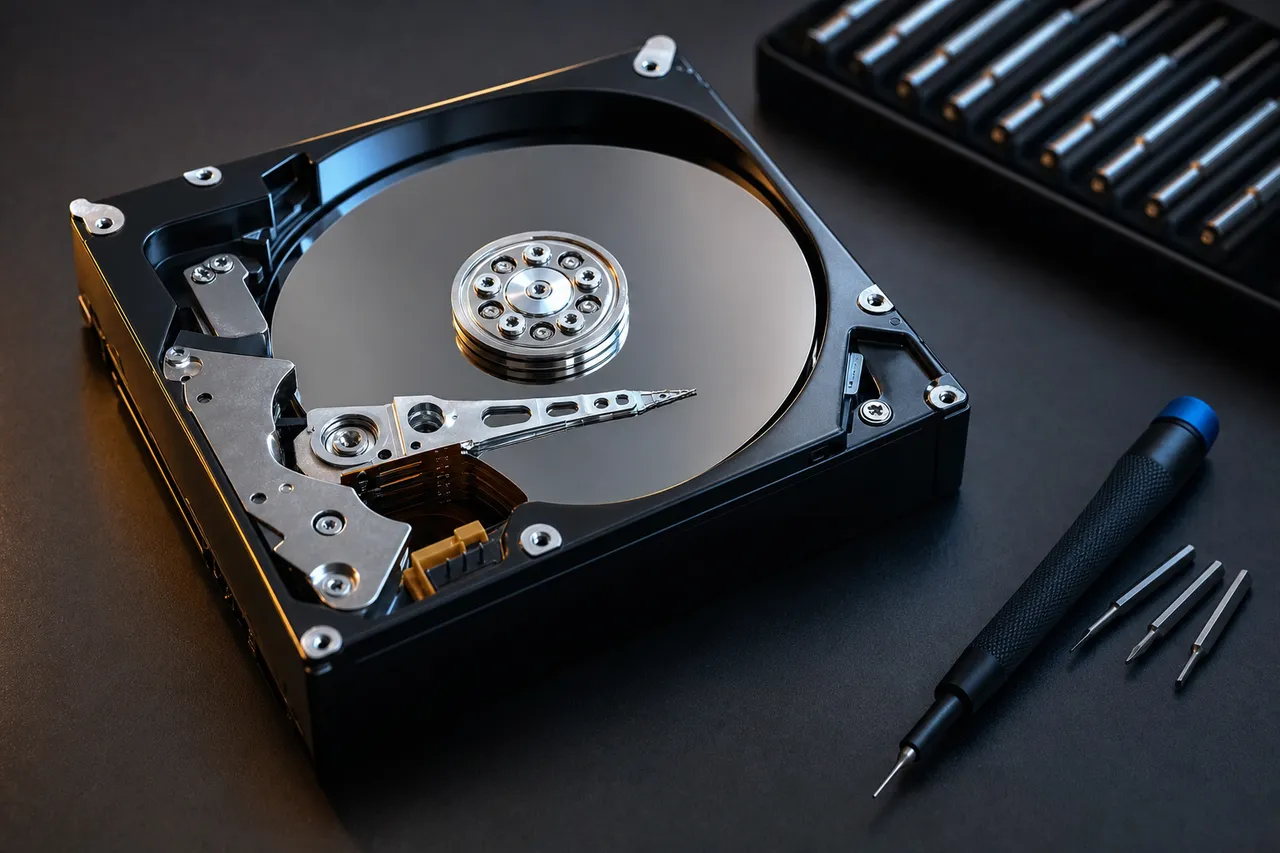
Hard drives store data magnetically on spinning platters using read/write heads that float nanometers above the surface. When components fail - heads crash, motors seize, PCBs burn out, or firmware corrupts - your files become trapped on the platters. Hard disk drive recovery is the process of bypassing or replacing those failed components to extract your data.
Our lab uses ACE Laboratory's PC-3000 for firmware diagnostics, head map editing, and service area repair, and DeepSpar imaging hardware for extracting data from physically damaged media. Combined with a laminar flow bench and a donor drive library spanning all major manufacturers, we image first and recover second - cloning every sector before touching your files.
- Mechanical Clicking heads, seized motors, scratched platters.
- Logical Deleted files, formatted partitions, corrupted file systems.
- Electronic Blown PCB components, damaged ROM chips from power surges.
Inside a Hard Drive: Components That Fail
Understanding the internal components of a hard drive helps explain why different failures require different recovery approaches - and why some are more expensive than others.
-
Platters
Magnetic-coated disks where data is physically stored. Scratched platters mean permanently destroyed data, making scratched platter recovery the most difficult type of data recovery.
-
Read/Write Heads
Fly nanometers above spinning platters to read and write data. Failed heads can crash into the platter surface, destroying data and causing the clicking sound heard from failing drives.
-
Spindle Motor
Spins the platters at thousands of RPM. A seized motor causes beeping or buzzing and requires transplanting the platters to a donor motor assembly.
-
PCB (Printed Circuit Board)
The external board controlling all drive operations. Contains unique calibration data, which is why swapping PCBs between drives doesn't work without a ROM transfer.
-
Firmware
Internal software stored on the platters that maps where data is physically located. Corruption can cause the drive to go undetected or hang during startup.
-
Preamp
Amplifies signals from the heads to the PCB. Failure mimics head failure (clicking, read errors) and requires a full head stack replacement.
Call 732-933-7717 $100 diagnostic, credited toward recovery - no data, no charge.
What's Happening to Your Hard Drive?
Every hard drive failure has a cause. Identifying the symptoms correctly is the first step toward successful data recovery - and knowing what NOT to do is just as important.
-
Clicking or Ticking
Repetitive clicking means the read/write heads are failing - they're trying to load onto the platters and falling back. Each click cycle risks scratching the platter surface and destroying data permanently. See our clicking hard drive recovery service.
High SeverityPower off immediately. Do NOT restart.
-
Beeping or Buzzing
Beeping indicates the spindle motor cannot spin the platters - either the motor has seized or the heads are stuck to the platter surface (stiction). The drive needs physical intervention to free the mechanism. Learn more about beeping hard drive recovery.
High SeverityPower off immediately. Do NOT shake the drive.
-
Not Detected by Computer
If your drive spins but isn't recognized, the issue is likely firmware corruption, a failed PCB (circuit board), or damaged service area on the platters. If the drive doesn't spin at all, the motor or PCB may have failed. We handle drives not detected by the computer, including external hard drives that no longer mount.
Medium - High SeverityStop reconnecting. Each attempt may worsen firmware damage.
-
Water or Fire Damage
Liquid exposure causes rapid corrosion on the circuit board, heads, and internal components. Fire-damaged drives face heat warping and smoke contamination. Both require urgent professional attention.
High SeverityDo NOT power on. Do NOT dry with heat. Ship immediately.
-
Accidentally Deleted or Formatted
If you deleted files, emptied the recycle bin, or accidentally formatted a drive, the data likely still exists on the platters - it's just no longer indexed by the file system. Our guide on how to recover deleted files from a hard drive explains why recovery is very possible if you stop writing to the drive.
Lower SeverityStop using the drive. Do NOT install recovery software on it.
-
Won't Power On
If the drive shows no signs of life - no spinning, no LED, nothing - the PCB (circuit board) has likely failed, often from a power surge, bad power supply, or damaged SATA/USB port. The platters and data are usually fine.
Medium SeverityDo NOT swap PCBs from another drive without professional guidance.
Not sure what's wrong? Try our free HDD Diagnostic Tool for a guided assessment, or call 732-933-7717 to speak with a technician.
Run the Diagnostic ToolTypes of Hard Drive Failure We Handle
Hard drive failures fall into two main categories. Understanding which type your drive is experiencing determines the recovery approach, timeline, and cost.
Category 1
Physical & Mechanical Failures
-
Clicking Hard Drive - Head Failure
Failed read/write heads are replaced using matched donor heads from an identical drive model. Performed in a controlled, particle-filtered environment to protect the platter surface.
-
Beeping Drive - Motor Seizure or Stiction
Seized spindle motors require platter transplant to a donor chassis. Stiction (heads stuck to platters) requires manual head unsticking using specialized tools under magnification.
-
Head Crash & Platter Damage
When heads contact the spinning platter surface, they create circular scratches that destroy data in those zones. Our scratched platter recovery works around damaged areas to image recoverable sectors.
-
Drive Not Spinning
Dead motor, failed PCB, or damaged preamp. We diagnose the exact point of failure and either replace the component or transplant platters to a functional assembly.
-
Dropped Hard Drive
Physical impact displaces the head assembly, damages the preamp, or causes immediate head crash. Severity depends on whether the drive was spinning at impact. Never power on a dropped drive.
Category 2
Logical & Firmware Failures
-
Deleted Files & Quick Format
Deleted data remains on the platters until overwritten. We image the drive at the sector level and use file carving and file system reconstruction to recover files, folders, and directory structures.
-
File System Corruption
NTFS, HFS+, ext4, and other file systems can become corrupted from improper shutdown, power loss, or bad sectors. We reconstruct the file system metadata to restore access to your data.
-
Firmware Corruption
Hard drives run internal firmware stored in a service area on the platters. When this firmware becomes corrupted - from bad sectors, power events, or manufacturing defects - the drive may not be detected or may lock up during initialization. PC-3000 tools allow us to read and patch firmware modules.
-
Bad Sectors / SMART Errors
Degrading magnetic media causes bad sectors that grow over time. SMART warnings indicate the drive is failing. We create a forensic image that works around bad sectors, reading good data first and returning to problematic areas with multiple passes.
-
PCB (Circuit Board) Failure
Power surges, bad adapters, or component failure can kill the drive's circuit board. PCB recovery requires transferring the original drive's ROM/firmware chip to a compatible donor PCB - swapping boards without this step will not work on modern drives.
Advanced Failure Modes by Drive Family
Not all hard drives fail the same way. Each manufacturer and drive family has specific failure patterns that require specialized knowledge and tooling. Our technicians maintain current expertise across all major families.
-
Seagate Rosewood: LED Errors & Terminal Lock
Seagate Rosewood drives (common in Barracuda and Backup Plus models) are known for LED error codes and terminal lock states where the drive becomes completely unresponsive. Recovery requires PC-3000 terminal access to unlock the service area and rebuild corrupted firmware modules before data can be imaged.
-
Western Digital SMR: Translator Fragility
Western Digital SMR (Shingled Magnetic Recording) drives use overlapping write tracks to increase density. This makes the translator tables - which map logical to physical sectors - extremely fragile. If the translator corrupts, the drive appears empty or unreadable despite intact data underneath.
-
Helium-Sealed Drives: One Shot at Recovery
High-capacity helium-sealed drives (8TB+) from Seagate, WD, and HGST use helium gas instead of air to reduce turbulence and pack more platters. We cut open the sealed enclosure, replace the failed head stack, then inject lab-grade helium while actively reading the platters - allowing us to image the drive before the gas dissipates.
-
Seagate F3 Firmware: Service Area Degradation
Older Seagate F3-family drives store firmware across multiple heads. When one head degrades, the drive enters a busy state or fails initialization. PC-3000 allows us to selectively disable damaged heads, patch firmware, and rebuild system files to regain access.
-
WD Marvell Controllers: ROM Architecture
Western Digital drives using Marvell controllers store critical calibration data in the PCB ROM chip. If the PCB fails, the ROM must be carefully desoldered, read, and transferred to a compatible donor board. Without this step, the donor PCB will not initialize the drive correctly.
-
High-Capacity 2TB+ Drives: Why Failures Are Harder
Higher capacity drives (2TB, 4TB, 8TB+) pack more data onto the same platter area using higher areal density. This means tighter head tolerances, more sensitive alignment, and less margin for error during head swaps. Recovery from high-capacity drives requires extremely precise donor matching and extended imaging times.
Hard Drive Data Recovery by Manufacturer
We maintain donor drive inventory and brand-specific tooling for every major hard drive manufacturer. Each brand has unique firmware architectures, head designs, and failure patterns that require specialized knowledge.
- Most common - ~40% of drives
Seagate Data Recovery
The most common brand we recover - roughly 40% of all drives in our lab. We service Barracuda, IronWolf, Backup Plus, Expansion, One Touch, FireCuda, Exos, and SkyHawk. Seagate's F3 firmware architecture is prone to busy states, failed initialization, and capacity misreporting when heads degrade. The Rosewood platform frequently presents LED error codes and terminal lock states requiring PC-3000 serial terminal access to unlock.
Seagate Recovery Details - Second most common
Western Digital Data Recovery
The second most common brand in our lab. We recover My Passport, My Book, Elements, easystore, WD Blue, Black, Red, Purple, Gold, and Ultrastar drives. Modern WD drives use Marvell controllers with ROM chips containing unique calibration data - PCB swaps without ROM transfer will fail. WD's SMR drives are especially vulnerable to translator corruption from power loss.
WD Recovery Details - Canvio & enterprise
Toshiba Data Recovery
Covers the Canvio Advance, Canvio Slim, Canvio Ready, P300, X300, N300, and MG enterprise series. Common failures include head degradation on Canvio 1TB-2TB models and firmware hang states where the drive spins up but never completes initialization. Toshiba's firmware architecture requires brand-specific PC-3000 modules for service area access.
Toshiba Recovery Details - Deskstar, Travelstar, Ultrastar
Hitachi / HGST Data Recovery
Deskstar, Travelstar, Touro, and Ultrastar drives are among the most reliable ever made but still fail from gradual head degradation, preamp failure, and motor bearing wear. HGST firmware requires its own diagnostic approach separate from WD despite the 2012 acquisition. Donor head matching requirements differ from Western Digital drives.
Hitachi Recovery Details - Spinpoint F3, M8 / M9T
Samsung Data Recovery
Samsung exited the HDD market in 2011, but Spinpoint F3 desktop drives and Spinpoint M8/M9T portable drives remain widely in use. Common failures are head degradation, motor seizure, and PCB failure. Samsung firmware requires Samsung-specific PC-3000 modules and Samsung-only donor heads - Seagate parts are not compatible.
- Seagate subsidiaries
Maxtor & LaCie Data Recovery
Both brands are now Seagate subsidiaries - modern LaCie Rugged, d2, and 2big drives contain Seagate mechanisms and use F3 firmware tools for recovery. Legacy Maxtor drives (DiamondMax, OneTouch) require Maxtor-specific donors. LaCie Rugged drives are popular with photographers and videographers but share the same failure patterns as any Seagate drive.
DIY Recovery vs. Professional Hard Drive Data Recovery
Some hard drive data loss scenarios can be handled at home. Others require professional intervention - and attempting DIY on a mechanically failing drive can make things worse. Here's how to know the difference.
Safe to Try at Home
- Drive spins normally with no unusual sounds
- You accidentally deleted files or formatted the drive
- Drive is detected by BIOS/Disk Management but files are missing
- File system shows as RAW but drive is mechanically fine
- You can use read-only recovery software (Recuva, R-Studio, PhotoRec)
- SMART status shows no critical errors
Try our free HDD Diagnostic Tool to check if DIY is appropriate for your situation.
Stop - Call a Professional
- Drive is clicking, ticking, or making repetitive sounds
- Drive is beeping or buzzing and not spinning up
- Drive was dropped, exposed to water, or damaged by fire
- Drive is not detected at all (no spin, no LED)
- Drive spins up and immediately shuts down
- Drive was previously opened by another person or shop
- SMART reports reallocated sectors or pending sectors above threshold
Every power cycle on a failing drive risks permanent damage. Call 732-933-7717 or get a free quote.
Step-by-Step
Can You Recover the Data Yourself?
Before spending money on professional recovery, there are a few safe checks you can run at home - and a few things you should absolutely never do. Here's the difference.
Safe to Try at Home
- Try a different cable or port. USB cables fail more often than drives. Test with a known-good SATA or USB cable before assuming the drive is dead.
- Check Disk Management (Windows) or Disk Utility (Mac). If the drive appears but has no letter, it may just need a drive letter assigned - not recovery.
- Use ddrescue to clone a readable drive. If the drive spins normally and reads (even slowly), you can safely image it before attempting file recovery. See our free DIY guide →
- Check SMART data with CrystalDiskInfo (Windows) or DriveDx (Mac). Rising reallocated sector count or pending sectors mean the drive is degrading - back up immediately.
Do Not Do This
- Do not open the hard drive. Exposing platters to unfiltered air causes permanent scratches. This is the #1 way people destroy their own data.
- Do not put it in the freezer. The freezer trick is a myth that causes condensation damage and corrodes electronics.
- Do not run CHKDSK or Disk Utility on a clicking/beeping drive. These tools attempt writes that can destroy weakened heads and escalate a $650 firmware job into a $2,000 head swap or total loss.
- Do not keep power-cycling a failing drive. Each spin-up attempt on a mechanically damaged drive worsens the damage. If it clicks, beeps, or grinds - power it off immediately.
Avoid These
Common Mistakes That Make Hard Drive Recovery Harder
Many drives arrive at our lab with additional damage caused by well-intentioned DIY attempts that can further corrupt the hard drive. Avoid these mistakes to give your data the best chance of recovery.
-
Opening the Hard Drive at Home
Even a few seconds of platter exposure in normal room air introduces dust and fibers that cause head crashes. Opening a drive also risks scratching the platters and disturbing head alignment. If a drive arrives already opened, recovery becomes significantly harder - and sometimes impossible.
-
The Freezer Trick
This internet myth does not work on modern drives. Freezing introduces condensation inside the drive, accelerating corrosion of the heads and platter surface. Thermal shock can also crack glass platters. A clicking drive will still click after the freezer - now with water damage added.
-
Repeatedly Powering On a Failing Drive
Every power cycle on a clicking or beeping drive causes additional damage. Failing heads scrape platters on each attempt. The difference between a $500 head swap and a $2,500+ scratched platter recovery is often just a few extra power-on attempts.
-
Swapping the PCB from Another Drive
Modern PCBs contain a ROM chip with calibration data unique to each drive. Swapping without ROM transfer results in no detection at best - at worst it sends incorrect values to the heads, causing them to contact platters at the wrong position.
-
Running Recovery Software on a Failing Drive
Recovery software like Recuva or Disk Drill is designed for healthy drives with logical damage. Running it on a mechanically failing drive forces thousands of read commands, degrading heads further with every retry. If your drive makes unusual sounds, do not run software on it.
-
Waiting Too Long
Hard drive failures worsen over time. Mild head degradation today becomes catastrophic failure next month. Water-damaged drives corrode more every day. Drives with growing bad sectors lose more data progressively. The best time to send a failing drive for recovery is now.
Prevention
Warning Signs Your Hard Drive Is About to Fail
Hard drives rarely fail without warning. Recognizing these early signs gives you time to back up your data before a catastrophic failure - or to get it to a recovery lab before things get worse.
-
Slow Performance & Freezing
Sluggish file access, long boot times, and random freezes often mean the drive is developing bad sectors and the heads are struggling to read degraded platter areas.
-
SMART Warnings
Your drive's built-in monitoring has flagged critical health metrics - reallocated sectors, pending errors, or seek failures. Back up immediately.
-
Intermittent Disappearance
A drive that vanishes and reappears signals a failing PCB, unstable connection, or intermittent head failure - progressive problems that become permanent.
-
Unusual Sounds
Clicking, grinding, beeping, or buzzing from your drive means mechanical components are failing. A healthy drive is nearly silent - new sounds demand immediate action.
-
Corrupted Files & Blue Screens
Garbled documents, broken images, and BSODs during disk operations mean the drive is losing the ability to read its platter surface - and it accelerates over time.
Experiencing any of these? Read our in-depth guide to hard drive failure, try our free HDD Diagnostic Tool, or call 732-933-7717 to speak with a technician.
Hard Drive Repair vs. Hard Drive Data Recovery
These are not the same service - and confusing them can cost you your data.
Hard Drive Repair
Hard drive repair means fixing the drive so it can function as a working storage device again - spinning, reading, and writing data normally. In the vast majority of cases, this is neither possible nor advisable.
A hard drive that has suffered mechanical failure (clicking, beeping, head crash) cannot be reliably returned to service. Even if it appears to work after a temporary fix, the underlying damage means it will fail again - potentially destroying data that was recoverable the first time.
Some shops advertise "hard drive repair" and may attempt fixes that prioritize getting the drive to boot - like running CHKDSK, attempting firmware hacks without proper tools, or even opening the drive without a controlled environment. These approaches can permanently destroy data that a professional lab could have recovered.
Hard Drive Data Recovery
Hard drive data recovery means extracting the data from a failed drive and transferring it to healthy media. The original drive is not repaired for continued use.
Our technicians stabilize the drive just enough to create a complete sector-level image of the platters, extract your files from that image, and deliver them on a new external drive or via secure download. The goal is your data, not a working drive.
The correct approach is always: image first, extract data second, and retire the failed drive permanently.
At MDRepairs, we never return a failed drive to service. We recover your data, deliver it on new media, and the original drive is either returned to you or securely destroyed per your instructions.
Why Thousands Trust Us With Their Hard Drives
We've earned our reputation one recovery at a time - with full transparency, honest pricing, and results we document on camera.
2M+ Social followers
319+ Reviews
4.6★ Google rating
50 States served
-
2M+ Followers Watching Us Work
Our lead technician documents real hard drive recoveries from diagnosis to data delivery. Over 2 million followers watch us open failed drives, swap heads, and rebuild firmware. You can watch us work before you ever send in your drive.
-
Mechanical Recovery Specialists
We perform head-stack swaps, motor and stiction repair, and controlled-environment platter work - recovering drives that other shops return as "unrecoverable," including complex scratched-platter cases.
-
No Data, No Charge
If we cannot recover your data, you only pay the $100 diagnostic fee. Period. No hidden costs, no surprise invoices. Your approval is required before any recovery work begins.
-
PC-3000 & a Deep Donor Inventory
We run industry-standard PC-3000 hardware by ACE Laboratory and keep a deep inventory of donor heads, boards, and firmware modules - so we can match parts to your exact drive and image it sector-by-sector.
-
In-House NJ Lab, Never Outsourced
Every drive is handled in our own Lincroft, NJ lab under a documented chain of custody - never shipped to a third party. Recovered data comes back on a new drive; our copies are securely wiped after you confirm receipt.
-
Nationwide From Our NJ Lab
Based at 644 Newman Springs Road in Lincroft, NJ, we serve clients in all 50 states through our secure mail-in program with free prepaid insured shipping. Get a quote or call 732-933-7717.
Supported Hard Drives, Systems & Platforms
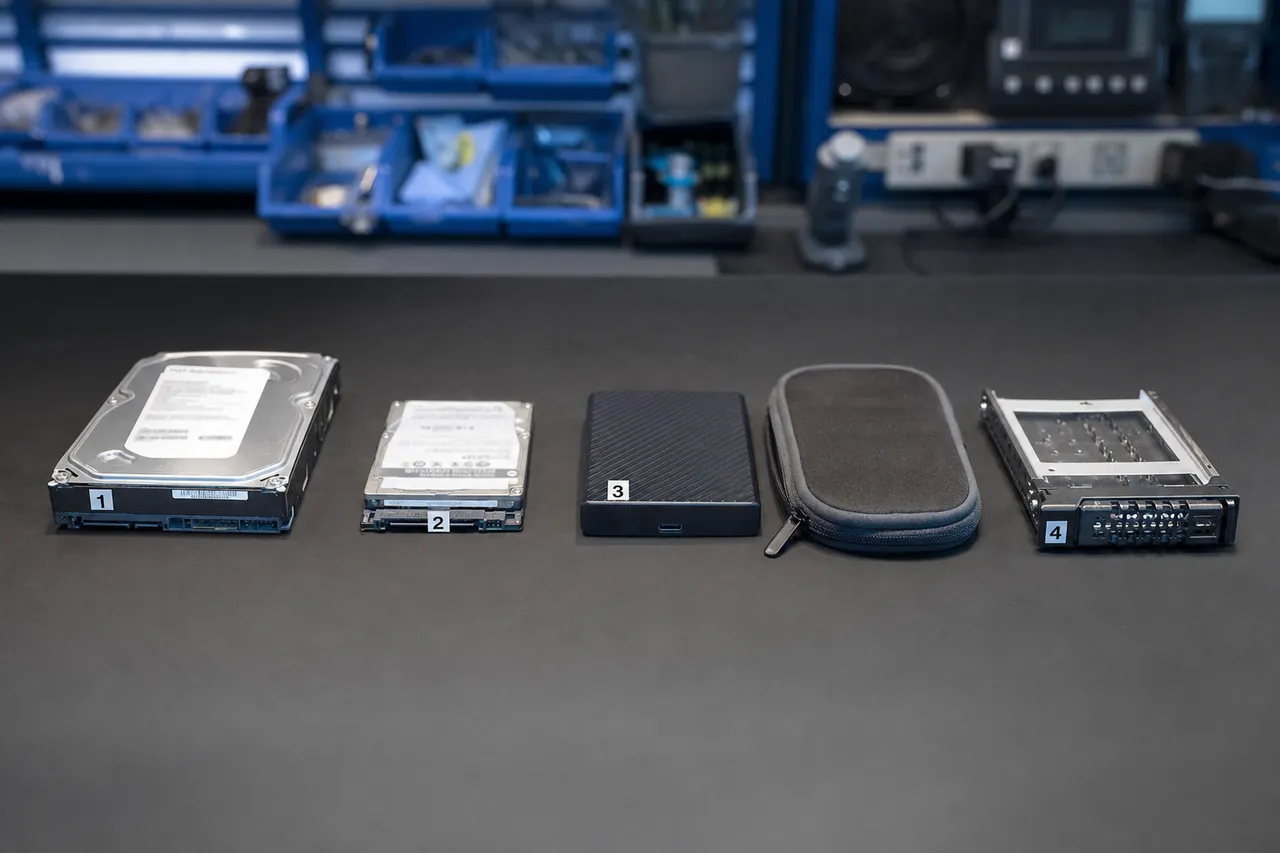
We recover data from hard drives in any configuration, from any operating system, in any enclosure or computer.
Operating Systems & File Systems
- Windows
- all versions from Windows XP through Windows 11.
- macOS
- all versions including Fusion Drive configurations.
- Linux
- including server and NAS configurations.
- Other
- and proprietary NAS/DVR formats.
The file system on your drive determines the recovery approach. NTFS and HFS+ are the most common and have well-understood structures. Newer file systems like APFS and ReFS are more complex but fully supported by our tools.
Computers & Devices
- Desktop computers
- Custom builds, Dell, HP, Lenovo, Acer, Asus, all brands.
- Laptops
- All brands and models with 2.5" SATA drives.
- MacBooks & iMacs
- MacBook data recovery for all models with internal HDD or Fusion Drive.
- Servers
- Dell PowerEdge, HP ProLiant, Lenovo ThinkSystem - single drives and multi-drive configurations.
- NAS devices
- Synology, QNAP, Western Digital My Cloud, Drobo, Buffalo LinkStation, Netgear ReadyNAS.
- DVR & surveillance
- Security camera recorders with embedded hard drives.
External Hard Drives & Storage
- Seagate External
- Backup Plus, Expansion, One Touch, Game Drive, LaCie Rugged, LaCie d2.
- WD External
- My Passport, Elements, My Book, My Cloud, G-Drive (WD subsidiary).
- Toshiba External
- Canvio Advance, Canvio Slim, Canvio Ready, Canvio Gaming.
- Other
- Samsung T-series (SSD), Silicon Power, Transcend, Buffalo MiniStation, Iomega.
External drives use the same internal mechanisms as desktop/laptop drives inside a USB enclosure. Sometimes the external enclosure fails while the internal drive is fine - we test for this during diagnostics before recommending a full recovery.
Real Hard Drive Recovery Cases
Every recovery we perform is documented from intake through data delivery. Here are representative cases that illustrate the range of hard drive failures we handle.
- 99.8% recovered
Seagate Backup Plus 2TB Beeping After Drop
- Symptoms
- Customer dropped portable external drive off a desk. Drive beeped on connection, not detected by any computer.
- Diagnosis
- Impact dislodged the heads, which became stuck to the platter surface (stiction). Motor was unable to spin platters past the stuck heads.
- Recovery
- Opened drive on laminar flow bench, manually freed heads using specialized tools, transplanted platters to matched donor motor assembly. Imaged with PC-3000 using conservative retry settings.
- Result
- All photos, documents, and video files intact.
- 94% recovered
WD My Passport 4TB Clicking on Startup
- Symptoms
- Drive started clicking and disappeared from Windows explorer. Customer powered it on and off approximately 15 times trying to get it to work.
- Diagnosis
- Head 0 failed and was dragging across platter 0 surface. Multiple power cycles had created light scoring in the landing zone.
- Recovery
- Performed head swap with matched WD donor, imaged using selective head disable to skip damaged head 0 initially, then carefully read head 0 areas with adjusted parameters.
- Result
- Some files from the scored zone were incomplete, but the vast majority of data was recovered including irreplaceable family photos.
- 100% recovered
Seagate Barracuda 1TB Not Detected After Power Surge
- Symptoms
- Desktop computer's hard drive stopped working after a thunderstorm. No spin, no LED, completely dead.
- Diagnosis
- Power surge through the wall outlet burned out the TVS diode and main motor controller on the PCB. Platters and heads appeared undamaged.
- Recovery
- Desoldered the original ROM chip from the burned PCB, transplanted it to a matching donor PCB with identical firmware revision. Drive initialized normally. Created full forensic image.
- Result
- All business documents, QuickBooks files, and personal data recovered.
- 87% recovered
Toshiba Canvio 3TB Returned "Unrecoverable" by Another Lab
- Symptoms
- Customer sent drive to a national chain data recovery company. They quoted $2,800, attempted recovery, and returned it as "unrecoverable" after 3 weeks.
- Diagnosis
- We discovered the previous lab had swapped heads with an incompatible donor (wrong head map and firmware revision). Their heads had created additional light scoring.
- Recovery
- Removed the incorrect donor heads, sourced a properly matched Toshiba donor with correct head map, performed careful imaging around the new and pre-existing damage zones.
- Result
- The original data loss area was small, but the previous lab's incorrect head swap had expanded the damage. Customer recovered their most important files.
- 100% recovered
Seagate Rosewood 2TB Firmware Corruption
- Symptoms
- External drive would spin up, LED would flash in a pattern, then the drive would spin down. Not detected by any computer.
- Diagnosis
- Rosewood firmware entered a locked state - the LED flash pattern was a diagnostic code indicating service area corruption. Terminal access showed damaged system files in the firmware modules.
- Recovery
- Used PC-3000 Seagate F3 terminal to unlock the service area, rebuilt corrupted modules, patched the translator, and performed controlled imaging. No physical damage to heads or platters.
- Result
- Pure firmware failure with no mechanical component. Full data set recovered.
- 100% recovered
Hitachi Deskstar 500GB Head Swap
- Symptoms
- Desktop drive started clicking rhythmically after several years of daily use. Computer would hang on boot when the drive was connected.
- Diagnosis
- Head degradation from age and wear. Heads could no longer maintain stable flight height above the platters. No platter scoring detected.
- Recovery
- Sourced matched Hitachi donor drive with compatible head map and firmware revision. Performed head swap on laminar flow bench. Imaged with PC-3000 using adaptive head management.
- Result
- Drive had no platter damage because the customer powered off immediately after hearing the clicking.
Lesson from these cases: The single most important thing you can do when your hard drive fails is power it off immediately and stop trying. Customers who power off quickly get better outcomes and lower costs than customers who keep retrying.
RAID & NAS Hard Drive Data Recovery
RAID arrays and NAS devices add complexity to hard drive data recovery - but the core principles are the same. RAID (Redundant Array of Independent Disks) systems use multiple hard drives working together for performance, redundancy, or both. NAS (Network Attached Storage) devices like Synology, QNAP, and WD My Cloud typically use RAID configurations internally.
When a RAID array fails, recovering data from RAID drives requires understanding both the individual drive failures and the RAID configuration that ties them together.
- DISK 1A1A3A5DISK 2A2A4A6
Data RAID 0 Striping
Data is split across two or more drives with no redundancy. If any single drive fails, the entire array is lost. Recovery requires imaging the failed drive (or drives) individually and then reconstructing the stripe order and block size to rebuild the virtual volume.
- DISK 1A1A2A3DISK 2A1A2A3MIRROR
Data RAID 1 Mirroring
Two drives contain identical copies of the data. If one drive fails, the other should contain a complete copy. Recovery is typically straightforward - we image the surviving drive. If both drives fail, we recover whichever is in better condition.
- DISK 1A1B2CpDISK 2A2BpC1DISK 3ApB1C2
Data Parity RAID 5 Data + Parity
Data and parity information are distributed across three or more drives. The array can tolerate one drive failure and rebuild from parity. When two or more drives fail simultaneously - or when a rebuild operation triggers a second failure - recovery requires imaging all available drives and using parity calculations to reconstruct the missing data.
- DISK 1A1A2A3PAIR 1DISK 2A1A2A3PAIR 1DISK 3B1B2B3PAIR 2DISK 4B1B2B3PAIR 2
STRIPE + MIRROR Data RAID 6 / 10 Advanced
RAID 6, RAID 10, and other configurations have their own redundancy models and failure characteristics. We handle all RAID levels.
RAID recovery pricing depends on the number of drives, the RAID configuration, and the failure mode. Single-drive failures within a RAID are priced as standard hard drive recovery. Multi-drive failures and array reconstruction add complexity and cost. For businesses relying on NAS or server storage, our partnership program provides priority scheduling and dedicated support for RAID recovery cases.
Hard Drive Diagnostics & Equipment
Every recovery begins with a $100 diagnostic evaluation - external inspection, PCB testing, motor current analysis, and controlled spin-up with head monitoring. You receive a detailed quote with recovery likelihood, expected data yield, and timeline.
The $100 is applied toward the final cost; if recovery isn't possible or you decline, it's the only charge. For scratched platter cases and severely damaged drives requiring controlled-environment inspection, the diagnostic deposit is $500.
Not sure where to start? Try our free hard drive diagnostic tool.
- External inspection
- PCB testing
- Motor current analysis
- Controlled spin-up with head monitoring
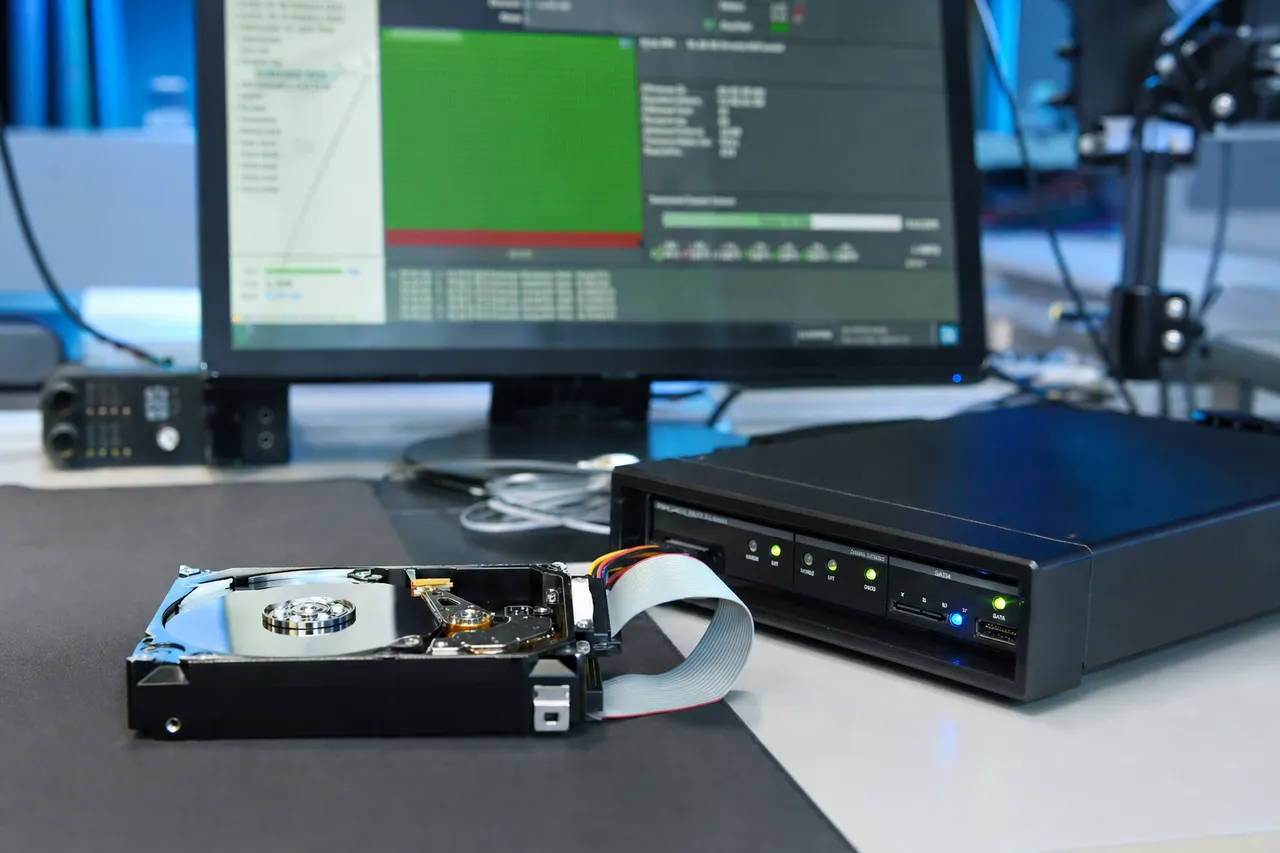
Professional Recovery Equipment
-
PC-3000 Recovery Platform
ACE Laboratory PC-3000 for firmware diagnostics, head map testing, selective head disabling, and controlled imaging with configurable retry strategies.
-
Laminar Flow Bench (HEPA Filtered)
Particle-filtered environment for head swaps, platter transplants, and internal inspection. ISO-equivalent air quality above the work area.
-
Donor Drive Inventory
Extensive donor library across all major manufacturers and firmware revisions - Seagate, WD, Toshiba, and Hitachi.
-
Every Recovery Documented
Full chain of custody from intake through data return - the same standard used by forensic recovery operations.
Talk to the engineer who does the work - not a call center.
Hard Drive Data Recovery Across All 50 States
Our secure mail-in program serves hard drive data recovery customers in every state. Free prepaid insured shipping both ways.
Free prepaid insured shipping both ways
- New Jersey
- New York
- Pennsylvania
- Connecticut
- Delaware
- Florida
- Georgia
- Maryland
- Massachusetts
- North Carolina
- Ohio
- Virginia
- Alabama
- Alaska
- Arizona
- Arkansas
- California
- Colorado
- Washington DC
- Hawaii
- Idaho
- Illinois
- Indiana
- Iowa
- Kansas
- Kentucky
- Louisiana
- Maine
- Michigan
- Minnesota
- Mississippi
- Missouri
- Montana
- Nebraska
- Nevada
- New Hampshire
- New Mexico
- North Dakota
- Oklahoma
- Oregon
- Puerto Rico
- Rhode Island
- South Carolina
- South Dakota
- Tennessee
- Texas
- Utah
- Vermont
- Washington
- West Virginia
- Wisconsin
- Wyoming
Hard Drive Data Recovery FAQ
Straight answers on cost, turnaround, failure types, and how we get your data back - drawn from the questions we hear every day.
-
How much does hard drive data recovery cost?
Hard drive data recovery pricing at MDRepairs is broken into five tiers based on failure type: Logical/Firmware/Electrical failures $650 - $1,200, Crashed Heads/Head Swap $1,000 - $2,000, Helium Drive Recovery $2,000 - $3,500+, Scratched/Contaminated Platters $1,500 - $2,500+, and RAID/Multi-Drive Arrays by quote. Every case begins with a $100 diagnostic evaluation that is applied toward the final cost if you proceed. If we cannot recover your data, you only pay the diagnostic fee. We provide a detailed quote after diagnostics - you approve the price before any recovery work begins. For comparison, corporate data recovery chains typically charge $2,000 - $7,000+ for the same work. We also offer financing through Affirm (split payments up to 12 months) and Afterpay (4 interest-free payments). Call 732-933-7717 or request a free quote. -
Can you recover data from a clicking hard drive?
Yes - clicking is one of our most common recovery scenarios. Hard drives click when the read/write heads can no longer locate the servo tracks on the platter surface. This happens due to head degradation from drops or wear, preamplifier damage on the head stack assembly, or contamination on the platter surface. The heads repeatedly try to load, fail to read servo data, and retract - creating the rhythmic click pattern. We perform head swaps using matched donor drives on our laminar flow clean bench, and use PC-3000 head mapping to disable any remaining failing heads while imaging from the healthy ones. This maximizes data yield even from partially degraded head stacks. Critical: every power cycle with damaged heads risks platter scoring as the failing heads sweep across the surface. Power off immediately after hearing the first click and contact us for a quote. Head swap recovery typically costs $1,000 - $2,000 at our Lincroft, NJ lab, with free insured shipping nationwide. -
How long does hard drive data recovery take?
Turnaround depends on the failure type. Logical recoveries (deleted files, formatting, corruption) typically take 3 - 5 business days of active work. Firmware repairs take 5 - 7 business days. Mechanical recoveries requiring head swaps take 7 - 14 business days depending on donor drive availability for your specific model. Rush options are available: Priority Rush 5 - 7 days (+$250), Urgent Rush 1 - 2 days (+$500), Emergency Same-Day (+$1,000). If using our nationwide mail-in program, your drive typically arrives at our Lincroft, NJ lab within 2 - 3 business days via free 2nd Day Air shipping. We communicate throughout the process so you always know your case status. Total turnaround including shipping both ways is typically 2 - 3 weeks for standard cases. -
Can you recover data from a dead hard drive?
Yes. A "dead" hard drive typically means one of three things: it won't power on (PCB failure), it won't spin (stuck heads or seized motor), or it powers on but isn't detected by any computer (firmware corruption). All three are recoverable - learn more in our guide to recovering data from a dead hard drive. PCB failure requires desoldering the ROM chip from the original board and transplanting it to a compatible donor PCB. Stuck heads require careful separation from the platter surface on a laminar flow clean bench, followed by a donor head swap. Seized motors require a platter transplant to a working donor motor assembly. Firmware corruption requires PC-3000 terminal access to repair corrupted service area modules. In all cases, the platters holding your data are rarely damaged - the access mechanism has failed, not the storage medium. Stop powering the drive and ship it to our Lincroft, NJ lab for a free quote using our free insured shipping. -
Is hard drive data recovery worth the cost?
When data is irreplaceable, professional recovery is almost always worth the investment. For businesses: lost client records, financial data, intellectual property, and compliance-required documents can cost far more to recreate (if possible at all) than recovery. For individuals: family photos, personal videos, creative work, and years of documents often have value that can't be measured in dollars. Our no data, no charge policy removes the financial risk - you only pay if we successfully recover your data. We provide a free quote with an honest assessment of recovery likelihood before you commit. With financing through Affirm (split payments up to 12 months) and Afterpay (4 interest-free payments), the cost becomes more manageable. Compare our pricing ($650 - $2,500) to corporate labs charging $2,000 - $7,000+ for the same work. -
Should I try data recovery software before sending my drive?
Only if your drive is mechanically healthy - spinning normally, appears in Disk Management or Disk Utility, and makes no abnormal sounds. Software tools like Recuva, R-Studio, PhotoRec, or Disk Drill work well for deleted files, formatted partitions, and corrupted file systems on functioning drives. For the safest approach, clone the drive first using ddrescue: boot from a SystemRescue USB, clone to an equal-or-larger target drive withddrescue --force -nfor a fast pass, thenddrescue --force -r3for retries. Recover files from the clone, not the original. Do NOT use software if the drive clicks, beeps, grinds, or isn't detected - software cannot fix hardware failures, and forcing read operations on a mechanically failing drive accelerates damage. What could be a $1,000 head swap becomes a $2,500 scratched platter case. Try our free HDD Diagnostic Tool first to check if DIY is safe for your situation. -
Can you recover data from an external hard drive that is not detected?
Yes - and the first diagnostic step is determining whether the problem is the USB enclosure or the internal drive. We remove the drive from its enclosure and connect it directly to PC-3000 via SATA. If the drive works on SATA, the problem was a failed USB bridge controller - recovery is simple and inexpensive. If the drive also fails on SATA, we proceed with diagnostics for firmware corruption, PCB damage from power surges, or mechanical failure. Important for Western Digital My Passport drives: many models use hardware encryption handled by the USB bridge chip. If the bridge chip fails, we transplant it to a donor board to preserve the encryption key. Common external brands we recover include Seagate Backup Plus, WD My Passport and Elements, Toshiba Canvio, LaCie Rugged, and G-Technology G-Drive. Ship yours to our Lincroft, NJ lab using free insured shipping, or start with our guide on troubleshooting a USB drive that is no longer recognized. -
Does data recovery void my hard drive warranty?
Opening a hard drive breaks the tamper-evident seal. However, the Magnuson-Moss Warranty Act (15 U.S.C. 2302) prohibits manufacturers from voiding a warranty solely because an independent service provider performed work on the product. The FTC reinforced this in 2018 guidance stating that warranty-void-if-removed stickers are unenforceable. In practice, most drives needing data recovery are already out of warranty - standard warranties are 2 - 5 years. More importantly, manufacturer warranties only cover hardware replacement - they send you a refurbished drive, erasing your data in the process. They do not recover data. If your drive has failed and you need the data, professional recovery is the only option regardless of warranty status. We do not modify firmware in ways that would affect legitimate warranty claims. -
Why is data recovery so expensive at some companies?
Three main factors drive inflated pricing. Advertising costs: companies spending $50,000 - $100,000+ per month on Google Ads pass those costs directly to customers in higher fees. Outsourcing markup: middleman companies (including many local shops and big-box stores) accept drives, ship them to a partner lab for actual recovery, and add 30 - 50% markup. You pay more for the same work with slower turnaround. Overhead: SOC 2 audits ($50,000+/year), full ISO cleanroom maintenance, enterprise sales teams, and corporate office space all add cost without improving recovery outcomes. We keep costs lower at MDRepairs by performing all work in-house at our Lincroft, NJ lab, leveraging organic reach through our 2M+ social media following instead of expensive paid advertising, and investing in equipment and technician expertise over certifications and overhead. -
Do you offer a no data no charge guarantee?
Yes. If we cannot recover your target files, there is zero charge for the recovery attempt - you only pay the $100 diagnostic fee. We never charge for unsuccessful recovery work. Before beginning any recovery, we provide a detailed quote with our honest assessment of recovery likelihood, expected data yield, and the specific failures identified. You decide whether to proceed - no pressure, no obligation beyond the diagnostic. Before delivering recovered data, we provide a complete file listing so you can verify that your important files were recovered before approving payment. For scratched platter cases requiring controlled-environment inspection, the diagnostic deposit is $500. This guarantee applies to all recovery types at our Lincroft, NJ lab. -
What's included in your $100 hard drive evaluation?
Our $100 diagnostic evaluation includes: visual inspection of the drive exterior for physical damage (dents, cracks, water marks), PCB inspection for burnt components, blown TVS diodes, or corrosion, listening for mechanical sounds to identify failure type, firmware-level diagnosis with PC-3000 if the drive can be safely powered on, determining the specific failure category (logical, firmware, or mechanical), and providing a firm price quote with our honest assessment of recovery likelihood and expected data yield. We do NOT attempt recovery during the evaluation - diagnosis first, firm quote second. You approve the price before any chargeable work begins. If we determine recovery is unlikely to succeed or not worth the cost, we tell you honestly. The $100 diagnostic fee is applied toward the final recovery cost if you proceed. -
What happens to my original hard drive after data recovery?
After recovery is complete, you choose what happens to your original drive. We can return it to you along with the recovered data (delivered on a new external drive or via secure download link), hold it for a specified retention period in case you need to verify anything, or securely destroy it at your request. Your original drive is your property - we never dispose of a customer's drive without explicit written permission. We strongly recommend not reusing a failed hard drive, as once a drive has experienced mechanical failure, it will fail again. All copies of your data on our recovery systems are securely purged after you confirm receipt of the recovered data. We maintain strict chain of custody documentation throughout the process. -
Can you recover data from a beeping hard drive?
Yes. Beeping specifically means the read/write heads are stuck to the platter surface - a condition called stiction. The spindle motor tries to spin the platters but physically cannot because the heads are bonded to the surface through molecular adhesion. This is especially common on 2.5-inch Seagate Rosewood drives (ST1000LM035, ST2000LM007) and Backup Plus Slim portables after drops or sudden disconnections. The motor generates the beeping sound as it strains against the stuck heads. Do not tap the drive, power-cycle it, or attempt to open it - tapping can cause the stuck heads to scrape the platter surface when they release, and each power attempt puts additional stress on the motor. Recovery involves carefully separating the heads from the platter surface under magnification on our laminar flow clean bench, then replacing damaged heads with matched donors. Pricing typically ranges from $1,000 - $2,000 at our Lincroft, NJ lab. -
What brands of hard drives do you recover?
We recover data from every hard drive manufacturer: Seagate (Barracuda, Rosewood, IronWolf, Exos, Backup Plus, Expansion, FireCuda), Western Digital (My Passport, Elements, My Book, Red, Blue, Black, Purple, Ultrastar, G-Drive), Toshiba (Canvio, MQ series, MG series, P300, N300, X300), Hitachi/HGST (Deskstar, Travelstar, Ultrastar, Touro), Samsung (SpinPoint, Story Station, M-series), Maxtor (DiamondMax, OneTouch), LaCie (Rugged, d2, 2big), and G-Technology (G-Drive, G-RAID). We maintain donor drive inventory for all major brands, model families, and firmware revisions at our Lincroft, NJ lab to ensure we can match heads and components correctly. Our technicians have firmware-level expertise across all vendor platforms - Seagate F3, Western Digital ATA, Toshiba, and Samsung - using PC-3000 diagnostic tools. -
Can you recover data from a water-damaged hard drive?
Yes - and time is critical. Water-damaged drives experience rapid corrosion that begins within hours. Fresh water causes moderate corrosion over days, but salt water and fire suppression water are far worse - salt accelerates PCB oxidation and conductive residue deposits destroy traces. Do not power on a wet drive - this causes short circuits across corroded components that were otherwise salvageable. Do not use a hair dryer, heat gun, or rice - heat warps head assemblies, and rice introduces fine particles that contaminate platters. Recovery involves cleaning PCB corrosion, transplanting the ROM chip to a compatible donor board if the original PCB is too damaged, and imaging the drive using PC-3000 with controlled timeouts to work around degraded sectors. Success rates range from 60 - 80% when the drive is brought in quickly without powering on. The faster you ship it to our Lincroft, NJ lab, the better the outcome. Wrap the drive in an anti-static bag and use our free insured shipping. -
What is the difference between logical and mechanical hard drive failure?
There are three categories of hard drive failure. Logical failures are software-level issues - deleted files, formatting, file system corruption, partition table damage - where the drive hardware works normally. Pricing: $650 - $1,200. Firmware failures are a middle category - the drive spins but isn't detected, shows wrong capacity, or misidentifies its model. This happens when the service area modules on the platters become corrupted. PC-3000 terminal access is used to repair firmware using vendor-specific protocols. Pricing: $650 - $1,200. Mechanical failures involve physical component damage - failed read/write heads (clicking), seized spindle motors (beeping), or damaged platters (grinding). These require physical intervention on a laminar flow clean bench with matched donor parts. Pricing: $1,000 - $2,500+. Important: do not run CHKDSK or Disk Utility on a drive with a mechanical failure - these utilities force intensive read operations that accelerate head degradation and can turn a recoverable head swap into a scratched platter case. -
Do I need a clean room for hard drive data recovery?
You need a controlled, particle-filtered environment whenever the drive is opened and platters are exposed. Clean rooms are rated under ISO 14644-1 - a Class 5 clean room allows a maximum of 3,520 particles per cubic meter at 0.5 micrometers. MDRepairs uses a laminar flow clean bench with HEPA filtration that achieves localized ISO Class 4 equivalent conditions in the work zone directly above the open drive. The critical zone is the 12 inches directly above the platters where airborne particles could land on the magnetic surface and cause head crashes. A full room-sized clean room is not required for hard drive data recovery because only the localized work area needs filtration. Most professional data recovery labs worldwide use laminar flow benches for this reason. Large corporate labs sometimes market full clean rooms as a differentiator, but the particle standard achieved at the platter surface is what matters, not the size of the room. Learn more in our data recovery clean room guide. -
Can you recover a drive that another lab said was unrecoverable?
Often yes. We regularly receive drives declared "unrecoverable" by other labs, and in many cases recover the data successfully. Common reasons other labs fail: they lack PC-3000 firmware tools for the specific drive family, they used an incorrect donor for the head swap (wrong head map or firmware revision), they don't have experience with advanced cases like scratched platters or Seagate Rosewood firmware locks, or they opened the drive without proper contamination control. Opening a drive outside a particle-filtered environment introduces contamination but doesn't always make recovery impossible - we can often clean the platters and proceed. We have documented multiple second-opinion recoveries on our YouTube channel with over 2 million followers, including a Western Digital 1TB drive another lab declared unrecoverable due to a bent chassis - we transplanted the platters to a donor chassis and recovered nearly all data. Send it for a free quote - the $100 diagnostic tells us exactly what's possible. -
Can you recover data from a scratched platter?
Scratched platter recovery is the most complex form of hard drive data recovery. Light scratches from brief head contact allow 80 - 95% data recovery by imaging around the damaged zones with PC-3000 configured to skip bad areas. Severe circular scoring - sometimes called the "ring of death" - means data in the scored zone is permanently destroyed, but undamaged tracks between and outside the scored areas can still be recovered. The earlier you stop powering a clicking drive, the less scoring accumulates. Recovery involves cleaning all particulate debris from the drive interior, installing clean donor heads, and using DeepSpar and PC-3000 to carefully image the platter surfaces while avoiding damaged zones. Pricing ranges from $1,500 - $2,500+ depending on extent of damage, with a $500 diagnostic deposit. We provide an honest assessment of expected data yield before you decide to proceed. -
How expensive is hard drive data recovery compared to other devices?
Hard drive recovery is mid-range in the data recovery spectrum. Typical pricing: hard drives $650 - $2,500+, SSDs $300 - $1,500, iPhones $1,500, RAID arrays $1,500 - $5,000+, NAS devices $1,000 - $4,000, flash drives $150 - $500, SD cards $150 - $500. Hard drives are generally more recoverable from physical damage than other storage devices because magnetic data persists on the platters independently of the electronics - even with a completely dead PCB, seized motor, or failed heads, the data is usually still physically present on the platters. SSDs and flash storage store data electronically in NAND chips, and certain controller failures can make data permanently inaccessible. This physical recoverability is why hard drive recovery often has the highest success rates among storage devices. For detailed pricing on other devices, see our guides on SSD data recovery costs and iPhone data recovery. -
How long does it take to recover a 1TB hard drive?
The drive capacity primarily affects the imaging phase, not the repair phase. A mechanically healthy 1TB drive images in 3 - 4 hours at full read speed. A 1TB drive with degraded heads may take 2 - 7 days because PC-3000 uses controlled retries, slower read speeds, and careful head temperature management to maximize data extraction. The repair itself - head swap, PCB work, firmware repair - takes the same time regardless of capacity. Head swaps also require time for donor sourcing, finding an exact-match donor with the correct head map and firmware revision. Total turnaround including free 2nd Day Air shipping both ways to our Lincroft, NJ lab is typically 7 - 14 business days for straightforward cases, or 3 - 5 weeks for complex recoveries requiring multiple donor attempts or extensive imaging passes. -
Can Geek Squad or a local computer shop recover my hard drive data?
For basic logical recoveries on mechanically healthy drives, some competent local shops can help using consumer software. For any mechanical failure - clicking, beeping, not detected, dropped drive - local shops and Geek Squad cannot perform recovery in-house. They lack PC-3000 firmware tools, laminar flow clean bench, donor drive inventory, and specialized training. They typically accept your drive, ship it to a third-party lab, and charge markup. Questions to ask any recovery provider: Do you have PC-3000? Do you perform head swaps in-house? Can I speak directly to the technician? Do you have a laminar flow bench? If the answers are no, they're middlemen. Ship directly to a specialized lab like MDRepairs through our mail-in program - cutting out the middleman saves time, money, and gives you direct communication with the technicians who actually handle your case. -
Why is my Seagate hard drive beeping?
Seagate drives beep when the spindle motor cannot spin the platters. This is most common on Seagate Rosewood models (ST1000LM035, ST2000LM007), Backup Plus Slim, and Backup Plus Portable drives, especially after drops. The beeping is caused by stiction - the read/write heads physically adhered to the platter surface during impact, and the motor strains against them trying to spin. This is a mechanical fault, not a cable or power issue - swapping cables will not fix it. Do not shake, tap, or freeze the drive. Each attempt risks the stuck heads scraping the platter surface when they release. Recovery involves carefully separating the heads on our laminar flow clean bench, then installing matched donor heads. After the physical repair, PC-3000 with Seagate F3 terminal access is used to stabilize the firmware and image the drive with controlled head management parameters. -
Does the freezer trick work for hard drive recovery?
No - the "freezer trick" is an outdated myth from the early 2000s that originated with older drives using ball-bearing motors. The idea was that cooling would contract swollen bearings enough to temporarily spin. On modern drives with fluid dynamic bearings and nanometer-level head clearances, freezing causes three problems: condensation forms on platters and PCB when removed from the freezer, causing corrosion and head contamination; thermal contraction causes platters to shrink unevenly, misaligning data tracks; and fluid bearing lubricant can thicken or freeze entirely. Modern drives are sealed with desiccant packs specifically to keep moisture out - introducing condensation defeats this protection. We've received multiple drives at our Lincroft, NJ lab with freezer-induced water damage compounding their original failure. If your drive has a mechanical failure, power it off and contact a professional data recovery lab. -
Can I swap the PCB from another hard drive to fix mine?
Not on modern drives manufactured after approximately 2003. Each PCB contains a ROM chip with unique calibration data specific to that individual drive - adaptive parameters (per-head positioning calibration), SMART data, defect tables, and configuration settings. A generic PCB swap without transferring the ROM data will cause the drive to either fail to initialize or spin up but fail to read data because the head calibration values are wrong. Incorrect calibration can cause misaligned heads to physically damage the platter surface. Professional PCB recovery involves desoldering the original ROM chip from your failed PCB and transplanting it to a compatible donor PCB, or using PC-3000 to read the ROM data electronically and rewrite it to the donor. This is a standard procedure at our lab requiring specialized soldering equipment, ROM readers, and firmware expertise. -
What is firmware corruption and how does it cause hard drive failure?
Hard drive firmware is stored in a reserved area on the platters called the Service Area (SA), plus a ROM chip on the PCB. The SA contains critical modules: the translator module (maps logical block addresses to physical platter locations), adaptive parameters (per-head calibration data), P-list and G-list (primary and grown defect tables tracking bad sectors), and SMART logs. When SA sectors develop read errors - from bad sectors, power loss, or head degradation - these firmware modules become corrupted. Depending on which module is affected, the drive may show 0GB capacity, display the wrong model name, enter a permanent busy state, or not be detected at all. Firmware corruption is especially common on Seagate F3 family drives and Western Digital SMR models. Recovery requires PC-3000 terminal access using vendor-specific protocols - Seagate F3 terminal commands, Western Digital ATA vendor commands - to directly read, edit, and rebuild corrupted firmware modules. -
What should I do if my hard drive is making strange noises?
Power off immediately. Every second a mechanically failing drive remains powered risks additional platter damage. Here's what different sounds indicate: Rhythmic clicking/ticking = failing read/write heads that cannot locate servo tracks - severity: high, do not power cycle. High-pitched beeping/buzzing = stuck heads (stiction) or seized motor - severity: high, do not shake or tap. Grinding/scraping = heads physically dragging across platters, a head crash in progress - severity: critical, every second causes permanent data destruction. Intermittent soft ticking = degrading heads beginning to fail - severity: moderate but escalating quickly. For any abnormal sound: do not power the drive on again, do not run diagnostics, do not shake or tap it. Package with cushioning and ship to our Lincroft, NJ lab via free insured mail-in, or call 732-933-7717. -
What is a head swap and why is it the most common mechanical recovery?
A head swap replaces a hard drive's failed read/write heads with working heads from a compatible donor drive. It's the most common mechanical recovery because heads are the most delicate and failure-prone component - they fly only 3 - 5 nanometers above spinning platters and are vulnerable to drops, wear, and power events. The procedure is performed on a laminar flow clean bench: the drive is opened, the damaged head stack assembly (HSA) is removed, and a matching donor HSA is installed. "Exact matching" means same drive model, same firmware revision, same head count, and ideally same head map - the specific manufacturer and part number of the heads installed at the factory. Incorrect head matching is a leading cause of failed recovery attempts by less experienced labs. After the swap, PC-3000 is used to create a head map, configure read parameters, and image the drive with controlled timeouts and head temperature management to maximize data yield from the new heads. -
How do I recover data from a crashed hard drive for free?
If your hard drive has mechanically crashed (clicking, beeping, grinding, or not spinning), there is no free method - physical repair requires specialized equipment and controlled-environment conditions. No software can fix failed heads or a seized motor. However, if your drive is mechanically healthy (spinning normally, no sounds, detected by your computer) and data loss is from deletion or formatting, try the ddrescue method: boot from a SystemRescue USB, clone the failing drive to an equal-or-larger target usingddrescue --force -nfor a fast first pass, thenddrescue --force -r3for retries on problem sectors. Recover files from the clone, not the original. Free software includes PhotoRec (file carving), TestDisk (partition recovery), and Recuva. This only works if the drive spins and is detected. If it clicks, beeps, or grinds, stop and contact our lab. Also try our free HDD Diagnostic Tool. -
Does removing a hard drive from a computer erase the data?
No. Data stored on a hard drive persists on the magnetic platters whether the drive is connected to a computer or not. Physically removing a hard drive does not erase, delete, or modify any data. This is the same principle that makes forensic data recovery possible - law enforcement and legal discovery routinely recover data from removed and discarded drives. You can safely remove a hard drive from a desktop, laptop, or external enclosure and ship it to our Lincroft, NJ lab for recovery. The only actions that erase hard drive data are: writing new data over existing sectors, performing a verified full secure erase (overwriting every sector), degaussing (exposing the drive to a powerful magnetic field that randomizes the platters), or physical destruction. This is why we advise against continuing to use a drive after data loss - new writes can overwrite recoverable files. -
What's your data recovery success rate?
We don't publish a single success rate number because it would be misleading - recovery outcomes vary significantly by failure type and drive condition. Logical failures on healthy drives have very high success rates, typically 95%+. Standard head swaps on drives with clean platters also achieve high recovery rates. Firmware corruption depends on the specific modules affected. Scratched platter cases are the most variable - light scoring may allow 80 - 95% recovery, while severe damage limits what can be extracted. Rather than marketing an inflated blanket number, we provide honest, case-specific assessments during diagnostics. Our YouTube channel with over 2 million followers documents real recovery cases from start to finish - including the outcomes - so you can see exactly what to expect. The $100 diagnostic exists specifically so we can evaluate your drive and give you a realistic expectation before you commit. -
Do I need to send the whole external hard drive or just the internal drive?
Sending the whole external enclosure is usually better for three reasons: (a) we can test the USB bridge controller for encryption chips - some Western Digital My Passport models use hardware encryption handled by the USB bridge, and we need that chip to access your data; (b) the enclosure model and serial number help us identify the internal drive without opening it, speeding up donor matching; (c) you avoid the risk of damaging the drive during removal, especially on enclosures with tight or clip-based designs. If you've already removed the internal drive, that works too - just wrap it in an anti-static bag with 2 - 3 inches of bubble wrap cushioning on all sides. Either way, include a note with your name, phone number, and description of the problem, and ship to our Lincroft, NJ lab using our free prepaid insured shipping label. -
How do you recover data from a hard drive that won't spin?
A non-spinning hard drive has three possible causes, each with a different repair approach and price range. Dead PCB - the circuit board has failed, preventing power from reaching the motor. We fix this with a PCB swap and ROM chip transplant. Pricing: $650 - $1,200. Seized spindle motor - the bearings have failed and the motor physically cannot rotate. We perform a platter transplant, moving platters from the failed motor to a working donor assembly with extreme precision. Pricing: $2,000+. Stiction - the read/write heads are stuck to the platter surface, physically preventing rotation. We carefully separate the heads under magnification, then replace them with donor heads if damaged. Pricing: $1,000 - $2,000. Diagnosis starts by listening for motor attempt sounds and electrically testing the PCB. In all three cases, the data on the platters is typically intact since no read/write operations occurred during the failure. -
Can you recover data from an encrypted hard drive?
It depends on the encryption type. For hardware encryption - common on Western Digital My Passport drives where the USB bridge chip handles encryption - we transplant the encryption chip from your original USB board to a working donor board, preserving the encryption key and allowing full data access. For software-based encryption like BitLocker (Windows), FileVault (macOS), or VeraCrypt, we recover the encrypted data at the raw sector level - the data comes back encrypted, and you provide the password or recovery key to decrypt after extraction. Encryption does not affect our ability to image the raw drive. The mechanical recovery process (head swap, PCB repair, firmware repair) is the same whether the drive is encrypted or not. If your drive uses hardware encryption and the USB bridge chip is physically destroyed, the encryption key may be unrecoverable, making decryption impossible even if platter data is intact. -
How do you recover data from a Western Digital My Passport?
Western Digital My Passport drives use hardware encryption on the USB bridge board. Even if the internal drive is healthy, connecting it directly via SATA produces only encrypted data because the encryption key lives on the USB bridge chip. If the bridge fails, we desolder the encryption chip and pair it with a working donor PCB to preserve the encryption key, or use PC-3000 Portable to work through the USB bridge directly. Common My Passport failures include drops causing stuck or damaged heads, cable yanks that damage the USB connector or bridge board, and PCB shorts from power surges. Older My Passport models manufactured before 2014 generally do not have hardware encryption, making recovery more straightforward - we remove the drive from the enclosure and image via SATA with PC-3000. We stock WD My Passport donors at our Lincroft, NJ lab for all common models. -
Can you recover data from a Seagate Barracuda hard drive?
Yes. Seagate Barracuda 7200 RPM desktop drives - including the ST1000DM010, ST2000DM008, and ST4000DM004 - are among our most commonly recovered models. They frequently develop firmware issues, head failures, and progressive bad sector growth. We handle all Barracuda failure modes with PC-3000 using Seagate F3 terminal commands: firmware module repair for non-detection or busy states, head swaps for clicking drives, and controlled sector-level imaging with DeepSpar for drives with growing bad sectors. Barracuda Pro and Barracuda Compute variants use the same F3 firmware architecture and respond to the same recovery techniques. We maintain Seagate Barracuda donor drives across all major revisions at our Lincroft, NJ lab. Pricing ranges from $650 - $1,200 for firmware cases to $1,000 - $2,000 for head swaps. Free insured shipping nationwide through our mail-in program. -
How do you recover data from a WD Elements drive?
WD Elements drives are budget external hard drives that generally do NOT use hardware encryption on the USB bridge board, unlike the WD My Passport. This makes recovery more straightforward. We remove the drive from the enclosure and connect it via SATA for direct PC-3000 imaging, bypassing the USB interface entirely. Common WD Elements failures include drops causing stuck or damaged heads, USB port physical damage, and age-related bad sector growth from degrading heads. Because there is no encryption layer, a healthy Elements drive removed from a failed enclosure can often be imaged quickly at lower cost. When mechanical repair is needed, we perform head swaps using matched WD donors from our inventory at our Lincroft, NJ lab. Pricing: $650 - $1,200 for logical or enclosure-only failures, $1,000 - $2,000 for head swaps. Free insured shipping nationwide. -
Can you recover LaCie external hard drive data?
Yes. LaCie external drives - including the Rugged, d2 Professional, and Mobile Drive - contain Seagate mechanisms internally since Seagate acquired LaCie in 2012. LaCie Rugged drives are popular with photographers, videographers, and creative professionals, and commonly arrive at our lab after drops despite the orange rubber bumper (which protects against light impacts but not the internal head clearances from hard falls). We treat LaCie recoveries as standard Seagate recoveries using PC-3000 with F3 terminal access, head swaps from our Seagate donor inventory, and firmware repair as needed. LaCie Rugged RAID models (2big) require individual drive recovery followed by RAID reconstruction. LaCie d2 Professional drives use enterprise-class Seagate mechanisms with similar recovery approaches. Ship your LaCie to our Lincroft, NJ lab using free insured shipping. -
What's different about Toshiba hard drive recovery?
Toshiba drives have a unique firmware architecture requiring Toshiba-specific modules in PC-3000 for terminal access and firmware repair. MQ series 2.5-inch laptop drives (MQ01ABD, MQ04ABF) commonly fail from head parking mechanism failures after years of use - the parking ramp deteriorates and heads don't retract properly during power-off, leading to stiction or head crashes. Toshiba Canvio external drives contain standard Toshiba 2.5-inch mechanisms inside a USB enclosure, and most Canvio models do not use hardware encryption, making enclosure bypass straightforward. We maintain Toshiba donor stock at our Lincroft, NJ lab for common MQ and MG series models. The main challenge with Toshiba recovery is donor availability for less common desktop models - some may require extended sourcing time. Pricing follows our standard tiers: $650 - $1,200 for firmware, $1,000 - $2,000 for mechanical. -
Can you recover data from a Hitachi or HGST hard drive?
Yes. Hitachi/HGST drives (now owned by Western Digital) are generally well-built but fail from bearing wear and head degradation over time like all mechanical drives. Deskstar 7K series desktop drives and Travelstar laptop drives have known firmware issues on certain revisions that cause sudden non-detection. HGST Ultrastar enterprise drives used in servers and NAS devices need specialized service area-level firmware work when they fail - these are high-capacity, high-reliability drives that require precise donor matching. We stock Hitachi/HGST donors at our Lincroft, NJ lab and use PC-3000 with Hitachi-specific firmware modules for terminal access. Recovery techniques include head swaps on a laminar flow clean bench, firmware module repair, and PCB swap with ROM transplant. Pricing follows standard tiers based on failure type. -
How do you handle Samsung hard drive recovery?
Samsung exited the HDD market in 2011 when Seagate acquired their hard drive division, but Samsung SpinPoint drives remain common in older systems. Models like the HD103SJ and HD154UI had known firmware bugs that cause sudden non-detection even when hardware is healthy. We repair Samsung firmware using PC-3000's Samsung module, which provides terminal access to the Samsung service area for module repair and translator rebuilding. For mechanical failures, we stock compatible Samsung donors for the most common SpinPoint models. Samsung SpinPoint F3 and M8 series drives generally respond well to standard head swap and firmware techniques. Because Samsung drives are no longer manufactured, donor sourcing can take longer for uncommon variants. Recovery pricing follows our standard tiers at our Lincroft, NJ lab with free insured shipping nationwide. -
Can you recover data from a formatted hard drive?
Yes, in most cases. A quick format only erases the file system index (the table that tells the OS where files are located) - the actual file data remains on the platters until new data is written over those sectors. We clone the drive with PC-3000 or DeepSpar, then use specialized tools to carve files from the raw image by scanning for file signatures (JPEG headers, document markers, video containers). Success depends heavily on how much new data was written to the drive after formatting. If you formatted and immediately stopped using the drive, recovery rates are very high. A full format (which overwrites every sector with zeros) is harder, but partial recovery is often possible because the overwrite may not have completed. The critical step: stop using the drive immediately after an accidental format and ship it to our Lincroft, NJ lab. -
Can data be recovered from a hard drive after a power surge?
Usually yes - and surge-damaged drives are among our highest-success recoveries because the data on the platters is rarely affected. Power surges typically damage the PCB (circuit board) and sometimes the head preamplifier, but the platters and the magnetic data on them remain intact. Recovery involves transplanting the ROM chip from the damaged PCB to a compatible donor board, or in some cases repairing the PCB directly. If the surge also damaged the preamplifier (built into the head stack assembly), a head swap may be required. PC-3000 is used to verify firmware integrity and image the drive after the PCB is restored. Pricing: $650 - $1,200 for PCB/firmware-only cases, $1,000 - $2,000 if heads were also damaged. Prevent future surges with a quality surge protector or UPS battery backup for important drives. -
My hard drive was dropped - can you recover the data?
In most cases yes. Dropped drives typically have stuck or damaged read/write heads. If the drive was running when dropped, the heads may have been knocked into the platter surface, potentially scoring it - the severity depends on how long the drive ran after impact. If the drive was powered off when dropped, the heads likely stuck to the platter surface via stiction or the parking ramp mechanism broke - both recoverable with a clean bench head swap. Critical: do NOT power the drive on after a drop if it makes any unusual sounds (clicking, beeping, grinding). Each power attempt with damaged heads risks scoring the platters and escalating from a $1,000 - $2,000 head swap to a $2,500+ scratched platter case. Ship it unpowered to our Lincroft, NJ lab using our free insured 2nd Day Air shipping label. -
Can data be recovered from a hard drive after a fire?
Often yes. Hard drive platter data is stored as magnetic orientation patterns in a cobalt alloy coating. The Curie temperature of cobalt alloy (the point at which magnetic data is destroyed) is approximately 1,115°C. Most residential and office fires reach 600 - 800°C at ceiling level, with lower temperatures at desk and floor level where drives typically sit. The greater threat is water from fire suppression systems, which causes rapid PCB corrosion and potential head contamination. We clean fire-damaged drives on our laminar flow bench, transplant ROM chips from corroded PCBs to donor boards, and image the platters with PC-3000. External enclosure melting and PCB char are common but often leave the platters and heads intact inside the sealed drive housing. Ship fire-damaged drives to our Lincroft, NJ lab as quickly as possible to minimize corrosion. -
Can you recover data from a hard drive with bad sectors?
Yes - this is one of the most common and recoverable failure types. Bad sectors are areas of the platter surface that can no longer be reliably read, typically caused by degrading head performance, minor platter surface defects, or age-related magnetic weakening. PC-3000 and DeepSpar image the drive with controlled read retries, adjustable timeouts, and head disabling to work around bad areas methodically. Scattered bad sectors across a drive typically yield 95 - 100% file recovery because the affected areas are small relative to total capacity. Growing bad sector zones may indicate actively degrading heads. Important: do NOT run CHKDSK or fsck on a drive with bad sectors - these utilities make write operations that stress weakened heads and can turn a recoverable imaging case into a head swap or scratched platter case. Ship the drive to our Lincroft, NJ lab for controlled professional imaging. -
Can data be recovered after running CHKDSK or Disk Utility?
Usually yes, but these tools make recovery harder and more expensive. CHKDSK (Windows) and Disk Utility First Aid (macOS) write to the disk to "repair" the file system - relocating sectors, rebuilding directory structures, and sometimes moving data blocks. On a physically failing drive with degrading heads, this forces extensive read/write operations that stress weakened components, potentially causing head failure or platter scoring. On logically corrupted drives, CHKDSK may orphan files by removing directory entries it considers damaged. We recover by cloning the raw drive with PC-3000 using controlled parameters, then carving files from the image using signature-based recovery. Prevention: always clone the drive first with ddrescue, then run repair utilities on the clone - never the original. If you've already run CHKDSK and the drive is worse, stop and ship it to our Lincroft, NJ lab. For more background, see our guide on how to fix a corrupted hard drive. -
What is a head crash and can data be recovered?
A head crash occurs when the read/write heads physically contact the spinning platter surface, scraping off the magnetic coating that stores your data. This creates visible circular scoring and generates metallic debris that contaminates the drive interior. Recovery depends on severity: a brief head crash with quick power-off typically leaves most data outside the contact zone recoverable - we perform a head swap, clean the debris, and image around the damaged areas with PC-3000 and DeepSpar. Extended operation with crashed heads (hours of clicking or grinding) creates extensive scoring across multiple platter surfaces, limiting recovery to undamaged zones. The key factor is how quickly you powered off. Every second of operation with crashed heads means more platter area destroyed. Pricing: $1,500 - $2,500+ depending on severity. The $500 diagnostic deposit covers our controlled-environment inspection. -
Can overwritten data be recovered from a hard drive?
On modern hard drives, no. Once data has been overwritten with new data, the original magnetic pattern is destroyed and cannot be recovered by any technology. The myth that overwritten data can be recovered comes from Peter Gutmann's 1996 paper studying old MFM and RLL drives with very low track densities. Modern drives use perpendicular magnetic recording at 500,000+ tracks per inch - a single overwrite pass completely replaces the magnetic orientation. NIST Special Publication 800-88 confirms that a single-pass overwrite - along with methods like degaussing - is sufficient for permanent data sanitization on modern drives. However, files in sectors that have NOT yet been overwritten CAN be recovered via file carving. After deletion, data remains until the OS writes new data to those sectors. This is why we advise stopping all use of a drive immediately after data loss - every new file written reduces what can be recovered. -
What is PC-3000 and why does it matter for data recovery?
PC-3000 is professional data recovery hardware and software manufactured by ACE Laboratory. It is the industry standard tool used by virtually every legitimate data recovery lab worldwide, including DriveSavers and Ontrack. PC-3000 communicates with hard drive firmware through vendor-specific terminal commands: Seagate F3 terminal, Western Digital ATA vendor commands, Toshiba UART, and Samsung service protocols. It can repair corrupted service area modules, extract and rewrite ROM data from PCB chips, disable failing heads via head maps to image from healthy heads only, and control sector-level read timeouts for degraded media. Without PC-3000-class tools, a lab is limited to software-only approaches that cannot address firmware corruption or mechanical failures. We use the PC-3000 Portable III at our Lincroft, NJ lab. If a recovery provider does not have PC-3000, they cannot perform professional-grade hard drive data recovery. -
What file systems can you recover data from?
We recover data from all common file systems: NTFS and FAT32 (Windows), HFS+ and APFS (macOS), ext2, ext3, ext4, and XFS (Linux), UFS (FreeBSD), and ZFS. We also handle RAID-specific file systems and NAS configurations including Synology DSM (Btrfs/ext4), QNAP QTS (ext4/ZFS), and TrueNAS (ZFS). File system type affects our reconstruction approach but does not determine whether recovery is possible. We image the raw drive first at the sector level using PC-3000, completely bypassing the file system. Once we have a complete image, we reconstruct the file system and extract files. Even if the file system is completely destroyed - reformatted, corrupted beyond repair, or missing entirely - we can still recover files using file carving, which identifies and extracts files by their binary signatures (headers and footers) regardless of file system metadata. -
What causes hard drive failure?
Hard drive failure has four main categories. Mechanical wear: head crashes from drops or vibration, spindle bearing seizure from age, motor failure, and parking ramp breakage. Electronic damage: power surges destroying PCB components, TVS diode failure, motor controller shorts, and preamplifier damage. Firmware corruption: ROM errors, translator module bugs, service area degradation from bad sectors, and defect table overflow. Logical errors: file system corruption from improper shutdowns, accidental deletion, partition damage, and malware. According to Backblaze Drive Stats monitoring over 340,000 drives, the annualized failure rate across all models is approximately 1.5 - 1.6%. Environmental factors that accelerate failure include overheating (above 45°C), excessive humidity, physical impacts, and unstable power supplies. Regular SMART monitoring with tools like CrystalDiskInfo can provide early warning of developing failures. -
What do S.M.A.R.T. errors mean for data recovery?
S.M.A.R.T. (Self-Monitoring, Analysis, and Reporting Technology) errors indicate active drive degradation. Key indicators to watch: Reallocated Sector Count (ID 5) - spare sectors replacing bad ones, rising counts mean the drive is actively degrading. Current Pending Sector (ID 197) - sectors waiting for reallocation, indicating active bad sector growth. Uncorrectable Sector Count (ID 198) - sectors that cannot be read even with retries. If you see these warnings, back up your data immediately. If you cannot back up because the drive is too slow or freezing, send it for professional imaging with PC-3000 before the heads fail completely. A drive showing SMART warnings will almost certainly fail - the question is when, not if. Free monitoring tools: CrystalDiskInfo (Windows) and DriveDx (Mac). Do not ignore SMART warnings or continue using a degrading drive without a current backup. -
What's the difference between Level 1, 2, and 3 data recovery?
Data recovery is classified into three levels based on complexity. Level 1 (Logical, $650 - $1,200): The drive works physically - spins normally, no unusual sounds, detected by computer - but data is lost from deletion, formatting, file system corruption, or partition damage. Recovery is software-based from a cloned image. Level 2 (Firmware, $650 - $1,200): The drive spins but isn't detected, shows wrong capacity, or enters a busy state. The service area firmware on the platters has corrupted. PC-3000 terminal access is required to repair firmware modules. Level 3 (Mechanical, $1,000 - $2,500+): Physical component damage - failed or stuck heads, seized motor, damaged platters, or failed PCB. Requires laminar flow clean bench, donor parts, and hands-on physical repair. Each level requires progressively more specialized equipment. Our Lincroft, NJ lab handles all three with PC-3000, DeepSpar, and laminar flow bench. -
How long does data last on hard drive platters?
Magnetic data on hard drive platters can persist for decades under proper storage conditions - cool, dry environment away from strong magnetic fields. Modern platters use cobalt alloys with high coercivity - the magnetic orientation that stores your data resists change even without power. Drives stored unpowered for 10 - 20+ years typically have fully recoverable data on the platters. The practical risk is not data decay but mechanical degradation of the drive itself: spindle bearing lubricant dries out over years, head parking ramp material becomes brittle, PCB capacitors can leak, and rubber gaskets deteriorate. Important: do NOT simply power on an old drive that has been stored for years. Dried bearing lubricant can cause the motor to seize on first spin, potentially damaging the platters. Instead, send it to our Lincroft, NJ lab for controlled spin-up with proper monitoring using PC-3000. -
What is the difference between HDD and SSD data recovery?
HDD and SSD recovery require fundamentally different approaches. HDD recovery focuses on mechanical repair (head swaps, motor work, platter transplants) and firmware correction. Data is stored magnetically on spinning platters and persists even when the drive is completely dead - we repair the access mechanism to read intact data. SSD recovery targets controller repair, firmware reconstruction, and flash translation layer (FTL) rebuilding. Data is stored electrically in NAND flash cells and accessed through a controller chip - if the controller fails, data becomes inaccessible even though it still exists in the NAND chips. HDDs are generally more recoverable from physical damage because magnetic data persists independently of electronics. SSD chip-off recovery - desoldering individual NAND chips and reading them directly - is a last resort for unencrypted drives. We use PC-3000 Portable III for HDD and PC-3000 SSD for solid state recovery at our Lincroft, NJ lab. -
How do I ship my hard drive safely for mail-in recovery?
We provide free prepaid insured 2nd Day Air shipping labels to all 50 states through our mail-in recovery program. To ship safely: wrap the drive in anti-static bubble wrap or place it in an anti-static bag. Place the wrapped drive in a box with at least 2 - 3 inches of cushioning (bubble wrap or foam) on all sides - the drive should not shift when you shake the box. Do NOT use loose packing peanuts alone, as the drive can settle through them. Mark the box FRAGILE. Include a note with your name, email, phone number, and a description of the problem (clicking, beeping, not detected, etc.). Do NOT include cables, power adapters, or accessories unless specifically requested. Ship to MDRepairs at our Lincroft, NJ facility. Your drive typically arrives within 2 - 3 business days. We begin diagnostics promptly and contact you with findings. -
How do I know my data is secure during recovery?
Your drive never leaves our Lincroft, NJ lab - we do not subcontract, outsource, or ship drives to partner labs. Only your assigned technician accesses your data during the recovery process. We maintain chain of custody documentation tracking every step from intake to delivery. NDA agreements are available on request for sensitive business, legal, or medical data. After you confirm receipt of your recovered data, we securely purge all working copies from our recovery systems. We do not retain customer data after confirmation. Our recovery process is transparent - we document real cases on video for our YouTube channel with over 2 million followers, showing exactly how drives are handled in our lab. This level of transparency is uncommon in the data recovery industry and reflects our commitment to accountability. -
Can you recover data from a RAID array or NAS?
Yes. RAID and NAS recovery involves imaging each drive individually with PC-3000, then virtually reconstructing the RAID configuration and file system from the combined images. We handle RAID 0 (striped), RAID 1 (mirrored), RAID 5 (single parity), RAID 6 (double parity), RAID 10 (striped mirrors), and Synology Hybrid RAID (SHR). Synology NAS devices use mdadm software RAID with Btrfs or ext4. QNAP uses mdadm with ext4 or ZFS. TrueNAS/FreeNAS typically uses ZFS. Critical: do NOT attempt a RAID rebuild on a degraded array if remaining drives show S.M.A.R.T. warnings - the rebuild forces intensive read/write operations across every sector, and this stress frequently kills the next weakest drive, turning a single-drive failure into a multi-drive failure. RAID recovery pricing depends on drive count and failure complexity - contact us for a quote. -
Can you recover photos and videos from a failed hard drive?
Yes - recovering irreplaceable family photos, videos, and creative work is one of our most common cases. We recover all standard media formats including JPEG, PNG, TIFF, RAW camera files (CR2, NEF, ARW, DNG), HEIC, MP4, MOV, AVI, MKV, and audio files. We also recover professional creative projects: Adobe Lightroom catalogs, Premiere Pro project files, Final Cut Pro libraries, Photoshop PSD files, and After Effects projects. Even if the file system is completely destroyed, file carving can identify and extract media files by their binary signatures - JPEG files start with specific header bytes, MP4 files have identifiable container structures. Before delivering recovered data, we provide a detailed file listing so you can verify your photos and videos were successfully recovered before approving payment. No data, no charge. Ship your drive to our Lincroft, NJ lab using free insured shipping. -
How does MDRepairs compare to DriveSavers?
MDRepairs and DriveSavers use the same class of professional tools - PC-3000, DeepSpar, and laminar flow clean benches - and achieve comparable recovery results on hard drives. The primary difference is pricing: MDRepairs charges $650 - $2,500 across published tiers, while DriveSavers typically ranges from $2,000 - $7,000+ depending on case complexity. DriveSavers has over 40 years of experience and holds SOC 2 Type II certification, which matters for enterprise clients with strict compliance requirements. We keep our pricing significantly lower by performing all recovery work in-house at our Lincroft, NJ lab, avoiding expensive paid advertising (we leverage organic reach through our 2M+ social media following instead), and investing in equipment over certification overhead. Both labs are legitimate, professional operations with real PC-3000 hardware. For individual drives and small business cases where transparent pricing matters, MDRepairs offers the same technical capability at a lower cost. Call 732-933-7717 for a free quote. -
How does MDRepairs compare to Ontrack?
MDRepairs and Ontrack both use PC-3000 and DeepSpar - the same industry-standard tools for professional data recovery. Our pricing runs $650 - $2,500 across transparent, published tiers, while Ontrack typically charges $800 - $3,000+ on a quote-by-quote basis. Key differences: we offer direct communication with your technician throughout the process (Ontrack routes communication through account managers), we publish our pricing tiers upfront on our website (Ontrack provides quotes after evaluation), and we document our recovery processes on YouTube for our 2M+ followers so you can see exactly how we work before sending your drive. Ontrack has 35+ years of experience and may be a better fit for complex enterprise RAID arrays and large-scale corporate disaster recovery projects. For individual hard drive recovery and small business cases where cost transparency and direct technician communication matter, MDRepairs delivers the same technical results. free quote at our Lincroft, NJ lab. -
How does MDRepairs compare to Secure Data Recovery?
Both MDRepairs and Secure Data Recovery perform legitimate in-house data recovery work. Our pricing runs $650 - $2,500, while Secure Data Recovery typically ranges from $500 - $3,000+ depending on complexity. Secure Data Recovery operates multiple physical locations across the country, which can be convenient for local drop-off. We operate from our Lincroft, NJ lab with nationwide mail-in service using free prepaid insured 2nd Day Air shipping labels. Secure Data Recovery emphasizes ISO certifications and cleanroom classifications in their marketing. We emphasize transparent published pricing, YouTube-documented recovery processes visible to our 2M+ followers, and direct technician communication - you speak with the person working on your drive, not an account manager. Both companies use PC-3000 and perform head swaps, firmware repair, and platter-level imaging. The best choice depends on whether you prioritize certifications or pricing transparency and direct communication. No data, no charge at both labs. -
Why choose MDRepairs over a local computer repair shop?
Most local computer repair shops do not have PC-3000 hardware, DeepSpar imaging tools, or a laminar flow clean bench - the three essential tools for professional hard drive data recovery. Without these, they are limited to software-only recovery attempts, which fail on firmware corruption, mechanical failures, and any drive that isn't detected by the computer. Many shops that advertise data recovery actually ship your drive to a partner lab and add 30 - 50% markup on top of the lab's price - you pay more, wait longer, and lose direct communication with the technician. Before choosing any shop, ask three questions: Do you have PC-3000? Do you perform head swaps in-house? Can I speak directly to the technician who will work on my drive? If the answers are no, they are middlemen, not a recovery lab. We do all work in-house at our Lincroft, NJ lab with PC-3000 Portable III, DeepSpar, and a professional clean bench. Call 732-933-7717. -
Can data be recovered from an SSD after TRIM?
Once the TRIM command has been processed by the SSD controller, the affected NAND flash pages are zeroed and that data cannot be recovered by any technology. TRIM tells the controller which data blocks are no longer in use, and the controller erases them to prepare for future writes. However, there are important exceptions. If your SSD has a controller failure, firmware corruption, or simply won't power on, the TRIM queue has not been executed - raw data still exists in the NAND chips. We can repair SSD controller firmware using PC-3000 SSD at our Lincroft, NJ lab, potentially restoring access before any pending TRIM operations complete. On unencrypted SSDs with dead controllers, chip-off recovery (desoldering and reading individual NAND chips) may recover data that was queued for TRIM but never actually erased. Time is critical - if you've deleted files from a working SSD, every second the drive remains powered on allows TRIM to process. -
Can you recover data from a Mac hard drive or Fusion Drive?
Yes. Mac hard drives use HFS+ (older Macs) or APFS (macOS 10.13 and later), and both file systems are fully supported by our recovery tools. Fusion Drives combine a small SSD with a larger HDD into a single logical volume managed by macOS Core Storage. We image both the SSD and HDD components separately with PC-3000, then reconstruct the Fusion Drive volume to access files as macOS intended. Macs with Apple T2 security chips (2018 - 2020 models) require your login password or FileVault recovery key to decrypt the data after physical recovery - without the key, the recovered data remains encrypted. Pre-2017 Macs without T2 chips are straightforward since there is no hardware encryption layer. The mechanical recovery process (head swap, firmware repair, PCB work) is identical regardless of whether the drive came from a Mac or PC. Ship your Mac drive to our Lincroft, NJ lab using our free insured shipping label. -
Can you recover data from a surveillance DVR hard drive?
Yes. Surveillance DVR systems from Hikvision, Dahua, Swann, Lorex, and other manufacturers use standard SATA hard drives internally - typically WD Purple or Seagate SkyHawk drives designed for 24/7 continuous recording. The DVR formats the drive with a modified Linux file system or proprietary format optimized for sequential video writes. We image the drive with PC-3000, then reconstruct the proprietary file system to extract video footage with timestamps intact. Common DVR drive failures include head degradation from 24/7 operation (these drives run nonstop for years), power surge damage to the PCB, and firmware corruption causing the DVR to report no hard drive detected. We recover individual clips, date ranges, or entire recording archives depending on what you need. Pricing follows our standard tiers at our Lincroft, NJ lab: $650 - $1,200 for logical/firmware failures, $1,000 - $2,000 for mechanical. Free insured shipping nationwide. -
Is hard drive data recovery safe? Will it damage my drive further?
Professional data recovery at a properly equipped lab is designed to preserve your data, not risk it. Every imaging operation we perform uses write-blocking - nothing is ever written to your original drive during the recovery process. PC-3000 and DeepSpar control read parameters at the individual sector level: adjustable timeouts, controlled retry counts, and head disabling allow us to extract data without stressing damaged components beyond safe limits. If a drive is too unstable to image safely (severe platter scoring, catastrophic head damage), we stop the process and discuss options honestly rather than pushing through and causing further damage. The real risk to your data comes from DIY recovery attempts: running CHKDSK on a failing drive, opening the drive outside a clean environment, or taking it to a shop that attempts recovery with consumer software instead of professional tools. Our Lincroft, NJ lab uses PC-3000 Portable III and DeepSpar with laminar flow clean bench protection. -
Can you recover data from a hard drive with clicking sounds that stops and starts?
Yes, and intermittent clicking is often a better scenario than constant clicking. Intermittent clicking typically means some read/write heads in the stack are partially functional - they can read certain platter areas but fail on others, causing the drive to click, pause, attempt again, and occasionally succeed. We use PC-3000 head mapping to identify exactly which heads are failing and which are still functional. Our approach: disable the failing heads first and image all data accessible from the healthy heads, then attempt the zones served by failing heads using DeepSpar's controlled retry parameters with strict timeouts. This targeted approach maximizes data recovery while minimizing stress on degrading components. Important: intermittent clicking almost always progresses to complete head failure, often within days or weeks. Every power-on cycle accelerates degradation. Stop using the drive and ship it to our Lincroft, NJ lab immediately using our free insured 2nd Day Air shipping label. Pricing: $1,000 - $2,000 for head-related recovery. -
Do you recover data from hard drives used in gaming consoles (PS4, PS5, Xbox)?
Yes. PlayStation 4 uses a standard 2.5-inch SATA hard drive with a modified file system based on FreeBSD. PlayStation 5 uses an internal NVMe SSD. Xbox One uses a standard 2.5-inch SATA HDD, and Xbox Series X/S uses a proprietary NVMe SSD. We remove the drive from the console, image it with PC-3000, and extract save game files, screenshots, video captures, recorded gameplay, and downloaded content. The physical recovery process (head swap, firmware repair, PCB work) is identical to any laptop or desktop drive - the console simply uses a different file system to organize files. One important note: some console-specific content may be encrypted or tied to your account and require re-downloading after recovery. Personal saves and media captures are typically recoverable. Standard pricing applies at our Lincroft, NJ lab with free insured shipping nationwide through our mail-in program.
Sources & References
The statistics, specifications, and claims on this page are sourced from publicly available data. We cite our sources so you can verify independently.
-
Backblaze Hard Drive Stats
Annualized failure rate data from a monitored fleet of 340,000+ drives. Model-level reliability data referenced for general manufacturer failure trends and the ~1.5-1.6% average annualized failure rate cited on this page.
-
ACE Lab PC-3000 Portable III
Industry-standard data recovery hardware and software used by professional labs worldwide including DriveSavers, Ontrack, and Rossmann Repair Group. Manufacturer specifications referenced for tool capabilities described in our recovery process.
-
DeepSpar Disk Imager
Professional sector-level imaging tool with controlled retry and timeout features. Used in conjunction with PC-3000 for forensic-grade imaging of failing drives.
-
ISO 14644-1:2015 - Classification of Air Cleanliness
International standard for classifying air cleanliness in cleanrooms and clean zones. ISO Class 5 (max 3,520 particles ≥0.5µm per cubic meter) and ISO Class 4 (max 352 particles) referenced in our clean room vs. clean bench comparison.
-
NIST Special Publication 800-88 Rev. 1 - Guidelines for Media Sanitization
U.S. National Institute of Standards and Technology guidelines confirming that a single-pass overwrite is sufficient for modern magnetic media. Referenced in our FAQ on overwritten data recovery.
-
Magnuson-Moss Warranty Act, 15 U.S.C. §§ 2301-2312
Federal law prohibiting manufacturers from voiding warranties solely because an independent service provider performed repair or recovery. Referenced in our FAQ on whether data recovery voids your warranty.
-
Backblaze Blog - Hard Drive Failure Rates by Model
Quarterly reports breaking down failure rates by manufacturer and model. Referenced for Seagate, WD, Toshiba, and HGST failure trends discussed in our manufacturer sections.
Prevent Future Hard Drive Data Loss
-
The 3-2-1 Backup Rule
Keep 3 copies of your data, on 2 different types of media, with 1 copy stored offsite or in the cloud. This is the industry standard for data protection and guards against drive failure, theft, fire, and ransomware.
-
Monitor Drive Health
Use free tools like CrystalDiskInfo (Windows) or DriveDx (Mac) to check your hard drive's SMART status regularly. Reallocated sectors and pending errors are early warnings that a drive is failing - back up immediately if you see them. Read our complete guide on how to check hard drive health for step-by-step instructions on Windows, Mac, and Linux.
-
Replace Aging Drives
Hard drives have a typical lifespan of 3-5 years under normal use. If your drive is older than 4 years or shows any SMART warnings, replace it proactively and clone your data to the new drive before the old one fails completely.
Already experiencing symptoms? Try our free HDD Diagnostic Tool or call 732-933-7717 .
Hard Drive Recovery Guides & Resources
Educational resources to help you understand hard drive data recovery, make informed decisions, and protect your data.
How to Recover Data From a Hard Drive
If your hard drive is mechanically healthy (spinning normally, no unusual sounds, detected by your computer), you may be able to recover data using software tools. Start by connecting the drive as a secondary device - do not boot from it, as the operating system may overwrite deleted data. Use a read-only recovery tool like R-Studio, Recuva, or PhotoRec to scan the drive and extract files. Never install recovery software onto the failing drive itself. If the drive is not detected, makes unusual sounds, or shows SMART errors, skip software and contact a professional lab to avoid causing further damage. Our free HDD Diagnostic Tool can help you determine which approach is right for your situation.
How to Recover Data From a Dead Hard Drive
A "dead" hard drive - one that won't power on, isn't detected, or shows no signs of life - usually has a PCB (circuit board) failure, seized motor, or severe firmware corruption. Do not assume the data is gone. The platters inside typically retain all your data even when the drive appears completely dead. Recovery involves diagnosing the specific failure point (burned TVS diode, failed motor controller, corrupted service area) and bypassing or replacing the failed component to access the platters. Read our full guide on how to recover data from a dead hard drive for step-by-step guidance on what to try and when to contact a professional lab.
Can You Recover Deleted Files From a Hard Drive?
Yes. In most cases, deleted files can be recovered from a hard drive because HDDs don't use TRIM. When you delete a file, the data stays on the magnetic platters until new data overwrites it. Our complete guide covers how to recover deleted files from a hard drive, why hard drives are the most recoverable storage type for deletion cases, and what steps to take right after accidental deletion.
Software Recovery vs. Professional Lab
Software recovery tools like Recuva, R-Studio, and PhotoRec work well for logical failures on mechanically healthy drives - accidentally deleted files, formatted partitions, and corrupted file systems. If your drive spins normally, makes no unusual sounds, and is detected by your computer, software is a reasonable first step. However, if the drive is clicking, beeping, not spinning, or not detected, software cannot help - and running it can make things worse by forcing failing heads to sweep across degrading platters. The difference between a $650 logical recovery and a $2,000+ scratched platter case is often just a few unnecessary power-on attempts. When in doubt, try our free HDD Diagnostic Tool to determine whether DIY software or professional lab recovery is right for your situation.
How to Choose a Hard Drive Data Recovery Service
Choosing a data recovery service is a high-stakes decision - you're trusting someone with data that may be irreplaceable. Here are the key questions to ask:
- Do you perform recovery in-house or ship drives to another lab? (In-house is better - fewer hands, faster turnaround, lower cost.)
- What specific equipment do you use? (Look for PC-3000, laminar flow bench, and donor drive inventory.)
- What is your pricing structure? (Legitimate labs provide price ranges by failure type, not open-ended "starting at" quotes.)
- Do you have a no data, no charge policy? (Reputable labs don't charge for failed recovery beyond the diagnostic fee.)
- Can I speak with a technician? (Direct access to the person working on your drive indicates a real lab, not a broker.)
- Do you have documentation of your work? (YouTube videos, case studies, and detailed technical content indicate real expertise.)
Hard Drive Data Recovery Near Me
If you're searching for the best hard drive data recovery near your location, physical proximity matters less than specialized capability. Most local computer repair shops and IT consultants lack the equipment for mechanical hard drive recovery - they'll either attempt software-only recovery (which won't help with mechanical failures) or broker your drive to a specialized lab, adding markup and transit time.
Mailing your drive directly to a specialized lab like MDRepairs eliminates the middleman. Your drive typically arrives within 2-3 business days via our free insured shipping program, and you get direct communication with the technicians who actually handle your case. MDRepairs serves customers in all 50 states from our Lincroft, NJ facility. Whether you're in New York City, Texas, Florida, California, Maryland, Pennsylvania, Illinois, Georgia, or any other state, your drive is typically in our lab within 2-3 business days of shipping. Our PC-3000 diagnostics, laminar flow bench, and donor drive inventory are not available at most local electronics stores or IT shops - which is why customers across the country choose to ship to our specialized lab.
Emergency Hard Drive Data Recovery
When downtime isn't an option, MDRepairs offers rush hard drive data recovery with three priority tiers: Priority Rush at 5-7 business days (+$250), Urgent Rush at 1-2 business days (+$500), and Emergency Same-Day service (+$1,000). Rush cases are moved to the front of our queue and assigned dedicated technician time. Emergency same-day service is available for drives received before noon EST. All rush tiers include the same diagnostic rigor, equipment, and no data no charge guarantee as standard recovery - we simply prioritize your case above others in the queue. Request a rush quote or call 732-933-7717 to discuss your timeline.
External Hard Drive Data Recovery
External hard drives are among our most common recovery cases. Whether your Seagate Backup Plus, WD My Passport, Toshiba Canvio, LaCie Rugged, or other external drive was dropped, stopped being recognized, or is making clicking sounds, we recover the data using the same professional process we apply to internal drives. External enclosure failures are evaluated separately - sometimes the drive inside is fine and only the USB controller board has failed, making recovery straightforward and inexpensive. We recover data from all external drive brands and connection types including USB 3.0, USB-C, Thunderbolt, FireWire, and eSATA.
Hard Drive Data Recovery for Businesses
Business hard drive failures carry higher stakes - lost revenue, compliance exposure, and operational downtime. MDRepairs provides business data recovery with documented chain of custody that meets requirements for HIPAA (healthcare), SOX (financial), legal discovery, and government data handling. We support law firms, medical practices, accounting firms, and government agencies that need defensible documentation of how recovered data was handled. For time-sensitive business cases, our rush tiers keep your operations moving: Priority Rush 5-7 business days (+$250), Urgent Rush 1-2 business days (+$500), and Emergency Same-Day (+$1,000). Our partnership program offers volume pricing, priority scheduling, and dedicated account management for businesses and IT providers with recurring recovery needs.
For IT Professionals & Managed Service Providers
If you manage IT infrastructure or run a technology services business, our partnership program offers priority scheduling, volume pricing, and dedicated account management for hard drive data recovery cases. Many managed service providers and IT consultants refer their hard drive recovery work to MDRepairs because we handle the specialized work they cannot perform in-house - board-level micro-soldering, controlled-environment head swaps, firmware repair, and forensic imaging are capabilities that most IT shops and MSPs do not maintain. We provide white-label reporting and direct-to-client delivery when needed.
About MDRepairs
MDRepairs is a specialized data recovery lab based in Lincroft, New Jersey, serving customers nationwide through our free insured mail-in program. Our lab is equipped with ACE Laboratory PC-3000, DeepSpar imaging hardware, a HEPA-filtered laminar flow bench, and an extensive donor drive library spanning all major manufacturers. Every recovery is documented on camera and published on our YouTube channel with over 2 million subscribers - providing full transparency into our process, equipment, and results. We operate on a no data, no charge guarantee: if we can't recover your files, you only pay the $100 diagnostic fee.
Other Data Recovery Services
Beyond hard drive data recovery, MDRepairs provides professional data recovery services for a wide range of devices. We offer SATA SSD data recovery, NVMe SSD recovery, iPhone data recovery, Samsung Galaxy data recovery, cell phone data recovery for all brands, flash drive and USB recovery, SD card recovery, laptop data recovery, MacBook data recovery, iPad data recovery, and iPod data recovery. After recovery, learn how to transfer data to your new phone or access your recovered data through our secure portal.
Ready to recover your hard drive data?
Talk To A Technician
Ready to Recover Your Hard Drive Data?
Every recovery starts with a free quote and our no data, no charge guarantee. Call us directly at 732-933-7717 or get started online - we provide free insured shipping both ways.
Transparency
Sources & References
The statistics, specifications, and claims on this page are sourced from publicly available data. We cite our sources so you can verify independently.
- Backblaze Hard Drive Stats
Annualized failure rate data from a monitored fleet of 340,000+ drives. Model-level reliability data referenced for general manufacturer failure trends and the ~1.5 - 1.6% average annualized failure rate cited on this page.
- ACE Lab PC-3000 Portable III
Industry-standard data recovery hardware and software used by professional labs worldwide including DriveSavers, Ontrack, and Rossmann Repair Group. Manufacturer specifications referenced for tool capabilities described in our recovery process.
- DeepSpar Disk Imager
Professional sector-level imaging tool with controlled retry and timeout features. Used in conjunction with PC-3000 for forensic-grade imaging of failing drives.
- ISO 14644-1:2015 - Classification of Air Cleanliness
International standard for classifying air cleanliness in cleanrooms and clean zones. ISO Class 5 (max 3,520 particles ≥0.5µm per cubic meter) and ISO Class 4 (max 352 particles) referenced in our clean room vs. clean bench comparison.
- NIST Special Publication 800-88 Rev. 1 - Guidelines for Media Sanitization
U.S. National Institute of Standards and Technology guidelines confirming that a single-pass overwrite is sufficient for modern magnetic media. Referenced in our FAQ on overwritten data recovery.
- Magnuson-Moss Warranty Act, 15 U.S.C. §§ 2301-2312
Federal law prohibiting manufacturers from voiding warranties solely because an independent service provider performed repair or recovery. Referenced in our FAQ on whether data recovery voids your warranty.
- Backblaze Blog - Hard Drive Failure Rates by Model
Quarterly reports breaking down failure rates by manufacturer and model. Referenced for Seagate, WD, Toshiba, and HGST failure trends discussed in our manufacturer sections.